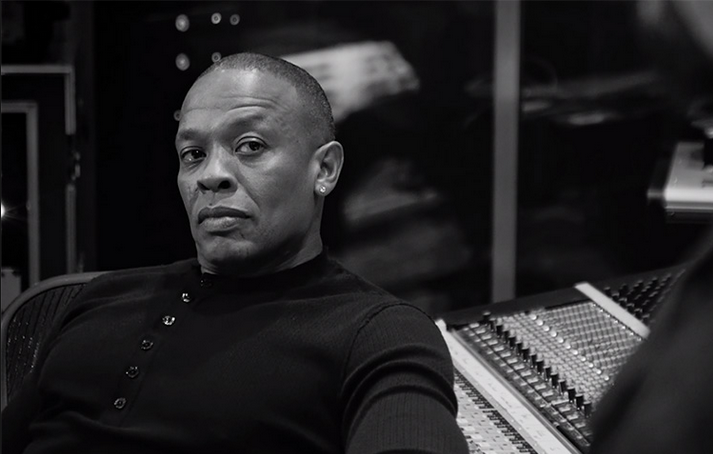
Producer Profile: Dr Dre
In this brand new series, we take an iconic producer and put them under the spotlight. We chart their background, influences, and every facet of their production style and techniques. To kick off the series, we’re focusing on one of hip-hop’s true kings of the beat. The man who put the West Coast on the hip-hop map: Dr. Dre.
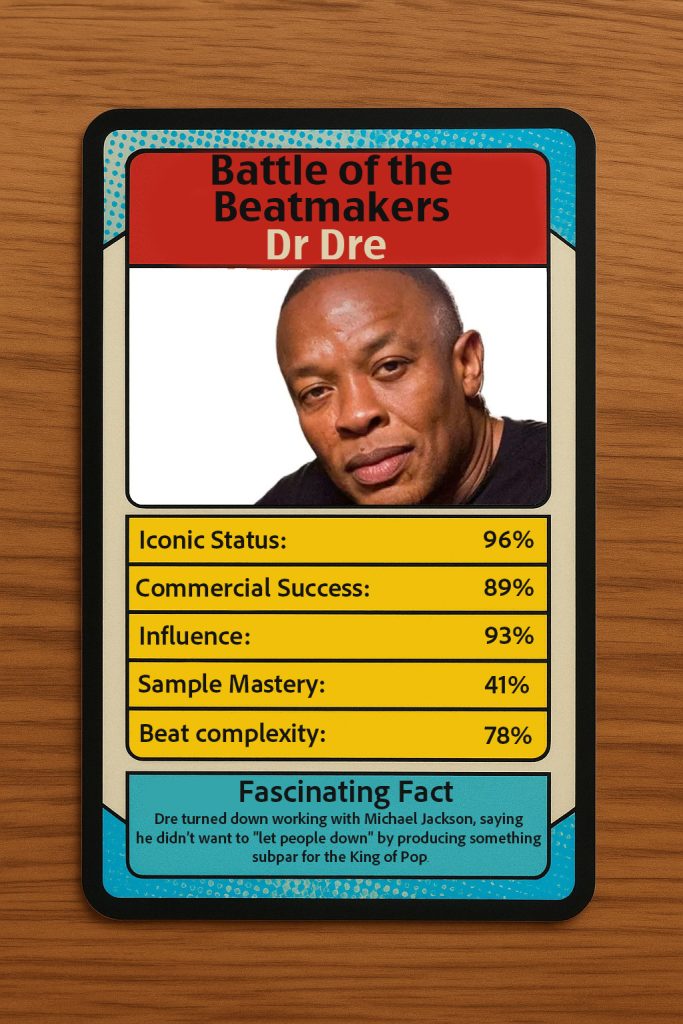
A Brief History
Dr. Dre, born Andre Romelle Young in 1965, is a legendary rapper, producer, and entrepreneur who helped shape West Coast hip-hop. The mid 80’s saw Dre’s first forays into music as a member of The World Class Wreckin’ Cru. His rise to fame, however, began in 1987 as a founding member of the groundbreaking group N.W.A, whose controversial lyrics and innovative sound pioneered gangsta rap in the late 80s.
After leaving N.W.A, Dre launched a hugely successful solo career with albums like The Chronic, which defined the G-funk era. Beyond his own music, he is renowned for discovering and producing for artists like Snoop Dogg, Eminem, and 50 Cent, helping to launch their careers.
In the business world, Dre founded Aftermath Entertainment and co-founded, along with Jimmy Iovine, Beats by Dre the latter revolutionising the world of headphones. Beats were later acquired by Apple for $3 billion, making Dre one of the wealthiest hip-hop artists of all time. With so many strings to his bow, Dre’s unique position means his influence spans music, culture, and technology.

Signature Production Style
Dre is predominantly known for a style that became known as G-Funk. The G stands for Gangsta and is a play on the term P-Funk. Dre sites P-Funk innovator George Clinton as one of his biggest influences and you can certainly hear this in his music. Dre’s early production as a member of N.W.A drew heavily on sampling, with a strong leaning towards slow deeply funky early 70s records. The Bar Kays, Rufus Thomas, and the Ohio Players were all sample favourites for a young Dre who grew up on a diet of these records. The thing that set Dre’s production apart was the way these beats were skillfully layered with drum machines and additional keyboard layers. This gave them a fuller more polished sound than much of the East Coast production at that time.
It was this willingness to interweave samples with other drum machine and synth layers that would influence the future direction of Dre’s production. In particular, it was Dre’s affection for analogue synths that would signify his unique sound and help birth a new style. That of G-Funk.
And while Dre came up in the game relying predominantly on samples, over the decades, he has moved away from this reliance. By the time he dropped his sophomore solo LP ‘2001’, much of his production featured original melodic composition. And this is where the question of how hands-on Dre is with the beatmaking process comes in. He has always had a stable of talented musicians to his disposal. Mel-Man and Scott Storch are two of his most famous musical collaborators and were responsible for the keyboard arrangements on some of Dre’s biggest hits.
Another signature of Dre’s production is the sonic quality of his mixes. Dre’s mixes are considered by many to be the benchmark for hip hop mixes. To sum up Dre you would have to say he is very much a producer in the traditional sense. That is, he is the orchestrator who steers the direction of a full track, working with artists, musicians and engineers to get the best overall result opposed to just making the beat independently from scratch.
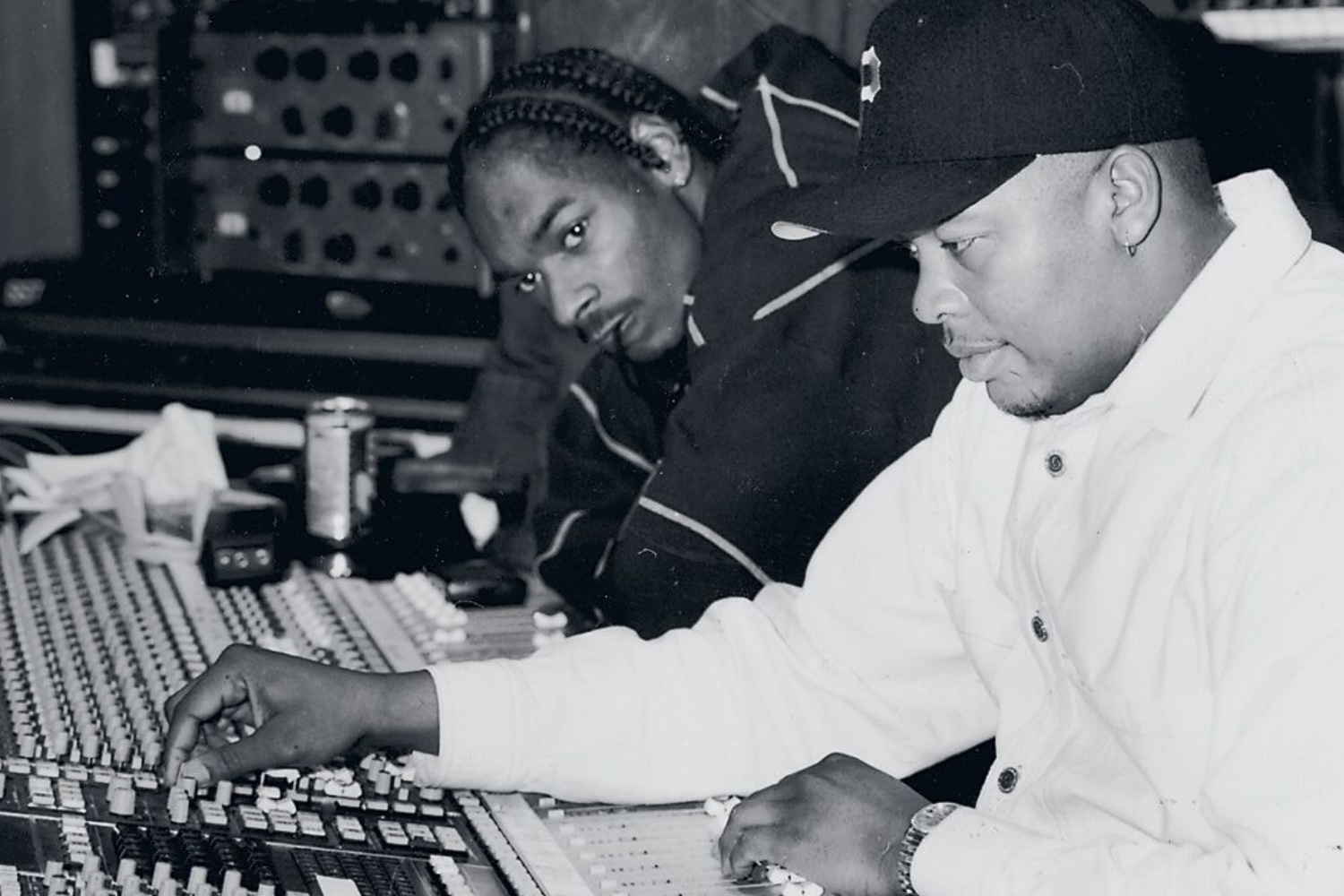
Equipment List
To fully understand and appreciate a producer’s sound, it’s important to familiarise yourself with their go-to gear. In this list we highlight some of Dre’s favourite audio tools, both past and present.
DAWs (Digital Audio Workstations)
- Pro Tools
Dre has been a longtime user of Pro Tools for recording, editing, and mixing due to its precision and professional capabilities.
Drum Machines & Samplers
- Akai MPC Samplers
A staple in 90s hip-hop production. Dre used it extensively for sequencing and sampling in albums like The Chronic and 2001 - E-mu SP-1200
Known for its gritty sound, used early in his career with N.W.A and Death Row. - Roland TR-808
Used extensively in his early career for bass-heavy, punchy drum layering featuring iconic kick drums.
Keyboards & Synths
- Moog Minimoog Model D
Used extensively for rich, analogue basslines and melodies. - Korg Triton
A workstation synth that Dre, along with Scott Storch and Mel Man, used in the early 2000s for iconic strings, keys, and orchestral sounds. - Yamaha Motif
Another go-to synth for Dre during his mid-2000s productions, known for realistic sounds and versatility.
Mixing & Outboard Gear
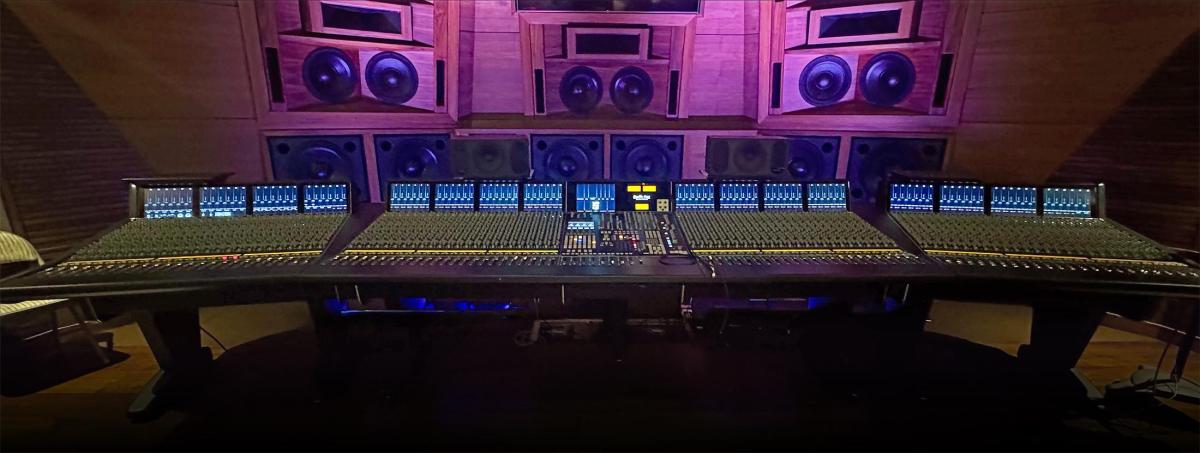
- SSL Duality Fuse Super Analogue Mixing Console
Dre is a massive fan of SSL mixing desks and recently upgraded his G series for the latest Duality Fuse Super Analogue Console - UREI 1176 & LA-2A Compressors
Used to add punch and smoothness to vocals and drums. - Sony C-800G
Dre is a huge fan of this high-end microphone, saying it works wonders on 85% of vocalists
Musical Legacy
Dre’s musical legacy cannot be understated. He is almost single-handedly responsible for giving West Coast hip-hop its distinct sound. Along with his group N.W.A, he helped to popularise gangsta rap, a style of hip-hop that would change the course of the genre. And after N.W.A, he went on to pioneer and popularise the G-Funk sound with his 1992 LP The Chronic.
In more recent years, since the release of his 2001 LP, Dre’s productions have been used as a benchmark of sonic quality. His use of full and rich keyboard-driven elements, along with live instrumentation, helped shift the industry’s understanding of what hip-hop production could be, showing there was an alternative to sampling old recordings. In fact, Dre’s beats represent a bridge between the boom bap style of hip-hop with its head nodding drums and tempos and the more keyboard-driven trap sound.
Top 5 Productions
- N.W.A – “Straight Outta Compton” (1988)
- Dr. Dre – “Nuthin’ But a ‘G’ Thang” ft. Snoop Dogg (1992)
- Dr. Dre – “Still D.R.E.” ft. Snoop Dogg (1999)
- Eve – “Let Me Blow Ya Mind” ft. Gwen Stefani (2001)
- 50 Cent – “In Da Club” (2003)
And if you are looking for Beats or Samples for your next project then RouteNote Create has you covered. sign-up now and take your music to the next level