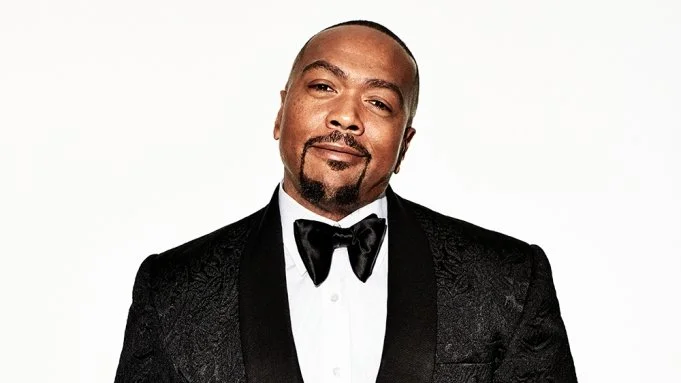
Producer Profile: Timbaland
I know what you’re thinking, not another blog featuring Timbaland, BUT this time we will not be focusing on his recent love affair with AI. Instead, let’s celebrate the huge contribution he has made to the world of music with his revolutionary production techniques. So buckle up as we profile one of the undisputed GOATS of beatmaking – Timbaland.
A Brief History
Born Timothy Zachery Mosley in Norfolk, Virginia, Timbaland began his music career in the early to mid-1990s as part of Swing Mob. Formed by Jodeci member DeVante Swing, this loose collective of artists included future Timbo collaborators Missy Elliott, Ginuwine, and Aaliyah. His breakout moment came in 1996, producing the hit single PONY by Ginuwine. Timbaland’s following years saw a meteoric rise, producing groundbreaking albums for Aaliyah and Missy Elliott. These albums helped establish Timbaland’s unique signature sound. A blend of both Hip-Hop and R&B influences, it featured off-kilter rhythms, sparse beats, and futuristic textures.
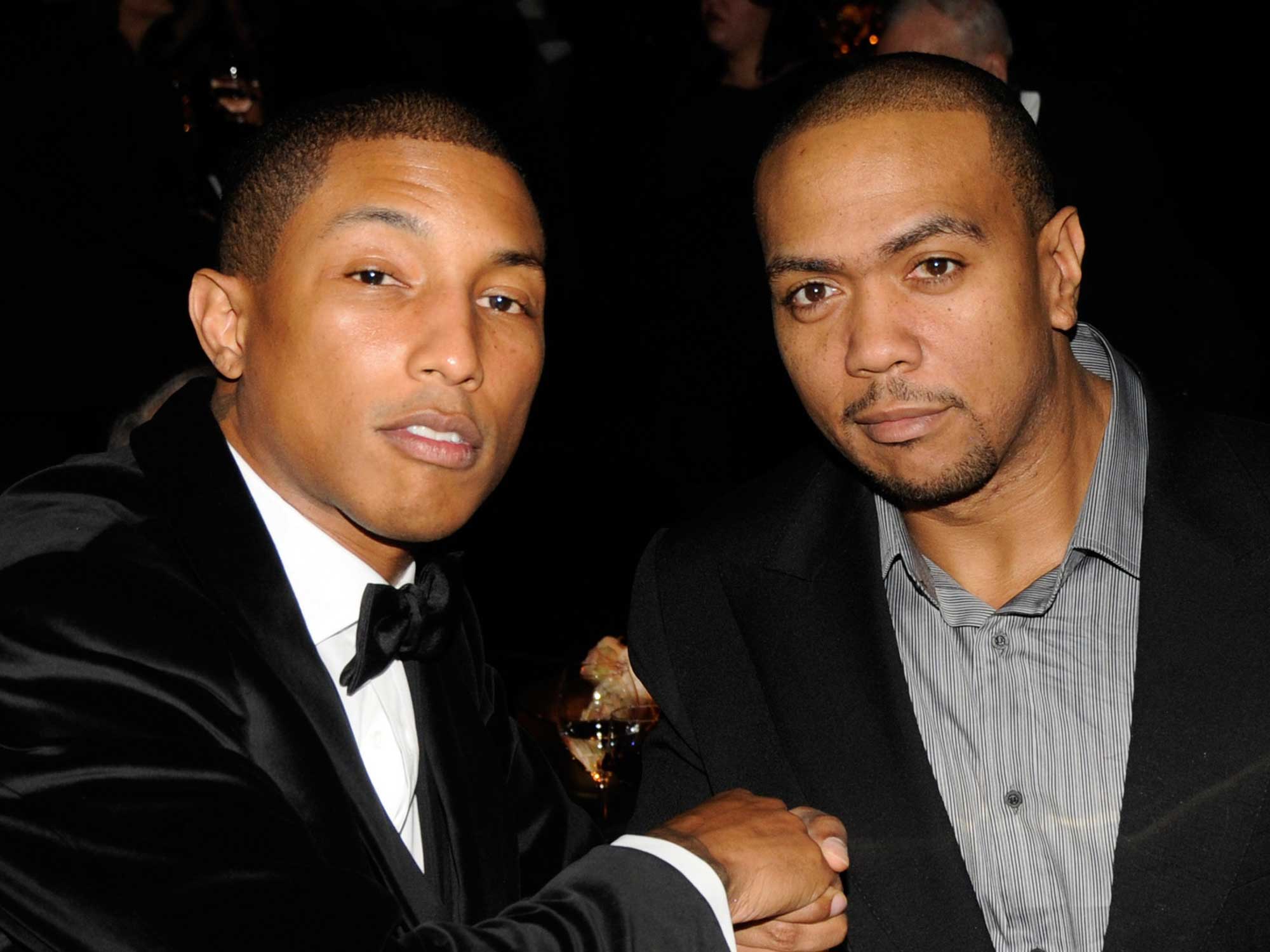
In the 2000s, Timbaland had transcended hip-hop and R&B, becoming one of the most sought-after producers in pop, working with Justin Timberlake, Nelly Furtado and even Madonna. In fact, you could strongly argue that during the early 00’s, Timbaland, along with fellow Virginia Beach producers, The Neptunes, WERE the sound of contemporary popular music. What makes this even more remarkable is that Timbaland and Pharrell Williams of The Neptunes are actually cousins, making their shared dominance of 2000s pop music a truly family affair.
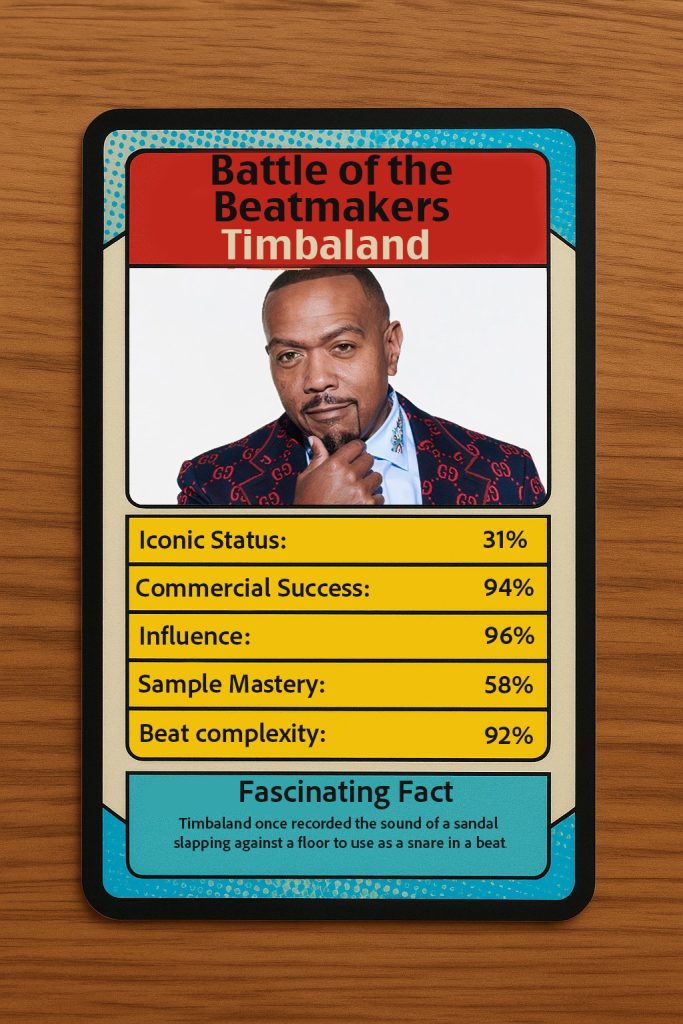
Known for pushing boundaries, Timbaland’s influence continues to shape modern music production despite a recent backlash due to his unwavering support for generative AI. A factor that has massively impacted his Iconic Status score on our Timbaland ‘Battle of the Beatmakers’ Card.
Signature Production Style
Timbaland is recognised as one of the most forward-thinking and innovative producers of modern times. Not one to be pigeon-holed, he has collaborated with a diverse range of artists and embraced styles ranging from pure hip-hop and R&B to mainstream pop. He would often blend these different elements to create a unique hybrid sound of his own. And while his melodic choices vary widely from track to track, it is his inventive, highly percussive approach to rhythm that defines Timbo’s signature sound.
Often built around Timbaland’s human beat boxing, his drum patterns would go where no other hip-hop or R&B producer dared at the time. Offbeat snares and gritty, almost distorted kicks were punctuated by rapid-fire, intricately placed percussive elements. The famous Timbo Bounce was engineered to have maximum impact in the club. Tempo-wise, Timbaland was equally non-restrained, happy to explore a wide range of BPMs. In fact Timbaland was an early pioneer of double time rhythms where micro rhythms are applied to slow tempo beats (60-70BPM) to give them a fast ‘doubled’ effect. This can be heard on pioneering tracks such as Missy Elliott’s The Rain (Supa Dupa Fly) and Jay Z’s Big Pimpin’.
While Timbaland is not fundamentally considered a sample-based producer, much of his work, especially his earlier work, does incorporate sampled elements. His production weapon of choice was, in fact, a workstation sampler- namely the Ensoniq ASR10. As well as sampling from old records, he was also happy to sample random found sounds. His sample game was as experimental and unpredictable as his rhythmic patterns.
By the 00’s Timbaland had become a master at producing tracks that, while rhythmically sophisticated, were also melodically accessible. His knack of creating simple catchy melody lines or chord progressions over club-friendly rhythms made him one of the most sought-after producers in the game.
It’s testament to Timbaland that while melodically he didnt really stick to a set formula, his beats are instantly recognisable and have a definite signature sound.
Equipment List
DAWs
Avid Pro Tools – Used for mixing and mastering, both in the studio and on the road with his mobile tour bus studio. A longtime staple in Timbaland’s workflow.
Ableton Live – Timbaland’s current DAW of choice for music creation, often used in tandem with the Push 2
Drum Machines and Samplers
Ensoniq ASR-10 – Timbaland’s love affair with the ASR-10 sampling workstation runs deep. Used in the ’90s and early 2000s it’s known for its unique, rich sound, flexibility, and quick workflow.
Open Labs Timbaland MiKo – A curious hybrid digital workstation that Timbaland endorsed and used for both live shows and in-studio production. This all-in-one system combined sampling, sequencing, and virtual instruments.
Keyboards and Synths
Korg Triton Pro – Frequently used by Timbaland during the early to mid-2000s. Known for its rich presets, it became a signature element in his synth-driven productions.
Yamaha Motif series (Motif ES7, Motif XS6, Motif 7) – Used extensively for its versatile sounds and expressive playing. Timbaland utilised it for layered synths and string sections in many pop and R&B hits.
Dave Smith Instruments Pro 2 – A modern monophonic synth known for its complex modulation options. Featured in Timbaland’s more recent productions.
Audio Interfaces and Mixing Gear
SSL Matrix Console – Used for routing and analogue mixing, especially within his hybrid digital-analogue studio setup.
Neve VR-72 – A premium mic preamp used in Timbaland’s vocal chain, contributing warmth and detail to recorded vocals.
Universal Audio 1176 – Classic hardware compressor, which Timbaland is known to lean heavily on for vocals.
Plugins and Software
iZotope Trash – A distortion and filtering plugin used for vocal processing, notably on Justin Timberlake’s “SexyBack.”
Valhalla VintageVerb – A go-to reverb plugin in Timbaland’s modern productions, known for its lush, modulated reverb tails.
Suno – a Generative AI tool that Timbaland has controversially endorsed and championed. Used as a tool for creating ideas, vocals and original textures.

Musical Legacy
With a score of 96% for influence on his “Battle of the Beatmaker” card, Timbaland didn’t just influence the sound of hip-hop and R&B; he re-wrote it. Hip-Hop in particular was dominated in the mid 90’s by straight boom-bap style drum programming and largely built on old dusty samples. Tempos didn’t veer too far from the 90BPM standard.
Timbaland pushed the boundaries of rhythmic structure but also melodic themes. His earlier sampled productions would draw upon a wide range of genres. He was one of the first producers to explore the fertile ground that is Bollywood and Middle Eastern scales. This would go on to directly influence the sound of early 00’s hip-hop and R&B.
Timbaland’s main legacy is that of experimentation and boundary pushing. Instead of conforming to set formulas, he turned many of these on their head. Maybe this is because he wasn’t based in New York or L.A, the two main hip-hop meccas during the 90’s. He almost certainly had a profound influence on the burgeoning southern hip-hop movement. Particularly with his pioneering of double-time beats. Metro Boomin’ has gone on record to say how much the Timbo bounce influenced and inspired his sound.
And beyond his early productions, Timbaland, alongside The Neptunes, single-handedly reshaped the course of pop music. They introduced a hip-hop and RnB influence to the biggest pop hits, producing songs that would resonate on dancefloors as well as the radio dials.

By the 2010’s Timbalands influence had waned slightly, and a new generation of producers, who had been influenced by Timbaland’s musical legacy, started to shine. In 2020 Timbaland took on a new role as a musical mentor with his Beat Club platform. The subscription site invites beatmakers to submit tracks for review and possible placements but has been accused by some of exploitation.
Unfortunatly, this is not the only controversy that has dogged Timbaland in recent years. His support and championing of AI has been widely condemned. He is the strategic advisor at AI company Suno, and has gone down on record as saying, “AI is the only thing that has a pure soul right now”. Statements such as these have not gone down well with the wider music community.
So, while Timbaland’s musical influence is unquestionable, his legacy has been severely tarnished in recent years.
Top 5 Productions
- Ginuwine – “Pony” (1996)
- Jay-Z – “Big Pimpin’” ft. UGK (1999)
- Aaliyah – “Try Again” (2000)
- Missy Elliott – “Get Ur Freak On” (2001)
- Nelly Furtado – “Promiscuous” (2006)
And if you are looking for Beats or Samples for your next project then RouteNote Create has you covered. sign-up now and take your music to the next level