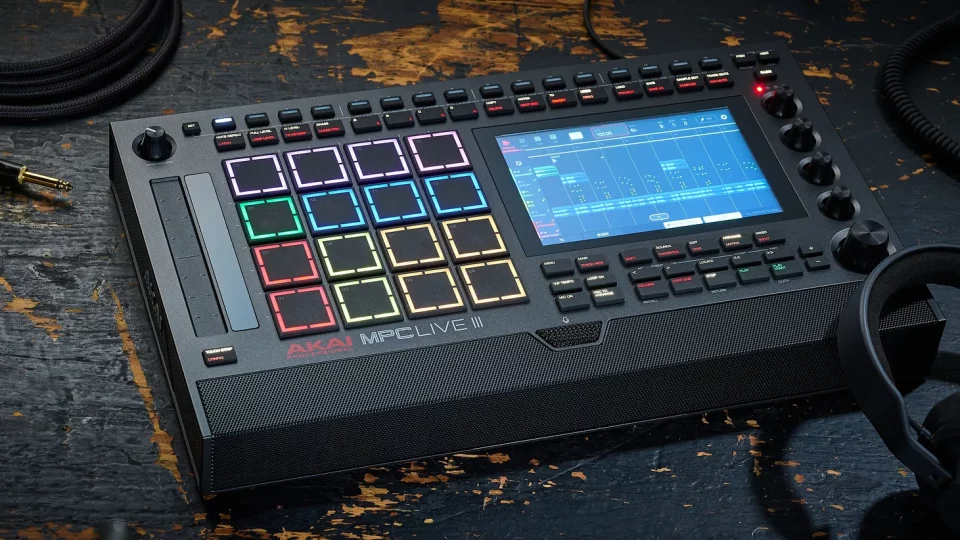
Akai MPC Live 3: The Latest Member of the Family has Arrived
Few products have gained the mythical status of Akai’s MPC (MIDI Production Centre) series of Drum machine style samplers. From the revolutionary Rodger Linn designed MPC 60 through to their latest highly portable stand alone offering, MPC’s have been responsible for more bangers than a Chinese firework factory.
So what of this latest offering? Let’s lift the lid and see what this next-gen sampler brings to the table.
Keeping it Live
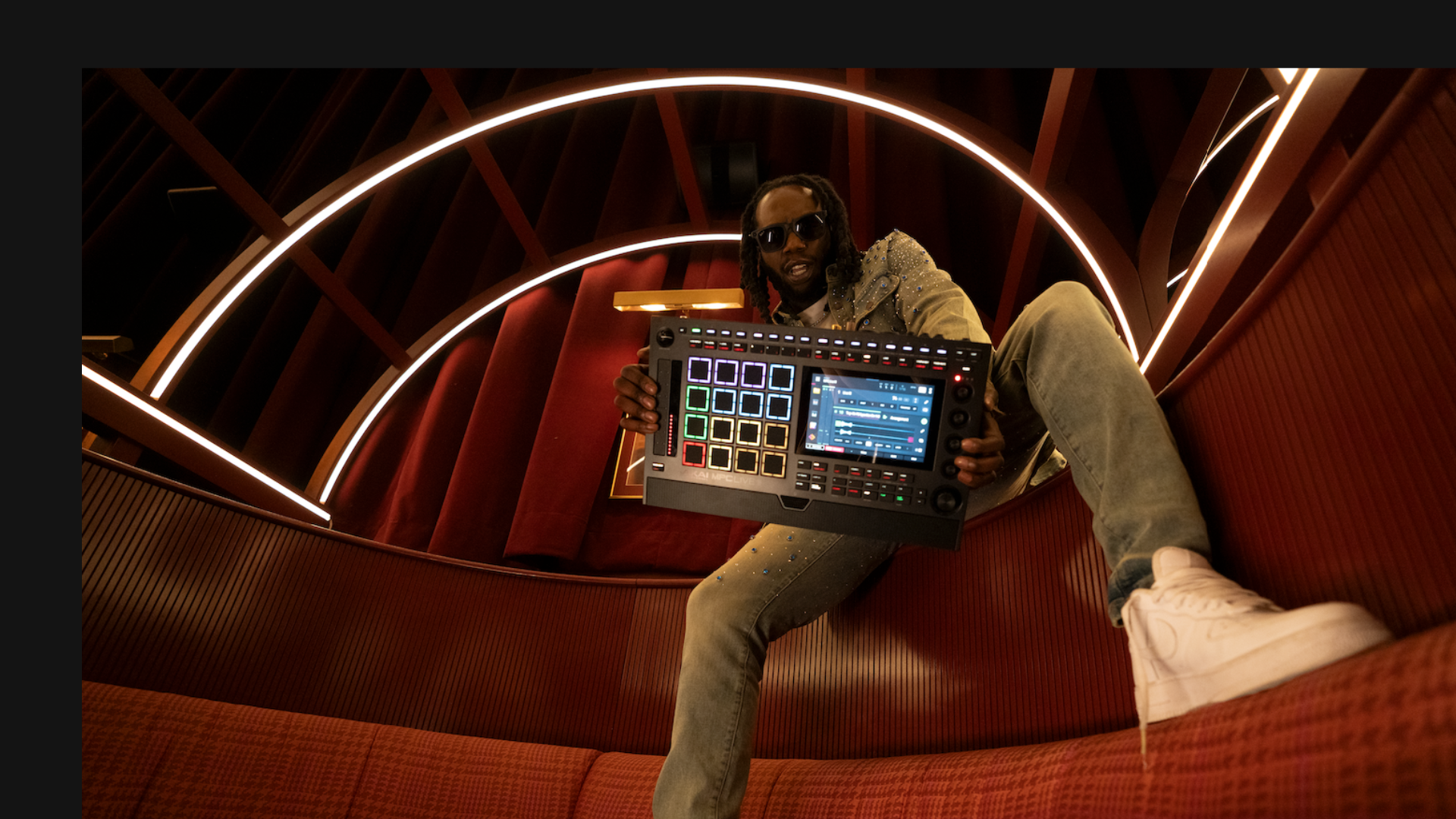
The thing that really sets the MPC Live series apart from previous MPC incarnations is its portability and stand alone nature. With its built in battery, speakers and now even a mic you have everything you need for mobile beat bashing. Perfect if you fancy cooking up some tropical house while you cook on a white sand beach sipping a Pina Colada. or creating some underground hip-hop whilst commuting to work on the subway.
Wherever you feel like unleashing your creativity. the MPC live offers you truly unrestricted music composing abilities. And while MPC’s have always appealed more to those working with samples this unit offers everything you need to create and mix almost any style of music.
What’s New?
The MPC Live 2 already packed a punch but this latest instalment takes things to new hights in respect of power, control and connectivity. So, lets take a look at all the improvements over it’s predecessor.
Power
The main major upgrade to this latest MPC Live is in terms of power and performance. According to Akai, this is the most powerful MPC to date. It boasts a rather impressive 8-core processor and 8GB of RAM, which Akai claims to be four times the power of the Live II. The onboard storage has also been increased from 16GB to 128GB. This free’s you up add many more plugins than was previously possible. So what you are in essence getting is a fully functioning DAW under the guise of a sophisticated controller.
And while you can plug this MPC into your computer and there’ve been improvements to its integration with Akai’s software this unit really is designed so you can fully produce within the box.
Added Expression
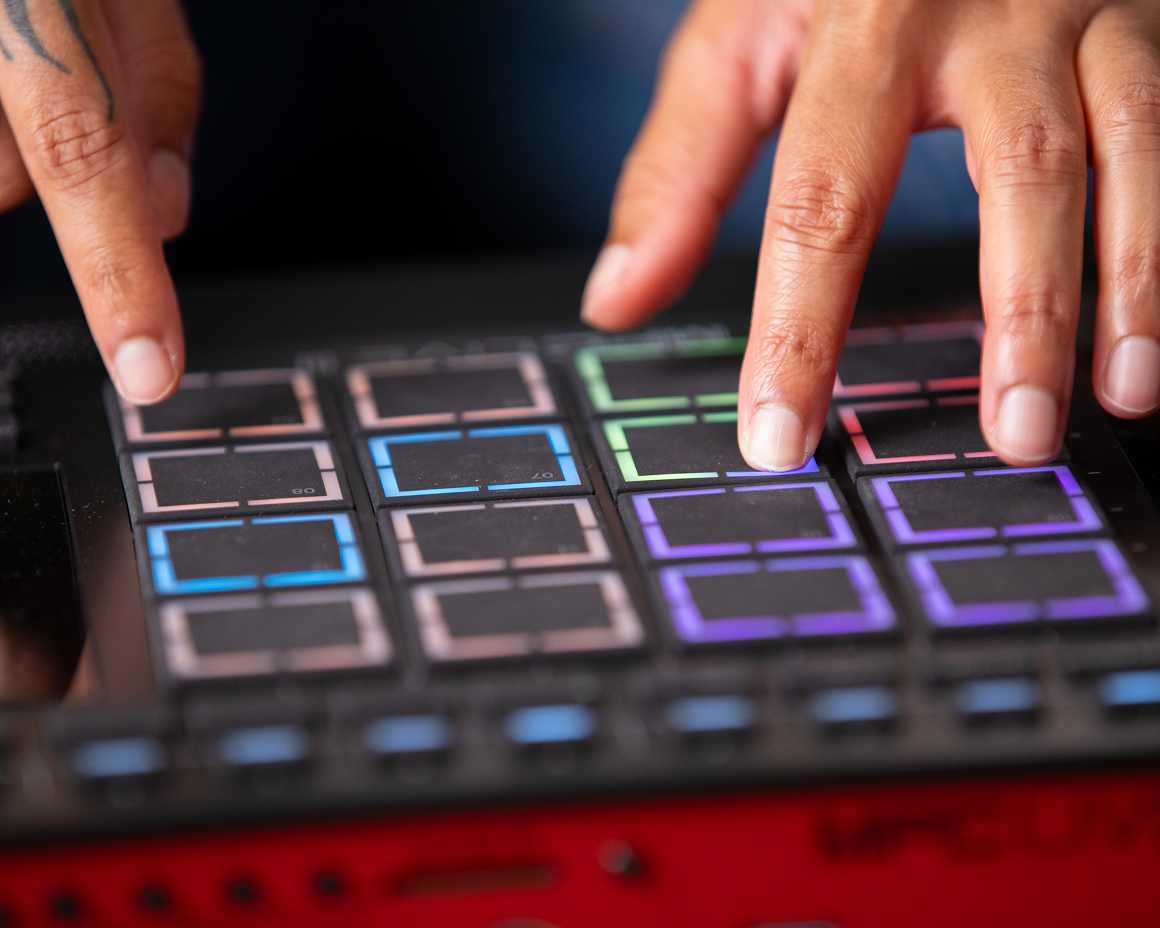
One of the coolest features on this MPC is it’s ability to add expression to your sounds and arrangements. The 16 pads offer 3D sensing, which can enable aftertouch and XY control of layers, sample blending, dynamic repeats, articulations. Perfect if you want your drums and samples to inherit a more naturalist sound or create purposeful movement and feel in your arrangements. You also have the ability to set up 4 different samples per pad, each inheriting a separate corner of the pad. In effect, this quadruples your 16 instantly playable pads to 64 which has got to be a win in anyone’s book.
You also have a touch strip controller so your fingertips can do the talking: apply filters, bend pitch, sweep effects, modulate parameters, adjust note repeat, control pad or track levels, play notes like a ribbon keyboard, or tweak wet/dry mixes in real time. And if knobs are your thing then you still have the 4 MIDI assignable knobs that featured on the previous Live.
Step it up
This one is an interesting addition. As well as the traditional MPC sequencing workflows you now have the addition of a hands on step sequencer. Situated along the top of the unit these illuminated lights give you the option to program like you would on an old Roland TR808. Something I’m sure that will appeal to the more dance music centred MPC users.
Clip Clip Hooray
Another new feature that’s been added to the MPC Live 3 is a clip matrix view. This allows you to create using repeatable loops comparing and swapping them in real time, much like you can do in Ableton Live. This is a great way to quickly add different rhythmic and melodic ideas and see how they can work together using combinations created on the fly. Clips can be triggered easily This could be particularly handy if you plan on using the MPC Live 3 for improvised live performances.
Under the Hood
As well as additional hardware functions, improvements have also been made to much of the software capabilities. Firstly, the crucial time-stretching algorithms have been improved to a higher quality FFT (Fast Fourier Transform) model. Akai claim to have improved the Stem Separation quality as well. Something that will be especially welcomed in a machine dedicated to sampling loops.
As well as these audio manipulation tools Akai have also added a selection of high quality new processing plugins. It now allows up to 32 plugin tracks apposed to the Live 2’s 8. All this in a new improved graphical layout that intends to make MIDI programming a slicker more intuitive affair.
Akai have also upped the polyphony to 256 stereo voices and doubled the audio tracks to 16. This is perhaps one area where a modern DAW will have a big advantage.
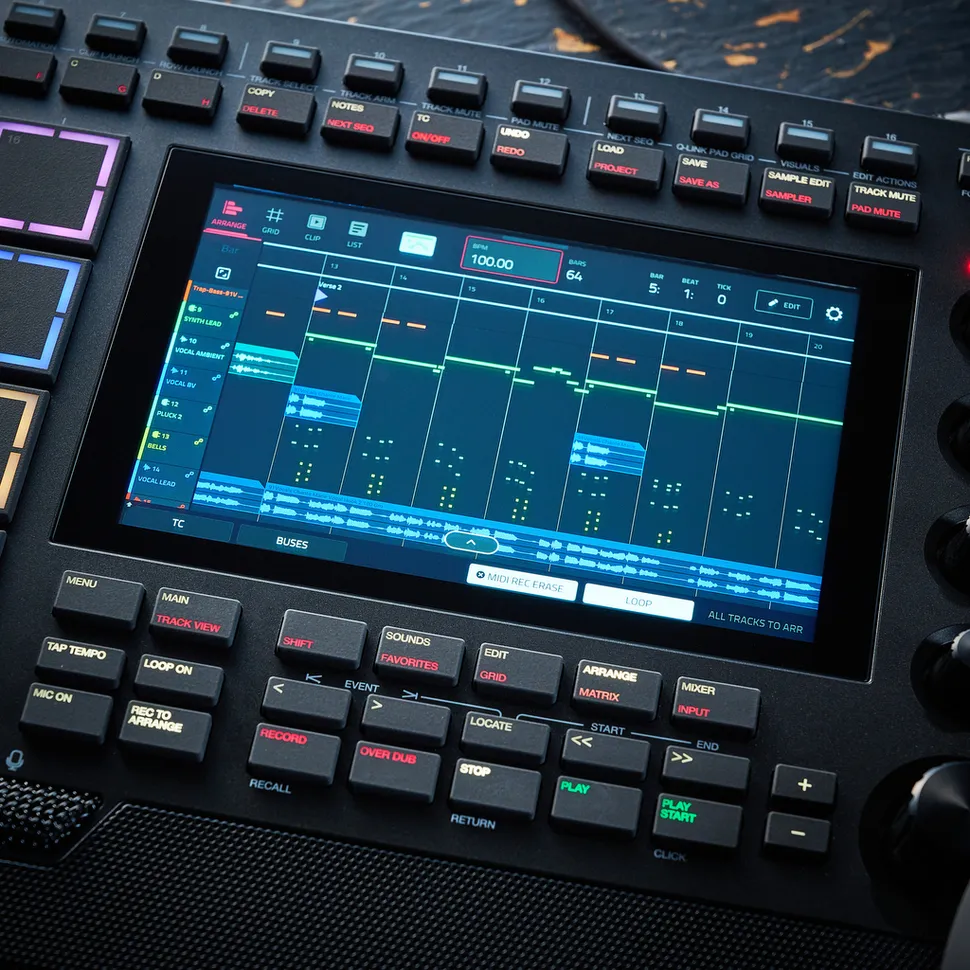
Added Connectivity
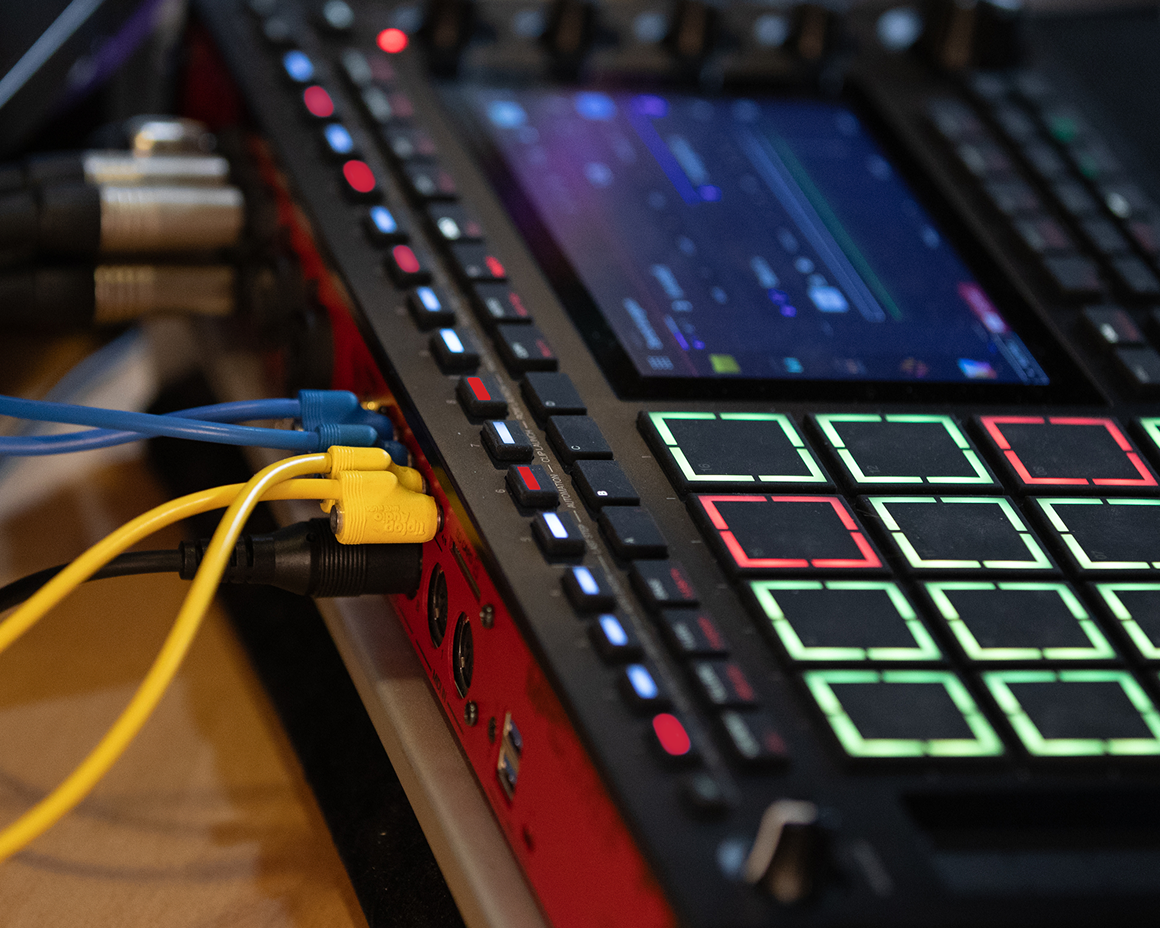
Again, Akai have stepped up their connectivity game with added flexibility. One of the main updates is a USB C port that allows transfer of up to 24 audio channels. Ideal when you want to continue or mix a track in a DAW. And for the truly analogue synth experimenters out there it also now supports CV/Gate outputs for modular / external synth integration. And as well as the existing phono inputs, perfect for plugging in your turntable directly, you also now get 2 handy combo XLR/TRS inputs (for mic/line)
Summary
While, we have only covered some of the key upgrades to this latest instalment of MPC action, it’s clear they have pulled out all the stops with the Live 3. They have clearly identified a desire for producers to step away from the glare of the monitor screen and scrolling of the mouse to instead embrace buttons and knobs. For producer’s that find traditional DAW’s an inspiration killer then this is going to represent a fantastic option. There really is nothing to stop you creating sophisticated and high quality productions all from within this machine.
And, the feedback from recognised YouTube production influencers has already been overwhelmingly positive. (See Below) But this must all be taken with a heavy pinch of salt of course. Especially as Akai Professional have a lot of recourses to throw around.
As for value for money, the MPC Live 3 is significantly more expensive than it’s predecessor and has been launched with a RRP of £1,399. That may sound quite steep but if you consider that this functions pretty much as a DAW in a box then you would find it hard to find a powerful laptop, DAW and sophisticated feature heavy MIDI Controller for that price.
At the end of the day, it all comes down to your preferred workflow and the sort of music you make. This will no doubt appeal to existing MPC fans and may even cause Ableton Push and NI Maschine users to investigate. One thing is for sure, The MPC legacy is far from over.
And if you are looking for Beats or Samples for your next project then RouteNote Create has you covered. sign-up now and take your music to the next level