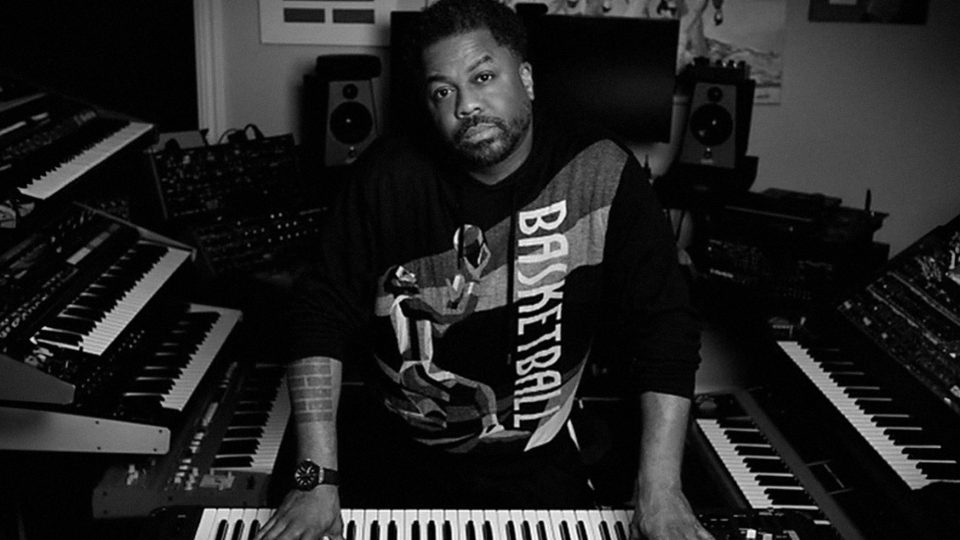
Producer Profile: Just Blaze
If any producer can be credited with carrying the 90’s hip-hop boom-bap legacy into the modern era, it’s Just Blaze. But he’s far more than a traditional underground beatmaker. His production effortlessly spans trap, club- bangers, and R&B flavours, showcasing a versatility few can match. As the new millennium unfolded, his influence on hip-hop’s evolving sound became undeniable, collaborating with some of the biggest names in the industry. Let’s go!
A Brief History
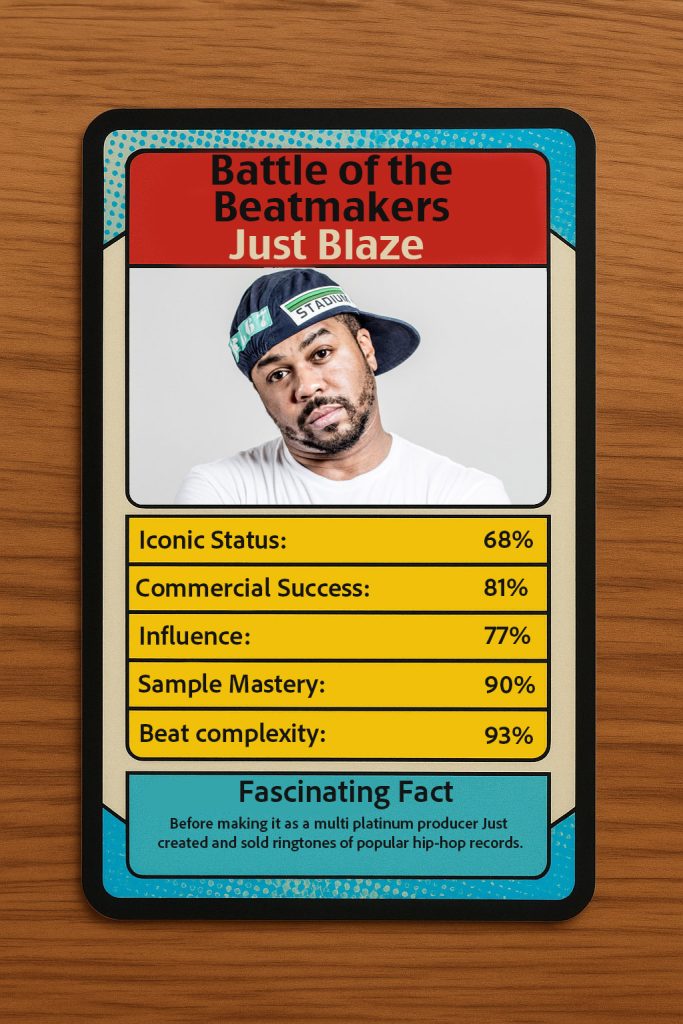
Born Justin Gregory Smith on January 8, 1978, in Paterson, New Jersey, Just Blaze emerged as a defining force in early 2000s hip-hop. His musical journey was deeply influenced by his father, an accomplished computer programmer, who introduced him to both the piano and the intricacies of computer programming. This early exposure sparked Just Blaze’s dual passion for music and technology.
Initially pursuing a computer science degree at Rutgers University, Just Blaze’s passion for music led him to drop out and immerse himself in New York’s vibrant music scene, both DJing and Beatmaking. He secured an internship at renowned Manhattan studio, The Cutting Room, where he honed his skills and built connections. His breakthrough came when a Roc-A-Fella A&R executive, Dino, heard one of his beat CDs. This led to a meeting and eventually to Just Blaze producing tracks for Jay-Z, including “Who Want What” on Beanie Sigel’s The Truth, which caught Jay-Z’s attention and solidified Just Blaze’s place in the Roc-A-Fella roster.

Beyond his work with Jay-Z, Just Blaze has collaborated with a diverse array of artists, including Eminem, Kanye West, Usher, and Drake, further cementing his status in the music industry. His influence extended beyond music production; he also contributed to video game soundtracks, even becoming a playable character in NBA Street Vol. 2
In 2004, Blaze founded Fort Knocks Entertainment, signing artists like Saigon and Ms. Jade, and continued to impact the hip-hop landscape with his innovative approach to production. Recognising his cultural contributions, the city of Paterson honoured him with a key to the city in 2018.
Signature Production Style
The first thing you notice about Just Blaze’s productions is the sheer quality and high-fidelity nature of the beats. While most of his tracks are built around samples, he is renowned for layering and stacking additional instrumentation over them, giving the music a much bigger, more epic sound. It’s as if he took the 90’s hip-hop rule book and embellished it with modern production tools to elevate it to the next level. While Just Blaze used an MPC 4000 for some of his production, he was also an early adopter of DAWs to create beats in the box. Something that was, and to some extent still is, looked down upon in the hip-hop arena. It was this mastery of technology, coupled with Just’s natural talent as a multi-instrumentalist, that gave him such an edge. This, in an era where most hip-hop producers were still reliant on hardware samplers like the SP1200 or Akai’s MPC’s.
Much of Just Blaze’s work also embraces a very club-friendly approach, with drums and tempos that are all about bringing energy. Unlike typical 90’s boom-bap drum programming, his drums have a distinctly live feel, famously incorporating percussion and layered hand claps. An accomplished drummer himself, Just frequently added live drum elements, especially impactful drum fills. This technique is showcased to great effect on Jay-Z’s “Show Me What You Got.”

In addition to sophisticated sample layering and manipulation, Just Blaze pioneered several other innovations that give his beats a uniquely recognisable quality. The most obvious of these is his infamous “Just Blaaaaze” producer tag. He was one of the first producers to truly appreciate the value of branding beats with a personalised watermark. While DJ shout-outs had appeared on mixtapes for years, Just Blaze’s deliberate placement of his tag at the start of tracks was among the first times this was heard in mainstream urban music production.
Alongside his iconic tag, he often combined it with a highly distinctive synth FX riser to heighten energy and anticipation. While the exact source of this sound remains unclear, it is likely a custom creation by Just, using pitch-bend techniques. Ironically, some years later, trap producers such as Lex Luger and Southside would replicate this riser sound and apply it to their own early trap tracks. Along with the Kill Bill-style siren, this riser has become a defining element of modern trap production.
Beyond tags and FX, Just Blaze was pivotal, alongside Kanye West, in popularising the early 2000s trend of pitched-up “chipmunk” soul vocal samples. This involved sampling often slow, deep soul tracks and speeding them up to create a high-pitched, almost comical vocal effect. Breakthrough tracks like Cam’ron’s “Oh Boy” and Jay Z’s “U Dont Know”, helped cement this technique, which is still prevalent in today’s production styles.
Just Blaze also revolutionised sample manipulation with other creative techniques. He frequently extends sections of a sample using half-bar loops. In these cases, the first, or occasionally last, bar of a sample plays in full, while the remaining three bars feature a repeating, generally half-bar loop. The repeating sample section will often feature some dramatic horns or a vocal hook. Notable examples of this approach appear in Kendrick Lamar’s “Compton” and Joe Budden’s “Pump It Up.”
Equally important are his often unconventional sample choices. A serious record digger, Just Blaze’s vinyl collection is thought to be in the hundreds of thousands. His selections prioritise energy above all, which is why many of his most hard-hitting productions sample rock-infused tracks. These provide an aggressive, gritty edge while maintaining melodic cohesion. A prime example of this prog-rock-esque sound is Fat Joe’s “Safe 2 Say (The Incredible).”
While Just Blaze cannot be pinned to a single sonic style due to the breadth of his production, he employs a set of signature techniques that make his beats instantly identifiable. Above all, his tracks stand out for their slickness and polish, setting him apart from his contemporaries.
Equipment List
As a self-confessed gear nut, Just Blaze has probably tinkered with more equipment than all our other producer Profile’s put together. Here is a list of some of the equipment that Just Blaze is well known for using

DAW (Digital Work Station)
- Logic Pro: Just Blaze entered the scene as a stornch champion of Logic. Something that flew against tradition at the time.
- Ableton Live: Just has also confessed to being a big fane of the Ableton Live workflow, especially when manipulating samples.
- ProTools: Just Blaze, has referred to the fact that he often chooses to mix tracks in ProTools.
Drum Machines And Samplers
- Ensoniq ASR10: This popular sampling workstation was the first serious sampling device that Just Blaze is said to have used.
- Akai MPC 4000: When not working in the box, Just has been known to sing the praises of the MPC 4000. In one interview, he claimed it was the perfect hardware sampler.
Keyboards And Synths
- Maximus Analogue Solutions Modular Synth: This modular synth system can be seen in a prominent position in Just Blaze’s Home Studio
- Oberhiem Various: It is apparent when you see Just Blaze’s home studio that he has a sweet spot for Oberhiem products, with various analogue and modular synths on display.
Software And Plugins
- UAD: Just Blaze has collaborated with UAD and favours their plugin suite when working in the box.
- Goodhertz Vulf Compressor: Just Blaze has been seen adding the Vulf Compressor to give a characterful compression effect.
- SWAM Engine: This high-quality orchestral virtual instrument has been Just Blaze’s go-to orchestra suite which he pairs with the ROLI Seaboard.
Mixing & Outboard Gear
- Ex Machina Quasar Studio Monitors: Just Blazes A Room monitors of choice
- API 1608-II Special Edition console: This mixing console sits at the centre of Just Blaze’s home studio set-up.
Musical Legacy
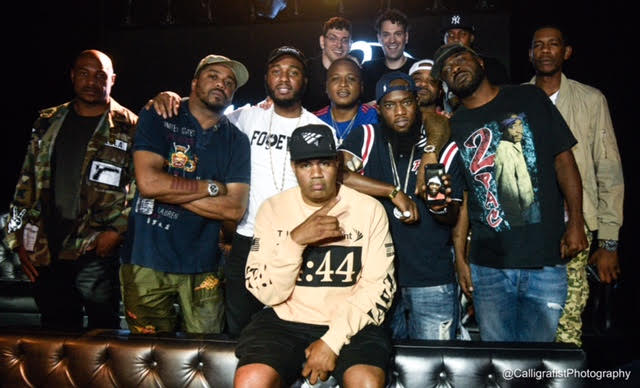
The transition into the new millennium brought many new sounds and styles to hip-hop production. Just Blaze stands as a bridge between the hip-hop template of the 90s, with its reliance on sampling, and the future sound of hip-hop that embraced synthesis and computer-based tools. He brought a fuller, more sonically rich palette, particularly through his pioneering work as an in-house producer for Roc-A-Fella Records. Just Blaze showed that a producer need not be confined to a single style or approach, displaying a remarkable versatility, from his underground, prog-rock-infused beats to smooth, soulful R&B cuts.
His work on Jay-Z’s The Blueprint series and with artists like Cam’ron, Beanie Sigel, and Kanye West helped define the sound of early 2000s hip-hop. His signature techniques of manipulating and layering samples with live instrumentation, would set the standard in terms of whats possible with sample based production.
His pioneering use of pitched-up soul samples popularized the “chipmunk soul” aesthetic that remains a popular technique to this day.
What truly sets Just Blaze apart from his peers is his technical mastery and his willingness to embrace new tools and methods. While sample-based hip-hop was traditionally built on hardware samplers, Just Blaze challenged the notion that this was the only “authentic” way to create beats. By embracing DAWs and modern production software, he demonstrated that technology could enhance, not diminish, creativity. Always ahead of the curve, he continues to champion innovation, most recently through his collaboration and championing of Serato Studio.
Top 5 Productions
- Streets are Watching – Jay Z
- Oh Boy – Cam’ron
- Safe 2 Say (The Incredible) – Fat Joe
- Come On Baby – Saigon
- Compton – Kendrick Lamar feat Dre
And if you are looking for Beats or Samples for your next project then RouteNote Create has you covered. sign-up now and take your music to the next level