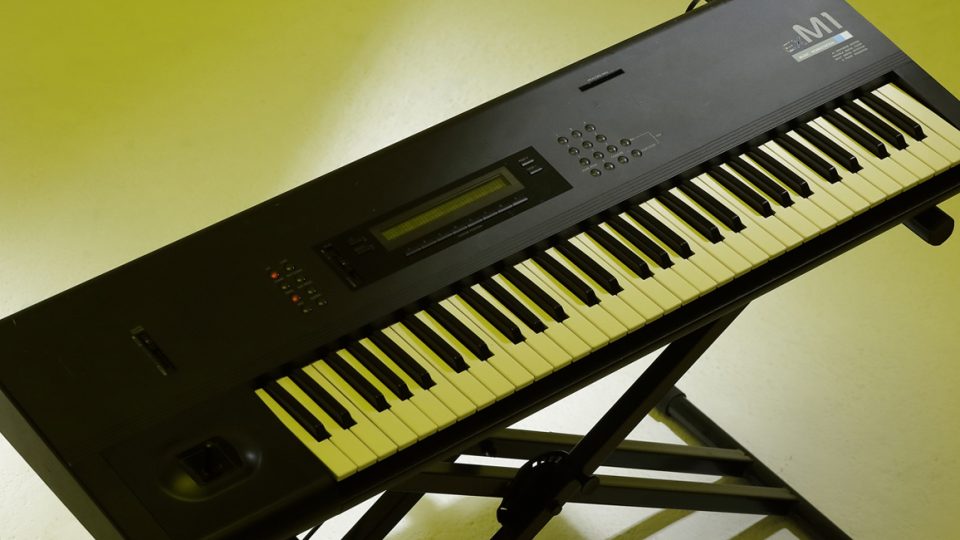
The Korg M1: A Legendary Synth that Defined an Era
When talk turns to classic synthesisers, all the usual suspects get reeled off. Think Mini Moogs, Junos, Jupiters, and of course the iconic Yamaha DX7. One instrument, however, that’s often overlooked is the Korg M1. This revolutionary synth helped to herald in a new era of realism and with it defined the sound of late 80’s and 90’s contemporary music. And with M1-rich 90’s dance classics still dominating dancefloors, it’s time we celebrated this titan of the pre-DAW era.
A Quick History
By the late 1980s, synthesiser technology had gone through several waves: the early monophonic analogue synths of the ’70s, the advent of polyphonic analogues (e.g. Prophet 5, Jupiter, etc.), and then the digital revolution led by Yamaha’s DX7 with its use of FM synthesis. By the mid-80s, hybrid sample + synthesis designs (such as the Roland D-50) were introduced, further pushing the frontier.
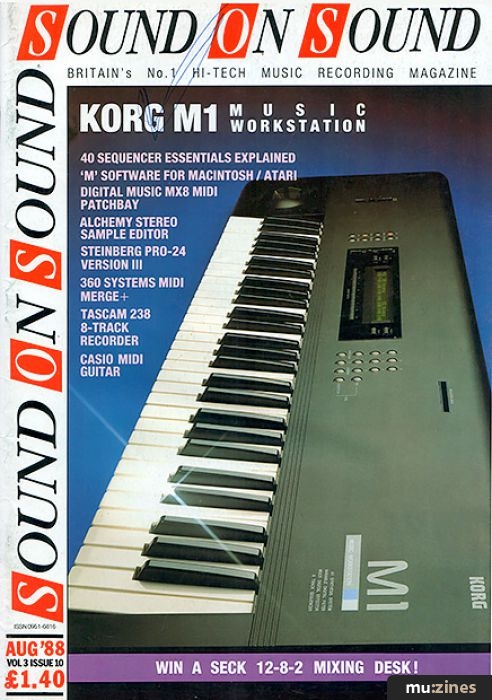
And into this landscape, Korg introduced the M1 in 1988. But the M1 wasn’t just a synth with cutting-edge sounds. Its ambition was to be a full “music workstation” with the ability to generate realistic sounds and combine them with effects, and onboard sequencing. Over its production life (88-95), it reportedly sold about 250,000 units, making it one of the best-selling synthesisers in history.

Building on the incredible success of the M1, Korg also spawned later Korg workstations (the T-series, 01/W series, X-series, etc.) that built on its architecture and philosophy. Eventually, the M1 series of synths was succeeded by Korg’s Trinity synth Workstation. Another hugely popular and influential product.
In short: the M1 sits at a crossroads. It emerges after the first wave of digital synthesis, yet before the total dominance of computer-based production.
A New Synth Architecture
The Korg M1, along with it’s rival, Rolands D-50, revolutionised synthesis by also incorporating sampled sounds. An early precursor to today’s sophisticated sample-based virtual instruments. The M1 used what Korg called AI Synthesis (Advanced Integrated Synthesis). Rather than purely generating waveforms algorithmically (as in analogue synthesis) or via FM synthesis like Yamaha’s DX synths, the M1 used PCM sampled data (recorded waveforms) as the base sound source. It then shapes and processes the waveforms via filters, envelopes, modulation, and effects.
Inside, the M1 you get 4 MB of 16-bit PCM samples (sound data) in its ROM, covering a broad palette. Pianos, strings, acoustic instruments, percussion, drums, ethnic instruments, along with a selection of effects and textures. Two oscillators per program could be combined, routed through a variable digital filter (VDF), envelope generators (VDA / EGs), LFOs, velocity/keyboard tracking, and then into onboard effects (reverb, delay, chorus, distortion, EQ, etc.). These sophisticated chains were not only more realistic than previous synth technologies but also much easier to edit than, say, FM synthesis.
Another groundbreaking feature of the M1 came in the form of multitimbrality and layering. The M1 supports up to 8 simultaneous parts (or “Combi” mode), letting you layer or split programs across keyboard zones or across MIDI channels. The keyboard splitting feature made the M1 a very attractive prospect for musicians planning to perform live. Add to this a built-in 8-track sequencer, which made it possible to build entire arrangements within the keyboard itself and you have a fully functioning workstation at your fingertips.
All of this meant the M1 was not just a sound module: it was a fully capable composition and performance engine, with high flexibility and musical immediacy.
A Revolution of Realism
Without a doubt, the M1’s major selling point was how convincingly it could approximate “real” acoustic instruments, at a time when previous synths often sounded rather synthetic. By using high-quality PCM samples as the foundational material, the M1 could deliver the attack character and timbral nuance of piano, strings, guitars and other instruments, while still giving the user signal processing control. It struck the perfect balance of being realistic but still expressive, and was a key reason musicians and producers embraced it.
That said, the M1 didn’t just attempt to replicate acoustic instruments. Because the sample data could be modulated, filtered, layered, and processed, it enabled hybrid textures that blurred the lines between “real” instrument and “synth” tone. This bridge was significant as it allowed musicians to move from the purely synthetic timbres of the DX7 era toward something more interesting and creatively expressive.
Because of this, many of the iconic “semi-realistic” textures in late ’80s and early ’90s records were often directly attributable to the M1. It allowed ambient producers to create lush, developing string/synth pads., Dance producers to sculpt basslines that popped out of the speakers and Production musicians to sound as though it was dwelling somewhere between the acoustic present and a synthesised future. In short, it helped narrow the gap between synthetic and acoustic, and raised expectations about what “keyboard sounds” represented in popular music.
Hardware workstations like the M1 became central to production workflows in a time before the widespread adoption of computer-based digital audio workstations (DAWs) and soft synths. For one of the first times, it let users sketch, arrange, and complete tracks in the box, without needing external sequencers or samplers.
Classic Status and Genre Defining Sounds
Once the M1 hit the market, its sonic characteristics became ubiquitous and could be heard everywhere. Thanks to its solid architecture, broad sound palette, and hands-on flexibility, it was quickly embraced across multiple musical genres. One of its strongest homes was to be found in the world of dance music.
In house and rave music, many of its preset sounds became staples. The bright, punchy “M1 Piano” sound for instance (often just “Piano 16” or “Grand Piano”) became synonymous. It offered clarity, attack, and presence that cut through club mixes with ease. Tracks like Robin S’s “Show Me Love” used this piano sound as part of it’s signature hooks. The M1 Piano sound even inspired its very own sub-genre: Piano House.
In an effort to make the pop music of the day more club-oriented, iconic dance M1 presets would be used. Madonna’s “Vogue” is a prime example with its unashamed use of the M1 presets.
As well as the classic Piano, the organ tones (Organ 1 / Organ 2 presets) became a mainstay in 90s house, gospel-tinged pop, and even Latin/Dance-pop productions. Its organ patches were crisp, and combined a nod to the past with a modern twist. The harmonic content of the organ voices meant they were perfect for driving basslines or chord stabs.
But the M1’s influence wasn’t limited to club music. In pop music, its lush pads, string ensembles, choir and ambient patches were woven into productions to add depth and polish. Producers could instantly call up an entire orchestral texture without the need for the real thing. Even rock giants Queen fully embraced the M1 in their final recordings with Freddy Mercury.
In film, TV and stock music, the M1 became the backbone of composers’ toolboxes. Its presets and editability made the M1 a highly versatile machine capable of the broad range of instruments needed to represent every different mood and emotion.
One of the reasons the M1 became genre-defining is that in many dance/pop productions, producers and songwriters would use multiple M1 instruments to create their tracks. With its multitimbral sequencing and workstation capabilities, you could combine different elements, i.e. piano + strings + pads + percussion. As these elements were all coming from one machine, it gave these productions a cohesive sonic fingerprint. While the DX7 represented the 80’s, the M1’s characteristic “sound” is what we have come to associate with late-80s/early-90s modern production.
Over time, the M1’s popularity naturally encouraged expansion: Korg released versions with expanded ROMs or rack formats (like the M1R, EX versions) to let users build on the sound set. Its architecture and success would also go on to influence Korg’s later lines (T, 01/W, X series)

Those Iconic Presets
As we have already discussed, it was the presets that helped to establish the M1 as the sound of an era. And here are a selection of classic tracks and the presets that helped make them famous.
Robin S – “Show Me Love” (1993)
- Preset: 117 Organ 2
- One of dance music’s most iconic tracks owes much of its success to the M1. While other presets feature predominantly in the track, it’s the iconic bassline that truly stands out. It also goes to show the versatile nature of the Organ 2 preset as it takes on the bass role in this track, but is also famously used for leads and chords in other dance anthems (see a little further down the list)
Queen – “The Show Must Go On” (1991)
- Preset: 107 Symphonic
- The dramatic string intro that opens this late-era Queen classic was played on the Korg M1. Its rich, layered string preset delivers an orchestral feel that’s both synthetic and deeply emotional, perfectly complementing Freddie Mercury’s powerful final performance. It’s a testament to how the M1’s realistic tones could hold their own in rock and theatrical productions, not just in pop or dance music.
Seinfeld Theme (Jonathan Wolff, 1989–1998)
- Preset: 146 Slap Bass
- The quirky, percussive bass line that opens every episode of Seinfeld was created using the M1’s Slap Bass patch. Composer Jonathan Wolff used it to mimic the feel of a live slap bassist but with the consistency and bite only a digital synth could deliver. The M1’s bass gave the show its instantly recognisable “urban jazz” groove and proved that the M1’s sounds could become pop-culture icons beyond the music charts.
Madonna – “Vogue” (1990)
- Preset: 101 Piano 16
- The driving piano groove in “Vogue” is built around the M1’s classic Piano 16 preset. Prehaps the most over used preset on the M1, Piano 16 has a bright, percussive tone that became synonymous with early-’90s house and pop production. Its sharp attack and mid-range presence made it perfect for rhythmic chord stabs as well as melodic lines.
Crystal Waters – “Gypsy Woman (She’s Homeless)” (1991)
- Preset: 117 Organ 2
- The instantly recognisable organ riff that underpins “Gypsy Woman” is one of the most iconic uses of the M1. Its sharp, percussive tone drives the track’s hypnotic groove, giving it that unmistakable early-’90s house feel. The simplicity of the Organ 2 patch became a defining sound of deep and soulful house for years to come.
To check out some of these classic presets being played in this video Andy Whitmore takes you through a trip of
Virtual M1 Options
Decades later, the M1 sound remains relevant and in demand. Especially as the last few years have seen a revival in the popularity of 90s dance anthems and the sounds associated with it. For instance, the classic Organ 2 has been used in numerous big hits, especially as a bassline.
Fortunately, you don’t need to track down an original unit (or deal with dying floppy drives) to experience the joy of the M1. There are several convenient ways to bring the authentic sounds of the M1 into a modern setup:
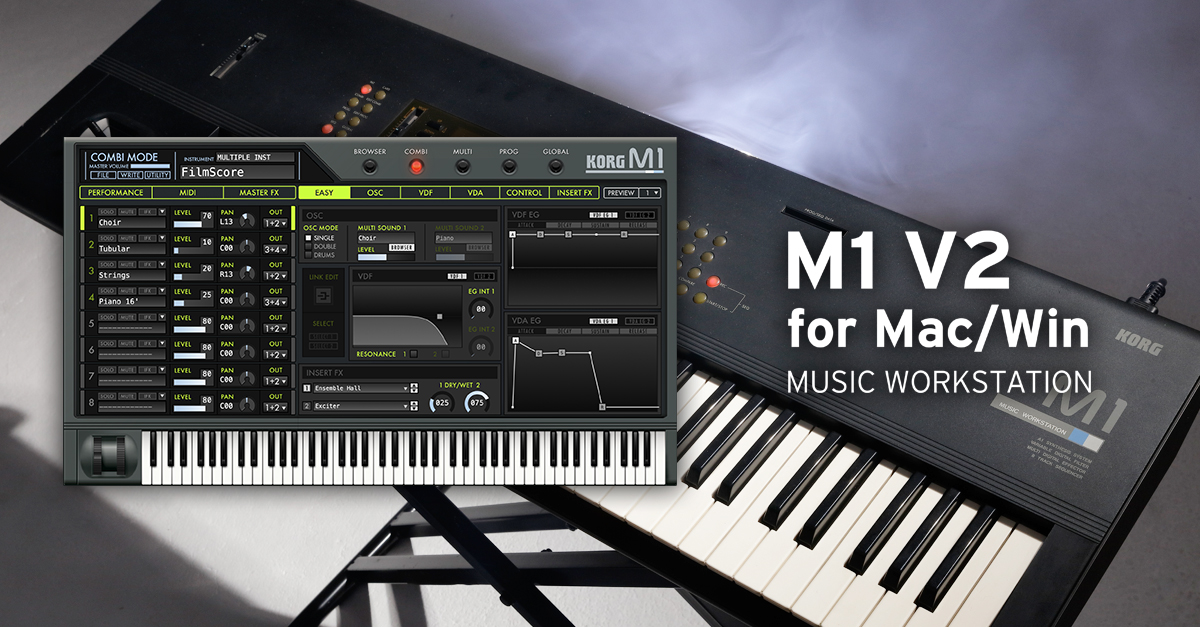
Korg Collection: M1 (Software Plug-in)
- Officially from Korg, this plug-in is a direct emulation of the original hardware, including all factory presets and expansion cards. It’s available as part of the Korg Collection suite.
- available to download here: Korg Collection – M1
Korg iM1 for iOS
- A mobile version of the M1 for iPad and iPhone, featuring an expanded sample library and touch-friendly interface. Great for coming up with retro ideas on the go.
- available to download here: Korg iM1 for iOS
ROMpler Plug-ins & Workstation VSTs
- Instruments like SampleTank (IK Multimedia) and Nexus 4 (reFX) include M1-inspired patches or sampled recreations of its most famous tones.
Summary
The Korg M1 wasn’t just another synth on the block. It helped to define the sound of a musical era, reconfiguring a sound that was highly synthetic to a much more realistic and textured sound. While the DX7 reshaped the early ’80s and the Triton and Roland Fantom defined the 2000s, it was the M1 that connected those two worlds. And for the first time, musicians could create convincing, radio-ready arrangements entirely within a single instrument. Something we take for granted these days with our modern laptops and DAW’s.
The Korg M1 gave us the sound of late-’80s pop, early-’90s dance, and so much of the music that still resonates in club and chart production today.
Perhaps the M1 doesn’t always get the same reverence as a Minimoog or Jupiter-8, but its impact was just as broad, not just on sound design, but on workflow, production, and accessibility. It helped to democratise music creation and left its sonic fingerprint across multiple generations.
In many ways, every modern workstation or soft synth owes a little something to the M1. It’s a machine that quietly, but indelibly, changed the sound of our lives.
And if you are looking for Beats or Samples for your next project then RouteNote Create has you covered. sign-up now and take your music to the next level