What is Future Bass Music?
Future Bass is one of the most vibrant and colourful new genres to come out of electronic music. As the name suggests, it’s driven by powerful basslines layered with bright synths, shimmering chords, and euphoric melodies. Blending elements of EDM, pop, and trap, Future Bass delivers an uplifting sound that always pops from your speakers. This is due to the highly evolved sonic balance and mix of the various musical and rhythmic elements.
In this guide, we’ll explore the origins of Future Bass, its musical characteristics, key elements, and some of the most notable artists and tracks that helped define the genre.
The Origins of Future Bass
Future Bass began to emerge in the early 2010s as a fresh offshoot of electronic dance music, blending influences from dubstep, trap, footwork, and bass music into a sound that was melodic, vibrant, and entirely new. Positioned within the lineage of bass-heavy electronic styles, it combined powerful low-end energy with bright, shimmering textures.
Despite its colourful and euphoric sound, Future Bass is widely recognised as having been pioneered in darkest Scotland. Scottish producers Rustie and Hudson Mohawke were among the first to develop the style in the early 2010s, creating tracks that inspired a wave of electronic producers, most notably Flume. His remix of Disclosure’s You & Me in 2013 is often cited as the track that brought the genre to a wider audience.
By around 2016, Future Bass had entered its breakout phase, crossing over into mainstream EDM and pop-electronic hybrids. Its futuristic yet melodic sound made it a popular choice for advertising, film, and TV, as well as dancefloor-ready tracks. By the 2020s, it had become a familiar and influential style, appearing in chart hits and mass media, with artists across electronic and pop music embracing its style.
Key Elements of Future Bass Music
Let’s break down the core ingredients of a future bass track.
1. Synth Design & Chords
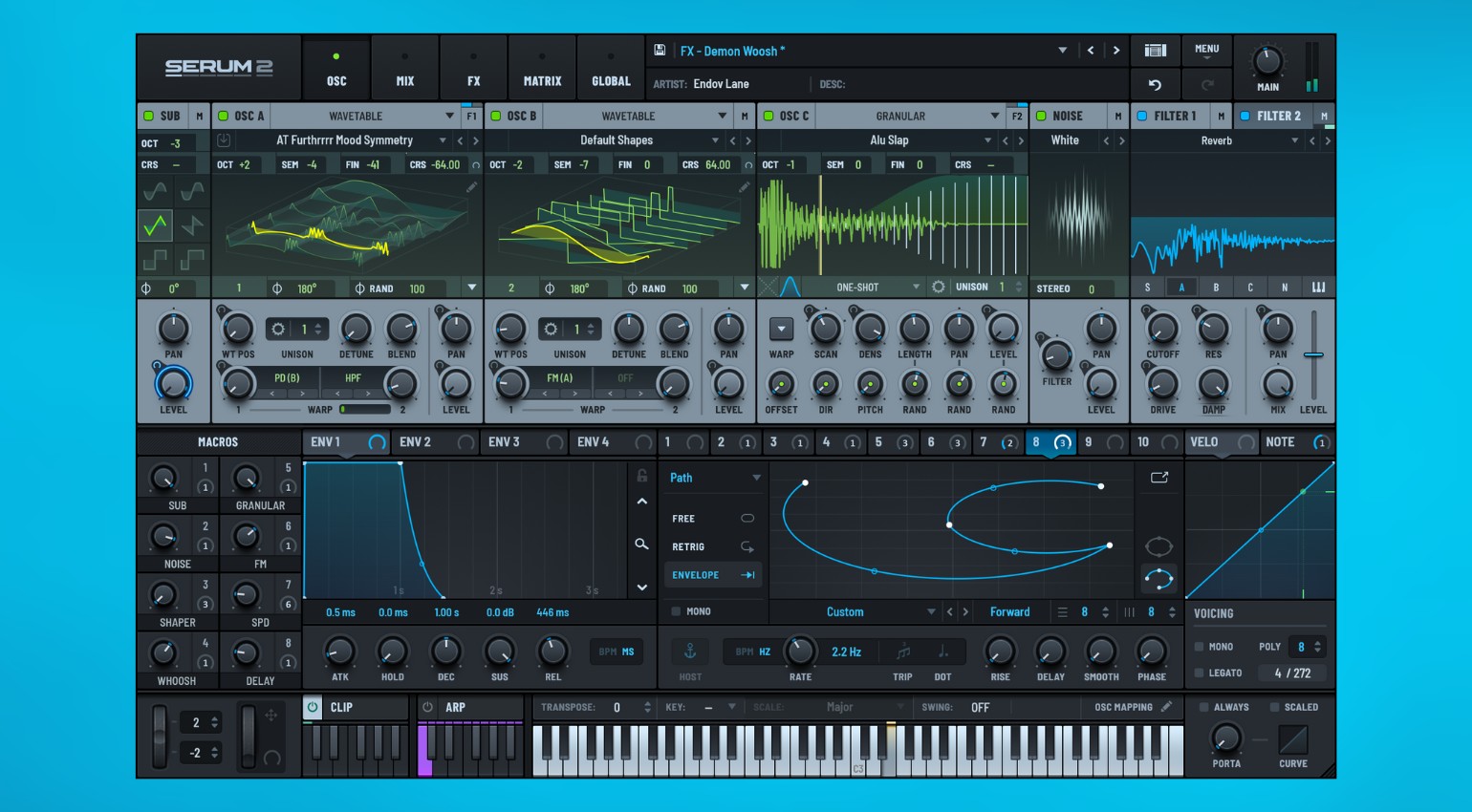
Future bass tracks often rely on rich chord progressions using detuned saw/square wave synths, layered supersaws, wide pads, and LFO-modulated filters. The modulation helps to give the synths a sense of movement and depth.
2. Bass & Sub-Bass
Although called “bass music”, the bass in future bass isn’t generally growling or featuring heavy wobble or distortion. Its job is to support the chord progression, sometimes using layered sub-bass beneath the melodic elements. Also, 808-derived sub-bass can feature, highlighting its link with trap music.
3. Vocal Chops & Melody
A distinctive element is the use of chopped-up vocal samples, pitch-shifted vocals, or melodic vocals as hooks. These help add emotion and differentiate it from purely instrumental bass music.
4. Rhythmic/Drum Patterns
The drum patterns bring in trap influences: hi-hat rolls, snare rolls, syncopation, and sometimes a half-time feel (snare on the third beat) for the drop sections. The drum sounds tend to be bright and full-frequency. The overall drum sound is punchy and dry. Drum sounds are often layered to give a fuller, more textured sound.
5. Tempo
Tempo-wise Future Bass is generally much slower than EDM and closer to Dub Step and Trap. Using a double time measure, tempos tend to fall in the 130BPM to 180BPM range.
5. Production Techniques / Drop Structure
Many future bass songs include build-ups (risers, filter sweeps), then a drop which is more melodic (chords + bass) rather than pure aggression. Automation, side-chaining, volume ducking, and filter movement are common techniques used to accentuate drops and add dynamism to Future Bass productions.
6. Emotional & Musical Dynamics
Unlike some heavier EDM subgenres whose primary aim is high energy and aggressiveness, future bass often uses contrast. Soft verses, emotional vocals, dramatic drops and lush atmospheres are all used to create impact.
Together, these elements give future bass its characteristic sound: sweeping melodies, emotive vocals, lush synth-work, trap/dubstep-inspired shuffling double-time rhythm, and rich bass foundation.
Notable Artists and Tracks
Artists
- Flume – Australian producer Flume is widely recognised as one of the genre’s most inspiring architects. His remix of Disclosure’s “You & Me” (2013) is often cited as a milestone.
- San Holo – Known to combine future bass with indie/electronic crossover, showcasing how the genre can effectively blend styles.
- Illenium – Known for his emotionally driven take on future bass production. Has had sucessfull crossover hits.
- Louis The Child, Mura Masa, Cashmere Cat – These artists are also important in spreading and evolving the style.

Tracks
- Never Be Like You by Flume feat. Kai – A strong example of a future bass vocal track demonstrating its crossover appeal.
- Good Things Fall Apart by Illenium & Jon Bellion – Demonstrates how future bass can combine with anthemic indie pop sounds.
- Light by San Holo – Shows production techniques typical of the genre: melodic modulated chords, emotional vocals, and clean drop.
Summary
Future Bass has firmly established itself as an important and unique branch of the modern EDM landscape. What began as underground experimentation and sound design has grown into a globally recognised genre that bridges the gap between the energy of dance music and the emotion of pop. Its shimmering synths, rich harmonies, and euphoric drops have not only shaped EDM, but elements of Future bass have inspired many producers across genres from pop and hip-hop to indie and K-pop.
And while today, Future Bass is not heard as much as during its heyday of the late 2010’s it’s still bubbling away under the surface. Today, artists are fusing it with elements of hyperpop, house, and lo-fi, creating exciting new styles and pushing the sound in unexpected directions. It’s Future Bass’s underlying principles of melodic and emotional soundscapes that really pop out of your speakers, that make it a relevant, useful, and creatively inspiring genre.
And if you are looking for Beats or Samples for your next project then RouteNote Create has you covered. sign-up now and take your music to the next level