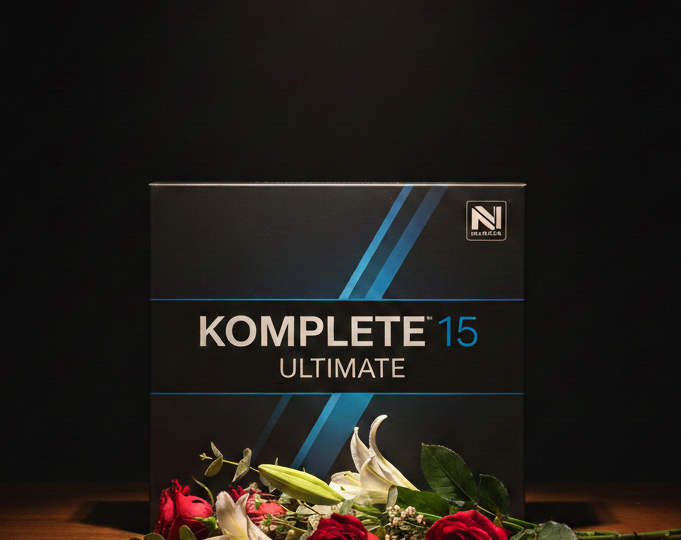
Celebrating the legacy of Native Instruments
With the future of Native Instruments seemingly in the balance, we thought it would be the perfect moment to celebrate the enormous influence this company has had on modern music production. As the saying goes, give people their flowers while they’re still alive and kicking* (preferably powered by a nice phat Battery kick). So let’s get floral and consider the significant influence Native Instruments has had on modern music and the technology that powers it.
A brief history
Native Instruments was founded in Berlin way back in 1996 by Stephan Schmitt. It was initially set up as a passion-driven project focused on software synthesis and digital sound experimentation. At this time, music production was still largely created using hardware in a studio setup. Realising that computer-based music production was the future, Native Instruments established a clear mission: to democratise music creation through powerful, accessible software tools.

What began as a small team of developers and musicians quickly grew into one of the most influential music technology companies in the world. Products like Generator (which later became Reaktor) demonstrated the power of software to compete with conventional synthesizers. They were also forward-thinking when it came to sampling technology, realising that with enough manipulation, almost any instrument could be realistically modelled. Enter the industry-standard Kontakt sample engine.
Over the years, NI constantly evolved and expanded, going beyond virtual instruments and sampling into effects, DJ software, and eventually hardware. This holistic approach helped to build a tightly integrated ecosystem that many producers and performers still rely heavily on.
Reflecting on that vision, CEO Constantin Köhncke once said that Native Instruments’ goal was to “empower creators at every stage of their musical journey.” That ethos of “creativity first, tools second” is woven deeply into the company’s DNA.
The influence of Native Instruments.
It’s hard to overstate just how much Native Instruments has shaped modern music production. They were pioneers in treating software instruments not as a compromise, but as creative powerhouses with almost limitless potential. Long before “in the box” production became the norm, NI proved that a laptop could be a studio, a stage, and a sound design laboratory.
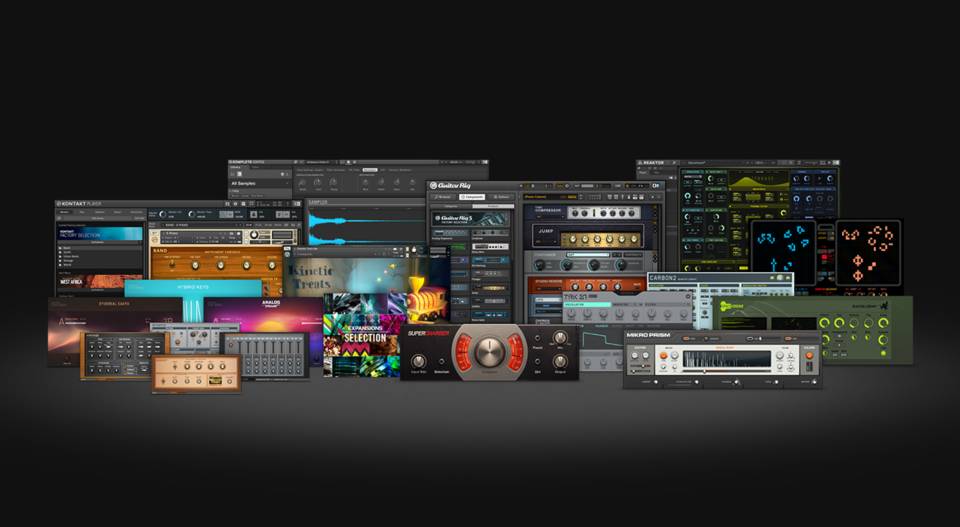
One of their game-changing moves was to offer a complete (with a K), unified suite of instruments and effects. Enter Native Instruments Komplete. This approach helped standardise workflows, affording aspiring producers everything that a top recording studio would once offer in a one-stop, one-time purchase. This clever concept helped lower the barrier to entry for aspiring producers, as well as proving highly lucrative for the company.
While still fundamentally committed to software solutions, they also realised the need for tight hardware integration. Modelled after the classic Akai MPC workflow, they launched Maschine in 2009, further blurring the lines between software flexibility and hardware immediacy.
And while Native Instruments’ influence is often invisible, it is undeniably foundational. From underground electronic scenes such as DubStep to chart-topping pop, film scoring, and experimental sound art, Native Instruments tools are evident everywhere.
Game changing Native Instrument products
Over the years, Native Instruments has released numerous products that exceeded expectations and became industry standards. Here are 5 NI products that well and truly changed the game and rewrote how we approach modern music technology.
Kontakt

NI’s flagship product, Kontakt is arguably the most important sampler ever created. It is certainly the most powerful and flexible. More than just a playback engine, it became the backbone of an entire ecosystem of third-party instruments, due to it’s flexibility, scripting power, and sonic quality. From orchestral libraries and cinematic sound design to niche experimental tools, Kontakt has become the industry-standard sample engine that the vast majority of sample instruments are now powered.
Massive Synth
First launched back in 2007, Massive defined the sound of a generation. Its aggressive wavetable synthesis and unmistakable character helped shape and define genres such as dubstep, EDM, and modern bass music. With it’s combination of outrageously heavy presets and limitless tweakability, It heavily influenced how electronic music sounded throughout the late 2000s and 2010s. Discovering the full potential of Massive would become a rite of passage for electronic-based producers worldwide.
Maschine

Maschine was revolutionary in the way it reimagined groove-based production. Its intuitive workflow fused software depth with the hands-on control of hardware. Neither fully DAW nor traditional drum machine, it successfully established its own lane. At the time of its launch (2009), its only other competition was the Akai MPC range of samplers, which had no real software integration. Observing the enduring success of the MPCs, Maschine was perfectly designed to appeal to beatmakers with its pad-based interface. It offered a fast, tactile workflow while remaining deeply integrated with the broader NI ecosystem. It also helped bridge the gap between producers and performers.
Komplete
Komplete is the embodiment of Native Instruments’ “all-in-one” philosophy. By bundling instruments, effects, and sound libraries into a cohesive all-in-one package, Komplete offered incredible value and creative breadth. Like a Swiss Army knife of music production, for many producers, buying Komplete was a defining moment. Almost overnight, a vast sonic universe opened up at their fingertips. On a personal note, that was certainly my experience when I splashed out and purchased the full Komplete 10 suite (when it was on a half price deal obviously)
Traktor

It’s safe to say that Traktor revolutionised digital DJing. At a time when vinyl and CDs still dominated the scene, Traktor pushed forward digital workflows with precision beatgridding, effects, and eventually controller integration. First launched in 2000, it was primarily a standalone digital DJ software designed for mixing and playing digital audio files on a computer, using just the mouse, keyboard, or early MIDI controllers. A few years later, they developed and integrated a digital vinyl system (DVS) that used time-coded discs. This major development changed the DJing game forever, with rival company Serato releasing its DVS system shortly after.
Reaktor
Reaktor is at the heart of Native Instruments’ and is where its experimental ethos lies. It is born out of Native Instruments first ever product; Generator, and is a modular environment for building instruments, effects, and generative systems. Reaktor empowers users to actually become the sound developer themselves. It’s popularity helped to spawn a vibrant community and influenced countless hardware and software designers across the industry.
Conclusion
Today, Native Instruments faces real challenges. The music technology landscape is faster, noisier, and more competitive than ever, with AI-driven tools, shifting our expectations, and economic pressures constantly reshaping the industry. Navigating this space while staying true to a creative-first philosophy is therefore no small task.
Hopefully, this moment proves to be a temporary hitch rather than a final chapter. But as we consider it’s future, it’s worth remembering just how much Native Instruments has already given us. They don’t just sell software, they have changed how music is made.
So here’s to Native Instruments. Thank you for the tools, the sounds, the late nights, the breakthroughs, and the inspiration. Whatever comes next, your legacy is already written into the music of millions, despite most people being oblivious to this fact.
And if you are looking for Beats or Samples for your next project then RouteNote Create has you covered. sign-up now and take your music to the next level