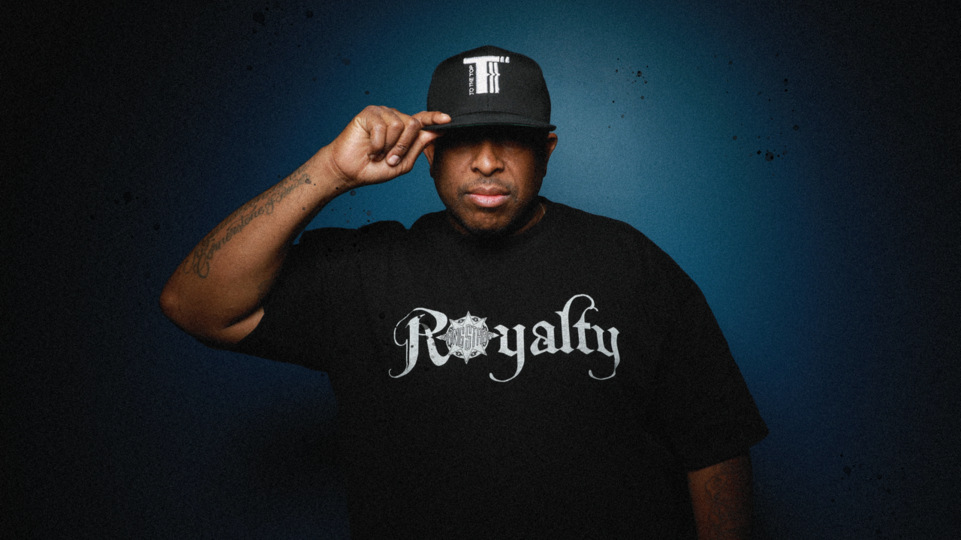
Producer Profile: DJ Premier
Few figures have shaped the boom bap style of hip-hop as profoundly as DJ Premier. From his early start in the late 80’s as Gang Starr’s replacement DJ to becoming the genre’s gold standard, Premier or Preemo as he is affectionately referred to, has remained steadfast in his devotion to raw, sample-based production. It’s therefore only fitting that he gets the full producer profile treatment.
A Brief History
Though Premier is often seen as the quintessential New York artist, he actually grew up in Houston, Texas. Both of his parents were educators. His mother an art teacher and his father a science teacher. Some would say, the perfect foundation for premier’s scientific beat artistry. His fascination with records and music led him to work in a local record store as a teenager before he eventually relocated to the mecca of hip-hop New York. There, whilst located in Brooklyn, he teamed up with Guru, becoming the DJ for the newly formed hip-hop group Gang Starr.
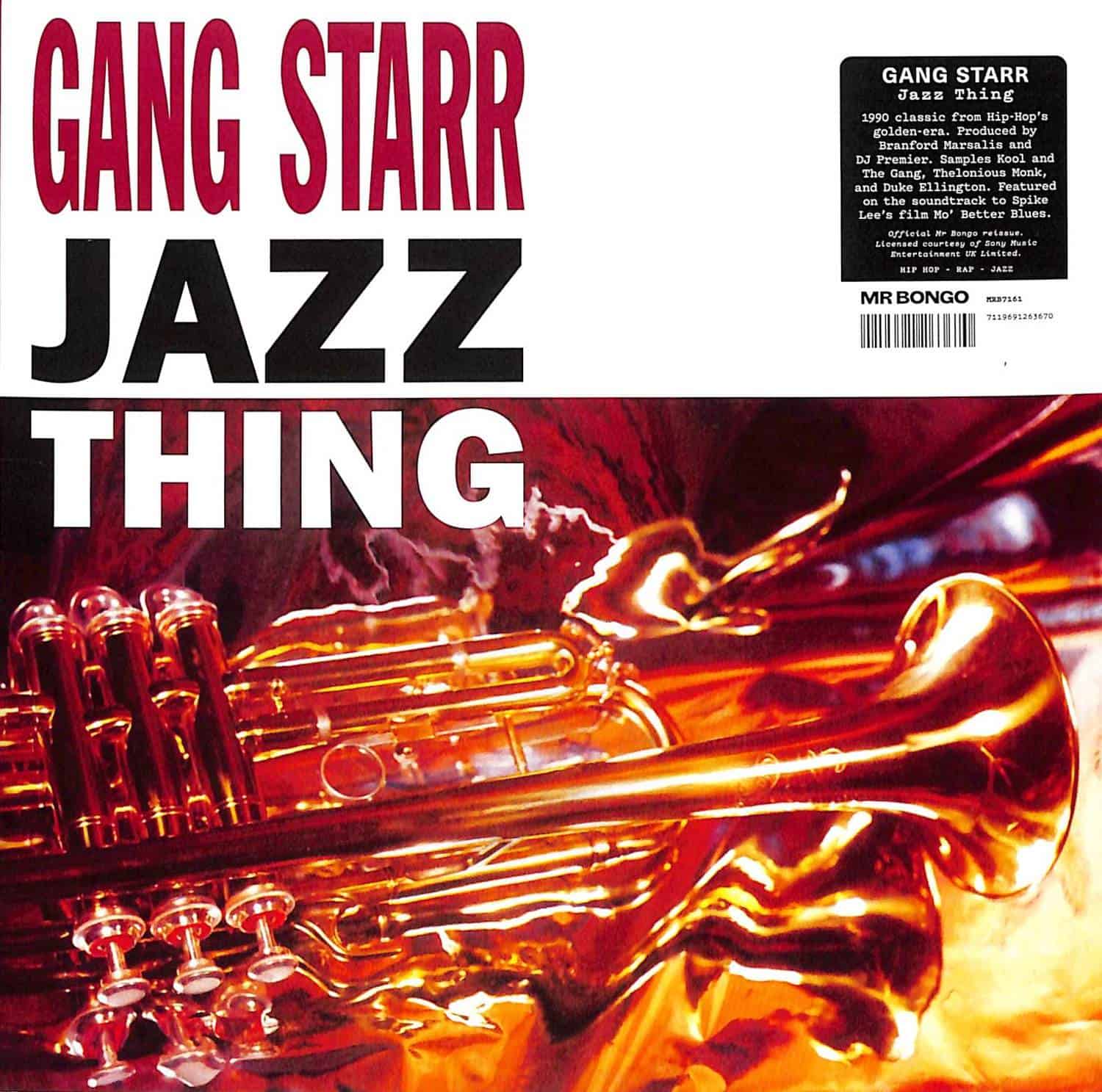
While Premier would remain fully committed to Gang Starr until Guru’s untimely passing in 2010, it wasn’t until their second album, Step in the Arena, that he officially stepped into the role of producer. Armed with his trademark Akai MPC 60 sampler, Premier honed a sound that became instantly recognisable: gritty, sample-driven beats enriched by his encyclopedic knowledge and love of music. Drawing from jazz, soul, and obscure deep cuts, he pioneered sampling choices that other producers had yet to explore. In particular, Premiers’ early work would famously mine the rich untapped territory of jazz. This is exemplified by the classic Gang Starr track A Jazz Thing, featured on the Mo’ Better Blues soundtrack.
Between Gang Starr projects, Premier began establishing himself as a sought-after producer for hire. By the mid to late 1990s, he was the go-to producer for artists looking to infuse their work with an authentic, raw underground sound. Legendary collaborations include Rakim, The Notorious B.I.G, KRS-One and Nas to name just a few.
In 2003, he purchased his favourite recording space, D&D Studios, which became both his creative headquarters and a hub of New York hip-hop culture until he was forced to relocate in 2014.
Although the late ’90s and early 2000s marked his most prolific period, Premier has continued to expand his catalogue, collaborating with an eclectic range of artists—from Christina Aguilera to Liam Gallagher of Oasis—while never compromising his signature sound: dusty records, hard drums, and those unmistakable scratched choruses.
It’s this enduring influence that earned Vibe Magazine’s recognition of DJ Premier as the third most important hip-hop producer of all time, trailing only Dr. Dre (1st) and J Dilla (2nd).
Signature Production Style
DJ Premier arguably has one of the most distinctive signature sounds in hip-hop, so much so that it has helped define the boom bap era almost single-handedly. At its core, Preemo’s production blends hard-hitting, often straightforward programmed drums with melodic sample elements, which are frequently,but not always, chopped. These beats are often enhanced with complementary programmed basslines and trademark effects, from spacey bleeps to textured atmospheric pads. And, of course, they are topped with his iconic, instantly recognisable scratched hooks, crafted from a collage of carefully chosen rap and speech samples. So let’s take a deeper look at the various techniques that have influenced the classic Preemo sound.
At the foundation of every DJ Premier beat are the drums. While his early work experimented with looping and layering drum breaks, by the time Gang Starr released their most successful album, Moment of Truth, Premier had developed a drum style entirely his own. On the surface, his classic drum patterns may appear simple, tight, trimmed one-shot kicks, hats, and snares, but the subtle swing in his programming creates an irresistible head-nodding effect that’s extremely hard to replicate. Trust me, as a producer, I’ve tried!
Premier has been famously guarded about his production methods, though he has shared details about his equipment. During his iconic period (roughly 1998–2003), he documented using an Akai MPC 60 as a sequencer to trigger samples from an Akai S950. This 12-bit setup helps create drums that really knock. While he certainly has his go-to drum sounds, it’s unclear whether he is recycling the same drums on multiple tracks or merely has a way of trimming and processing a wider array of drum sources. One thing is for sure, all his drums will have been culled from dusty old drum breaks.

Melodically Premier’s taste in samples is the stuff of legend. Even though he will sample from the widest range of vinyl sources, ranging from strange electronic albums to obscure prog rock offerings, his musical samples all seem to have THAT distinct Preemo sound. His samples often veer towards deep emotional tones with epic, dramatic characteristics. Think the beat to Nas’s “Nas is like” which samples a religious record detailing the birth of Christ called “What child is this?”
The wizardry doesn’t stop with sample selection. One of the most defining elements of Preemo’s sound is his unique approach to chopping samples. He isolates key phrases and reconfigures them rhythmically to complement the drums, often creating gaps and spaces that are as important as the samples themselves. This technique has led to remarkable transformations of source material. These chopped samples are sometimes unrecognisable. On Gang Starr’s Work, for example, Premier turns some light stabs and piano riffs from the soul ballad “Devil in the Dark” by The Manhattans into a hard-bodied underground classic.
Once the basic sequence is in place, Premier often layers additional elements and effects. From Star trek bleeps to Tropical Bird song, nothing is off limits when it comes to adding novel FX elements and these techniques have become another one of his trademark production tricks.
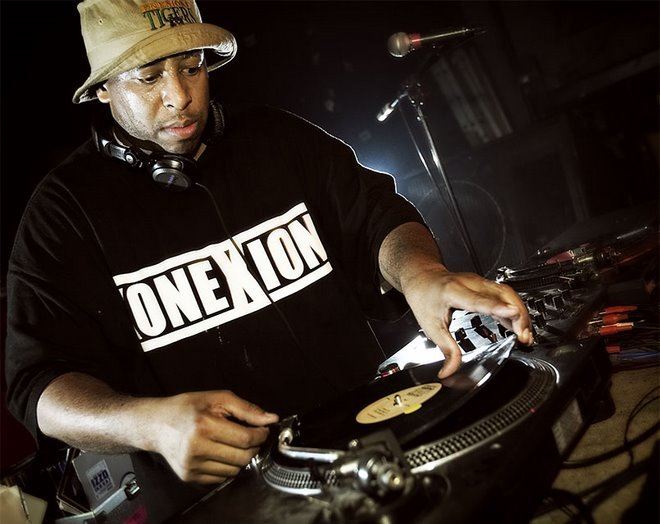
If there is ever doubt that a beat is a DJ Premier production, his signature scratching style immediately confirms it. Leveraging his encyclopedic knowledge of hip-hop vocal samples, he constructs intricate collages of interlinking scratches. While vocal scratching is not new, Premier has elevated it to an art form, integrating it seamlessly into his beats.
Another key aspect of his signature sound is the relative simplicity of his arrangements. Despite complex sampling and layering techniques, his beats typically adhere to clear, concise structures, often built around two or four-bar sequences. Each edit and arrangement choice is deliberate, giving his music maximum impact. One area that Preemo relishes is the humble intro. Premier frequently uses a contrasting sample or spoken-word segments to accentuate the beat drop.
All these elements combine to create a signature sound that is uniquely Premier. It is the result of decades deeply immersed in hip-hop culture, combined with a wide spectrum of musical influences. He has cultivated a sound that is both instantly recognisable yet nearly impossible to replicate.
Equipment List
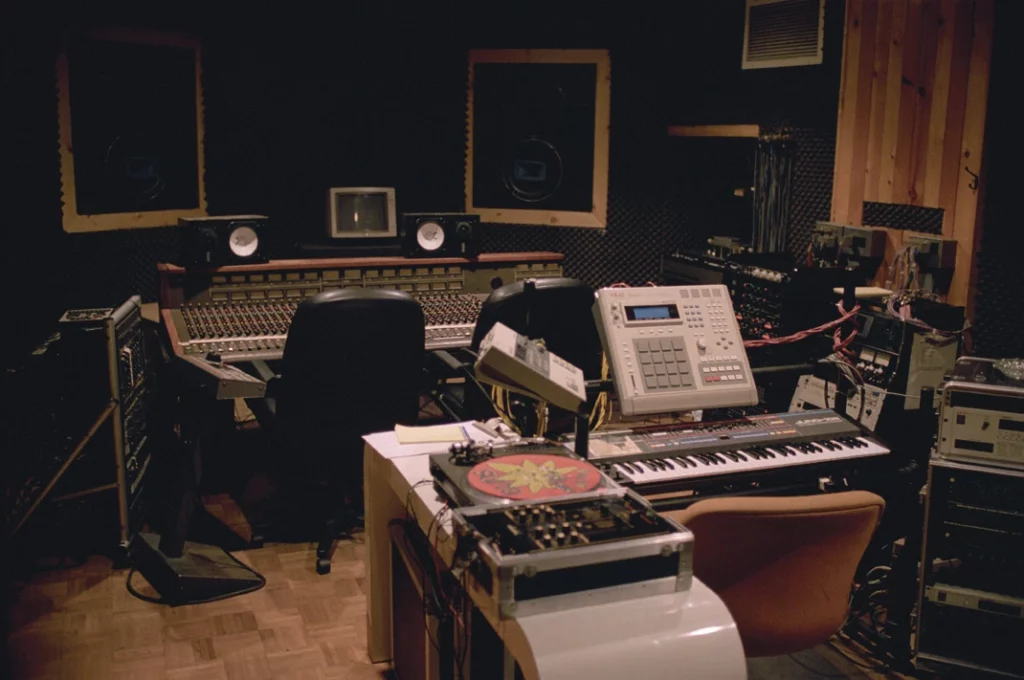
DAWs (Digital Audio Workstation)
- Pro Tools: While DJ Premier has recently made the move over to the MPC Renacience, he mainly produces outside the box using Pro Tools for recording and mixing purposes.
Drum Machines & Samplers
- Akai MPC 60II: This is Preemo’s main composing and sequencing device although it is unknown exactly how much sampling was done using it.
- Akai S950: For much of his career, this 12 bit machine would be used for all of DJ Premiers sampling
- E-Mu SP1200: This sampler was used at the beginning of Premiers carreer and he moved over to the Akai combo during the Gang Starr “Hard to Earn” LP
Keyboards & Synths
- E-mu Planet Phatt Sound Module: While its unclear how much this unit was used, it was certainly seen sitting above his S950 in various studio shots
- Korg Trident: This synth is listed as one favoured by Premier in a recent interview.
- Roland Juno 106: Seen in many promineant D&D Studio photos (see above)
Mixing & Outboard Gear
- Digidesign Pro Tools Control 24 desk: This digital desk that integrates with Pro Tools has been a favourite of Premier.
- Yamaha NS-10 monitors: Preemo has trained his ear to these classic monitors insisting that if it sounds good on these, it will sound good on any system
- Eventide H3000 Ultra Harmonizer: This multi FX unit has been mentioned in a number of interviews and spotted in studio shots.
Musical Legacy
DJ Premier’s legacy as one of the pioneers and ambassadors of the hip-hop sound known as boom bap is assured. He was even responsible for the lion’s share of production on KRS-One’s Return of the Boom Bap LP, which is thought to be the first use of the term. Along with J Dilla, he stands as one of the most imitated producers in hip-hop history. His formula of tight, programmed drums paired with melodic, chopped samples has become the blueprint for the genre.
His influence extends far beyond bedroom producers. Many of your favourite beatmakers cite Preemo as a direct inspiration. Names like The Alchemist, 9th Wonder, Just Blaze, and Statik Selektah all carry traces of his sound in their work. Since the late ’90s, Premier has been the gold standard of authenticity, producing and remixing not only hip-hop royalty but also R&B and pop acts, without ever diluting his style.
Part of his enduring relevance comes from his uncompromising devotion to the craft. Premier still works with the same core formula, helping keep boom bap both alive and respected. He pioneered techniques that are now staples of the culture. His rhythmic, gap-filled chopping style, his use of unusual sampled textures and effects, and his subtle 51–54% swing that gives his drums their irresistible, human feel. Then there’s his iconic scratched vocal choruses, built from collages of rap quotes. This style of hook has become standard practice within underground hip-hop.

And, of course, there’s the music itself. For more than three decades, his back catalogue has been a guaranteed fixture at hip-hop nights worldwide. Gang Starr remain one of the most celebrated and consistent groups in hip-hop. And then there are his countless productions and remixes. If you were an artist in the late 90’s and early 00’s it was almost obligatory to have at least one Preemo beat on your album. It was a ticket to instant street credibility and guaranteed attention from radio and club DJs alike.
When we talk about legacy, DJ Premier represents the very essence of the underground authentic boom bap sound and it is impossible to separate one from the other.
Top 5 Productions
- Nas – “N.Y. State of Mind” (1994)
- KRS-One – “MC’s Act Like They Don’t Know” (1995)
- The Notorious BIG – Kick in the Door (1997)
- D’Angelo – “Devils Pie” (1998)
- Common – “The 6th Sense” (2000)
And if you are looking for Beats or Samples for your next project then RouteNote Create has you covered. sign-up now and take your music to the next level