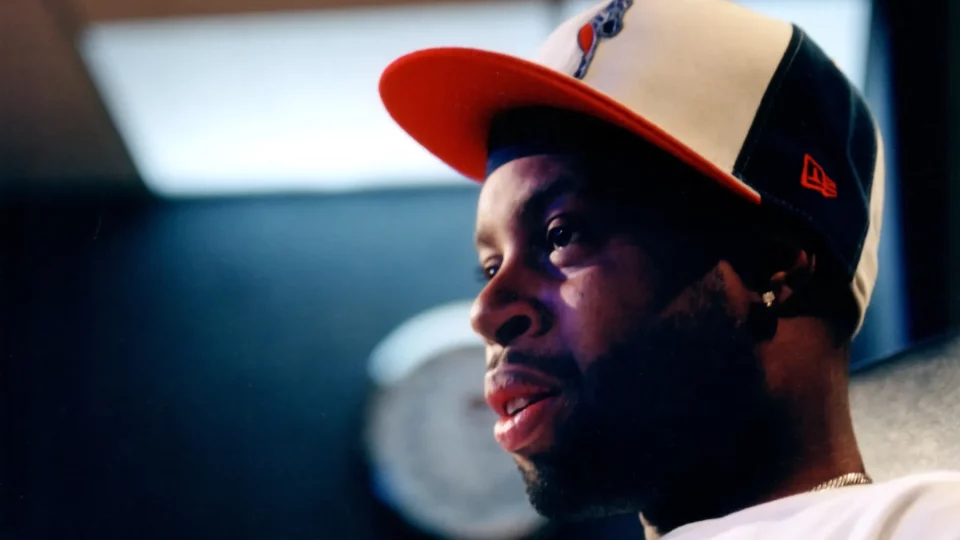
Producer Profile: J Dilla
When it comes to shaping the sound and direction of sample-based hip-hop, few producers can match the man we’re profiling in this latest instalment. In his tragically short career, the late, great J Dilla flipped convention on its head, injecting a loose, human swagger into hip hop’s previously rather rigid beat formulas. In doing so, he achieved something that only a handful of producers ever have: true cult-like status.
A Brief History
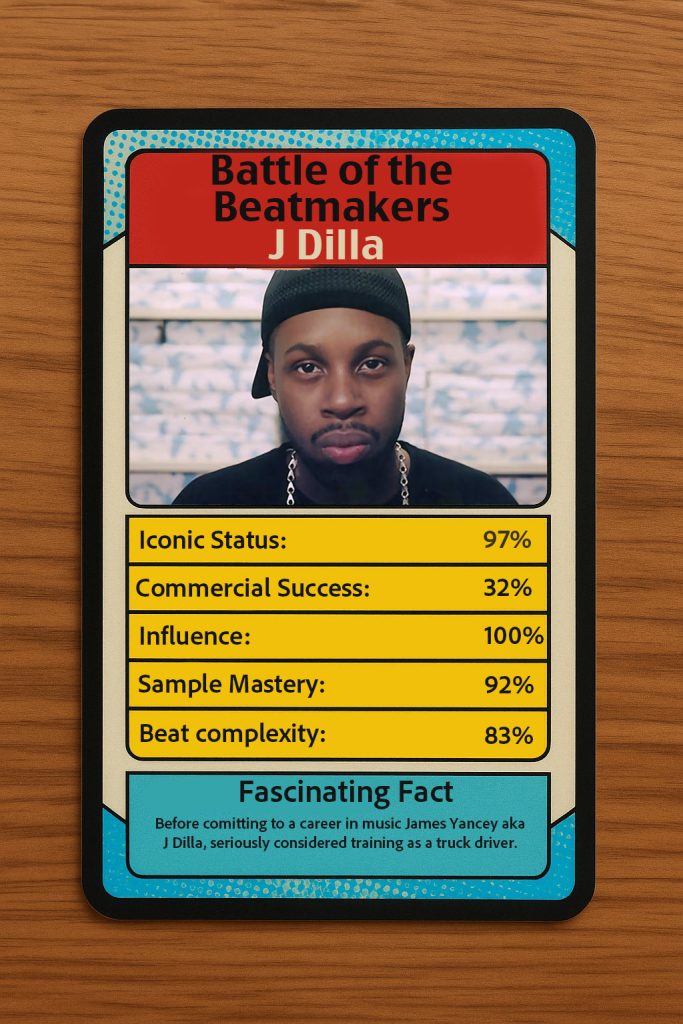
James Dewitt Yancey, better known to the world as J Dilla (or Jay Dee), was born in Detroit in 1974. He grew up in a musically rich household. His mother was an opera singer, and his father a jazz bassist, so music was already imprinted in Dilla’s DNA. By his teenage years, he was already experimenting with tape decks and turntables, chopping together loops and displaying a natural love and instinct for beats.
In the mid-1990s, Dilla formed the group Slum Village with friends T3 and Baatin. By now his production skills were fully honed, drawing clear inspiration from East Coast legends like Pete Rock and DJ Premier. At the same time, he brought his own distinct flavour that set him apart from his influences.
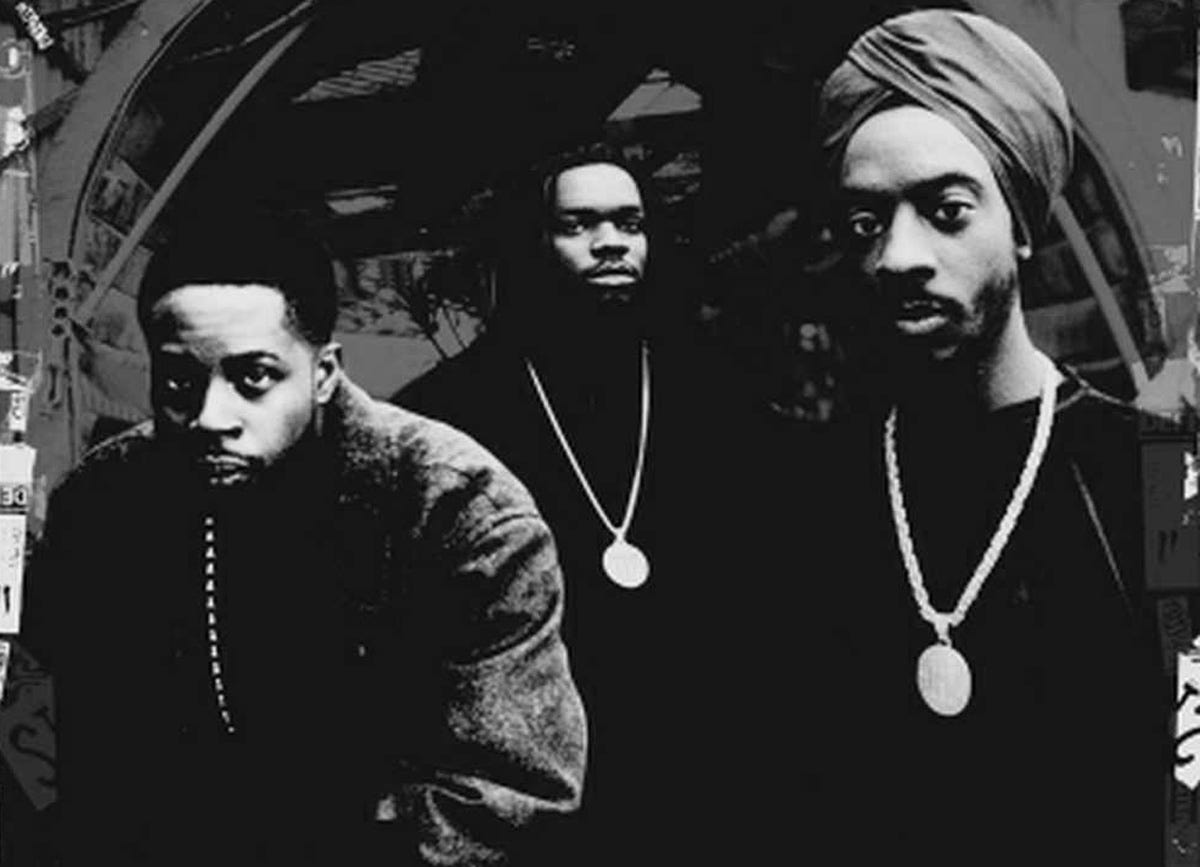
Slum Village created a local buzz that eventually reached the ears of Q-Tip from A Tribe Called Quest. This connection would change everything. Q-Tip was blown away by Dilla’s unique production and took him under his wing, becoming a mentor. This would lead to placements for popular artists such as The Pharcyde, De La Soul, and, naturally, Tribe. These productions cemented Dilla as a rising star in the world of underground hip-hop with fans drawn towards his soulful and emotive production, which was unlike anything else at the time.
By the late 1990s and early 2000s, J Dilla’s reputation was spreading fast. He became a member of the Soulquarians, a collective including Questlove, Common, Erykah Badu, and D’Angelo. This collective would help push the boundaries of neo-soul and hip-hop, soulfully blending sample-based production with live instrumentation.. In 2001, he released the album Welcome to Detroit, a mix of vocal and instrumental tracks that helped establish Dilla as a solo artist in his own right. It showcased his full genius, blending dusty samples with live instrumentation and his trademark futuristic swing.
Tragically, Dilla’s life was cut short in 2006 at the age of 32 after a battle with lupus and a rare blood disease. Just days before his passing, he released Donuts—an instrumental masterpiece that has become a cornerstone of hip-hop culture and a fitting farewell from one of music’s most innovative and forward-thinking minds.
Signature Production Style
Arguably, Dilla had one of the most distinctive production styles in hip-hop. This is largely attributed to his highly distinctive loose rhythmic timing, which some have dubbed drunk timing. Unlike many producers at the time who relied on quantisation to keep their drums locked to the grid, Dilla deliberately played and swung his beats slightly off-time. His kicks, snares, and hi-hats often sat just ahead or behind the beat, creating a more organic live feel. In fact, some of his timings were so unorthodox that they defied the excepted rhythmic conventions. An example of this was when legendary drummer Questlove was leaving a show in Detroit. As he was driving off he could hear the faint trace of a Dilla beat coming from the venue. Questlove was confused by what he heard and is quoted as saying, “it sounded as though a baby was drumming” He therefore turned back to investigate. That is when he first discovered J Dilla.
As well as his unique “Dilla timing” he was also recognised as a master sampler. He didn’t just loop the obvious soul, funk and jazz records. Dilla would plunder a weird and wonderful smorgasbord of old music. For example, He was often drawn to progressive rock and folk-tinged samples.

The main thing that inspired his sample choice was feel. His musical ear was extremely well-tuned and he could identify elements or parts of a record to sample that most producers would overlook. The samples he selected were often deep and emotive, often using vocal passages or choirs to further add a relatable human touch. Later in his career, he also embraced more experimental electronic samples, giving his beats a futuristic and spacey feel.
Another signature element was his willingness to add additional live instrumentation. For example, his basslines were legendary. Often played on his beloved Minimoog, Dilla’s bass was always warm and round. The placement of his bass notes was as considered as his drum hits, with both working together in perfect harmony. As well as playing bass and keys himself, through his Soulquarians affiliation, he got to work with some of the grooviest musicians around, including bass player Pino Palladino and keyboardist James Poyser.
Overall the main characteristic of Dilla’s beats was emotion. Not just your traditional head-nodders, Dillas beats could make you feel deep emotions such as joy, sadness or nostalgia. The live feel of his music had a humanity that’s hard to replicate, which is why producers still study and are inspired by his work today.
Equipment List
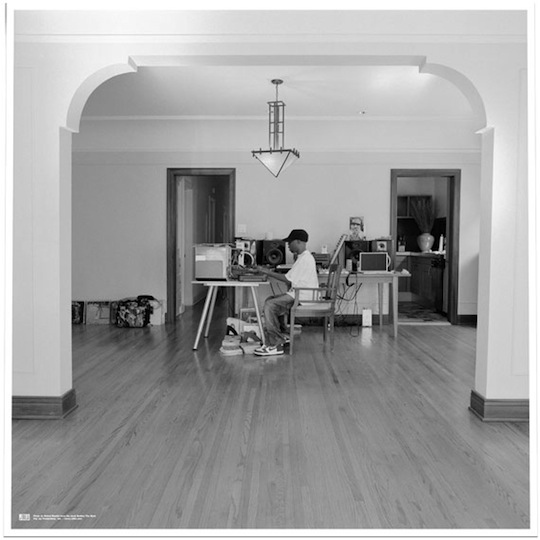
Dilla seemed to have done most of his pre-production in his small home setup, for which very little is known about. The only confirmed Images of his set-up show him sitting at a small table at his Hollywood home with his MPC, some records and a set of monitors.
DAWs (Digital Audio Workstations)
- Pro Tools: While primarily a hardware-based producer, Dilla recorded into Pro Tools for arranging and mixing.
Drum Machines & Samplers
- E-mu SP-1200: Dilla started off, learning the fundamentals of beat-making on an SP-1200.
- Akai MPC 3000: This is the machine Dilla is famous for using. Most of his classics were built on this with its sophisticated sequencer allowing for his trademark rhythmic experimentation.
Keyboards & Synths
- Moog Minimoog Voyager: A custom-built unit gifted to him by Bob Moog himself. Dilla used it to craft his unmistakable basslines.
- Korg MicroKorg: A compact synth he used later in his career for pads and textures.
Mixing & Outboard Gear
- Soundtracs Topaz Project 8 32-Channel: It’s unclear whether this was Dilla’s home studio desk but pictures show Dilla with this console. Other than this, not much is known about the recording gear Dilla used. He would have used various studios, including Electric Ladyland Studio in NYC.

Musical Legacy
J Dilla’s impact on music is almost impossible to overstate. He changed both the rhythmic conventions of programmed hip-hop and RnB music as well as the way beats emotionally connected to your mind, body and soul.
His influence on rhythm alone reshaped hip-hop. The “Dilla Swing” became a blueprint for countless producers, inspiring everyone from Kanye West and Pharrell to Flying Lotus and Madlib. Today, the off-grid, humanised rhythmic feel is present in so much music. Chances are if a hip-hop or RnB beat isn’t in an 808 trap style, it will have traces of Dilla in its rhythmic make-up.
It is even widely accepted that J Dilla is probably the predominant influence of lofi music. Combining jazzy laid-back melodies over loose downtempo programmed drums, his influence can be heard in a lot of lofi. Don’t believe me? Well, check out the Dilla beat below that predates lofi by many years.
As a pivotal member of The Soulquarians, he was also instrumental in the development of the neo-soul sound and movement. His work with Common (Like Water for Chocolate), Erykah Badu (Mama’s Gun), and most notably D’Angelo (Voodoo) took Dilla’s musical sensibilities and combined them with live instrumentation to help define a new sound and groove.
Dilla’s posthumous influence is just as strong. Albums like Donuts and The Shining continue to inspire new waves of producers. His influence is deemed so significant that his MPC3000 and Minimoog now live in the Smithsonian’s National Museum of African American History and Culture, immortalising him as not just a beatmaker, but a cultural icon.
And his music seems to transcend all generations. Ask a youngster just getting into sample-based hip hop production to name one of their favourite producers, chances are Dilla will be high on that list.
Top 5 Productions
- The Pharcyde – Runnin’ (1995)
- De La Soul – Stakes Is High (1996)
- Slum Village – Fall In Love (1997)
- Common – Doinit (2000)
- J Dilla feat Pharoahe Monch – Love (2006)
And if you are looking for Beats or Samples for your next project then RouteNote Create has you covered. sign-up now and take your music to the next level