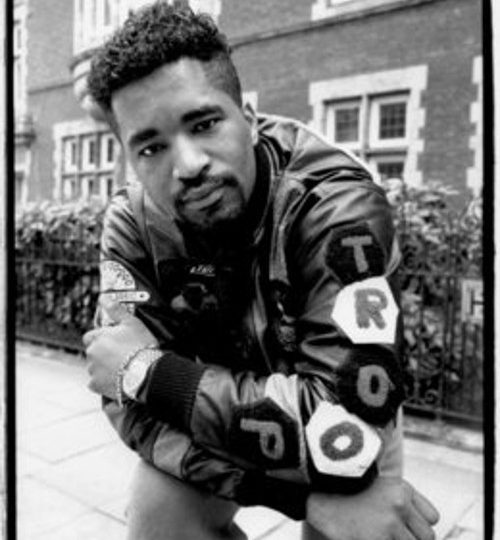
Producer Profile: Marley Marl
For this instalment of our producer profile series, we take it back in time to the golden era of hip-hop and a true pioneer of the art form. When it comes to influential figures in the world of hip-hop, few can match this producer. He helped put sampling on the map in the mid to late 80’s, creating some timeless hip-hop classics along the way. Enter the legend that is…the man Marley Marl.
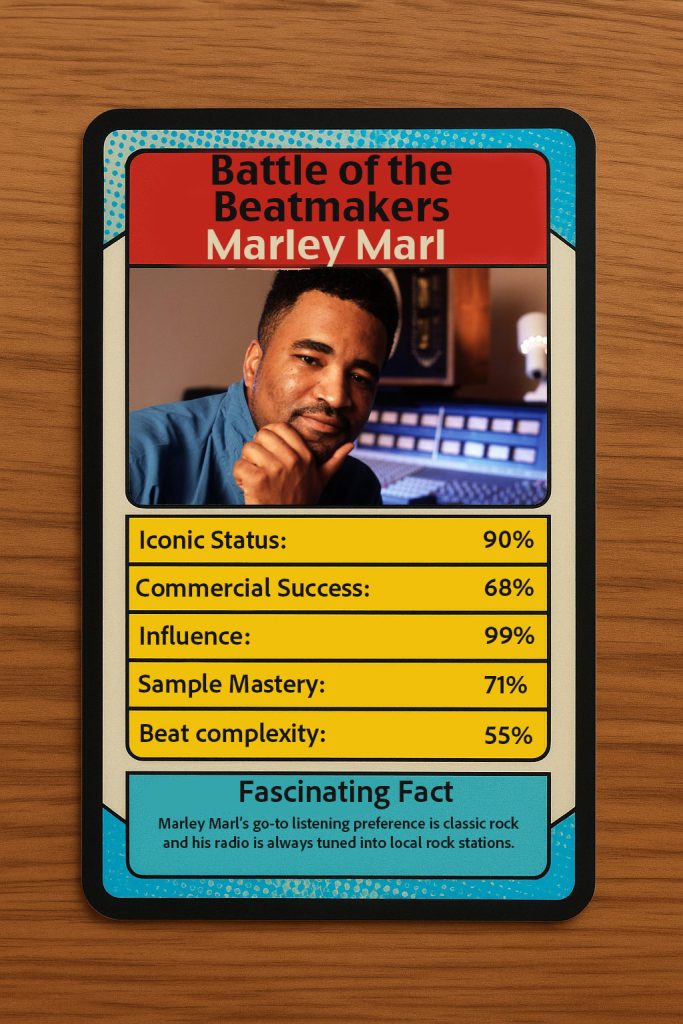
A Brief History
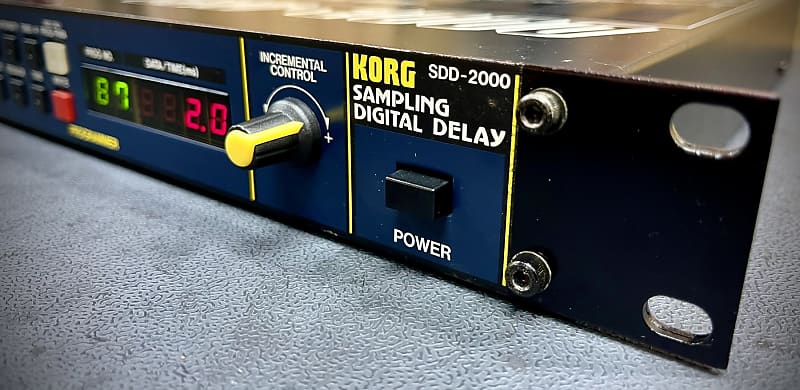
Marley Marl, born Marlon Williams in Queens, New York, in 1962, grew up immersed in the sounds of funk, soul, and disco that dominated his neighbourhood. As a teenager, he became fascinated with DJ culture and the emerging hip-hop movement taking shape in the Bronx. Working as an intern at NY’s Unique Recording Studios, Marley stumbled upon a groundbreaking discovery, sampling, when he was exposed to the very expensive Fairlight CMI sampler. His early sampling experiments would involve a much more improvised approach in his famous home studio. He managed to trigger a delay unit that featured an early sampling function from a TR 808 drum machine. This meant he could sample individual drum hits from old drum breaks and create completely new drum patterns using these sampled drums. This innovative approach would lay the foundation for a whole new approach to beatmaking.
By the mid-1980s, Marley Marl had become the architect of what would be known as the “Golden Era” of hip-hop. Along with DJ Mr Magic, he formed the Juice Crew, a collective of MCs including Big Daddy Kane, Kool G Rap, Roxanne Shanté, MC Shan, and Masta Ace. Through his innovative use of sampling and drum programming, he gave MC’s the perfect combination of raw yet polished backdrops. It was these sample-heavy productions that would shape the sound of East Coast hip-hop.
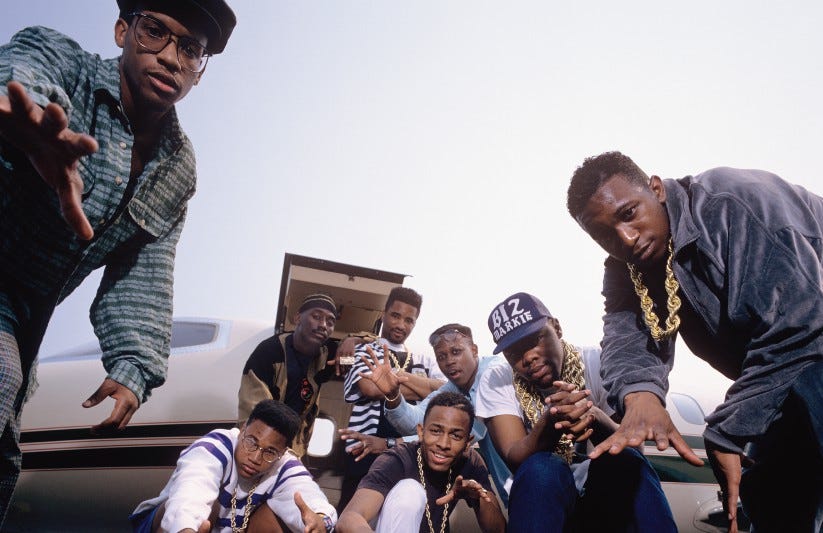
By the late ’80s and early ’90s, Marley Marl’s influence was undeniable. He had created the template for modern hip-hop production, inspiring a generation of producers including Pete Rock, DJ Premier, Madlib and RZA, all of whom carried forward his techniques. His 1988 album In Control, Volume 1 further showcased his range and vision as a producer, solidifying his status as a pioneer.
Though a new wave of producers would emerge in the 90’s and following decades, Marley Marl’s impact has remained constant. His innovations in sampling and drum programming forever changed how hip-hop was made, laying the groundwork for countless producers who came after him. To this day, he is widely recognised and respected as one of the architects of modern hip-hop production.
Signature Production Style
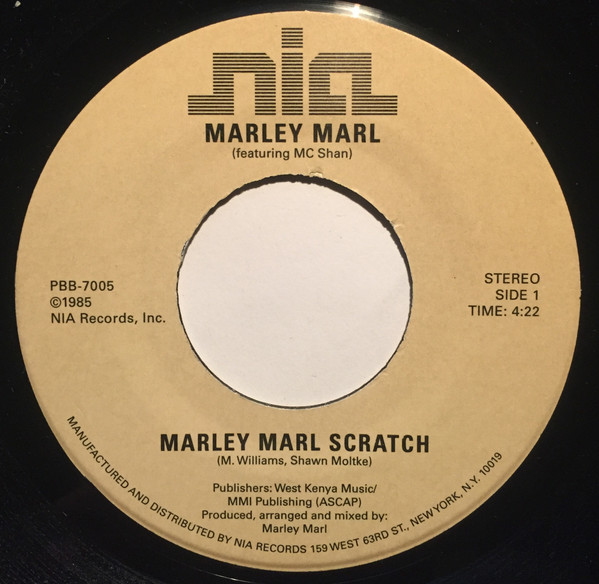
Marley Marl’s production style went through several phases. His early work was more drum-machine focused but by 1985 he was integrating sampled drum hits into his intricate programming. The classic Marley Marl Scratch 12″ feat MC Shan, is a great example with drums so hard that no stock drum machine sounds, or drummer, could compare. However, due to extremely limited sample time restrictions, his early hip-hop productions were minimalist affairs, limited to just sampled drum hits and the odd sampled stab. To complement these minimal productions, he would also draw upon his scratching skills, cutting up short snippits of break records or vocals.
It wasn’t until 1986, when Marley got his hands on the E-mu SP12 that he could get slightly more adventurous with its lofty 5 seconds of sample time. And while 5 seconds of sampling was an improvement it was still a limiting factor. These limits, however, helped force creativity and would inspire early sample based producers like Marley to make the most of every precious second. Saving samples was also not easy, so Marley often reused the same drum hits across multiple tracks. His famous stretch of beats built around the Honey Drippers’ “Impeach the President” drums gave his productions a unique and instantly recognisable signature. He would famously back up all of his drum hits by recording and re-recording them to tape. The added tape saturation of these recorded hits would help to give his drum hits added punch and attitude.
By 1987, Marley was hitting his stride as a reliable maker of hip-hop hits. His sound typically combined programmed drums with a strong melodic sample or bassline. While he drew on popular breakbeats of the era, he also dug deeper, building a formidable library of more obscure breaks. Like most producers of the time, he leaned heavily on James Brown records, but he wasn’t afraid to sample from other musical genres. For Biz Markie’s classic “Nobody Beats the Biz,” for example, Marley lifted an isolated section from the rock hit, “Fly Like an Eagle.” by The Steve Miller Band. His ear was wide open.

Even as other groundbreaking producers emerged, such as The Bomb Squad and DJ Mark the 45 King, Marley’s beats stood out for their undeniable head-nod factor and sonic punch. His tracks cut through whether in the club, on the radio, or blasting from car stereos. The most remarkable part is that most of these hip-hop classics weren’t mixed in professional studios but in his Queensbridge apartment, nicknamed the “Home of Hits,” using limited gear.
Between 1988 and 1992, Marley became a beatmaking powerhouse, setting the standard for hip-hop production. Though his signature sound is hard to pin down, given the wide range of samples he pulled from, there was no denying that when a Marley Marl beat dropped, you knew who was behind it.

Equipment List
While some of the recording equipment used in Marley Marls home studio remains shrouded in secrecy, we do have information regarding some of the samplers and keyboards that were used during Marleys prolific period.
DAWs (Digital Audio Workstations)
- Ableton Live: Although DAWs were barely imaginable in the late ’80s, recent videos show Marley Marl working in Ableton Live
Drum Machines & Samplers
- Korg SDD 2000: Marley adapted this digital delay’s very short sampling to trigger kicks and snares in his earliest productions
- Roland TR 808: A favourite drum machine that would be used to trigger drums (see above) and layer with sampled drum hits. Marley was an early pioneer of the long 808 sub kick.
- E-mu SP-12/1200: Marley’s sampling weapon of choice during his run of hits in the late 80’s/early 90’s.
Keyboards & Synths
- Casio CZ-101: A budget synth that Marley used for basslines and melodys such as the iconic whistle sound used in Eric B and Rakim’s My Melody
- Juno-106: A classic synth used by Marley for basslines and the occasional pad.
Mixing & Outboard Gear
- Tascam 32 or 34-series reel-to-reel machines: While it is unclear what mixing console Marley used in his ‘Home of Hits’ it is suspected that he used one of these machines for recording.
- Shure SM57/58: Again, there is no definitive evidence available, but it is believed Marley used the classic SM57 or SM58 to record rap vocals.
Musical Legacy
As one of the first producers to truly embrace sampling in hip-hop, Marley Marl will go down in history as one of the true pioneers. What makes his contribution even more remarkable is that he developed the concept of sampling old drum hits before the technology even existed to make it easy. Those early records like Marley Marl scratch hinted at a harder more organic hip-hop sound where the break beat would return as hip-hop’s driving force.
It was his relentless refinement of the sampled hip-hop sound that set the standard during hip-hop’s Golden Era. The many classic records that emerged from his modest “Home of Hits” studio have stood the test of time and serve as blueprints for everything that followed. Nearly every major producer of the 1990s boom-bap era has credited Marley Marl as a major influence, a testament to his groundbreaking output.
The techniques he helped develop, along with the breaks and samples he popularised, have been adopted far beyond hip-hop. He was the first person to utilise custom-sampled drum hits, which are now a cornerstone of modern music production. And Marly Marl was one of the first producers to blend drum machine drum sounds with sampled drums. For example, his use of extended 808 kick subs became a signature element of his sound, heard across countless classic tracks.
Marley Marl also played a crucial role in introducing some of hip-hop’s most influential artists, including Big Daddy Kane, Kool G Rap, and Roxanne Shanté. His Juice Crew acted as a precursor to later collectives like the Native Tongues and even the Wu-Tang Clan. And of course, he orchestrated one of hip-hop’s first major posse cuts with the legendary The Symphony..
It’s hard to imagine the Golden Era of hip-hop without Marley Marl’s unmistakable stamp. More than almost anyone, he helped define it, bridging the gap between hip-hop’s early electronic interpretations and the sophisticated, sample-driven mastery of the 1990s boom-bap era.
Top 5 Productions
- Mc Shan- The Bridge
- Craig G – Droppin Science
- Big Daddy Kane – Ain’t no half Steppin’
- Kool G Rap – Poison
- LL Cool J – Mama Said Knock You Out
And if you are looking for Beats or Samples for your next project then RouteNote Create has you covered. sign-up now and take your music to the next level