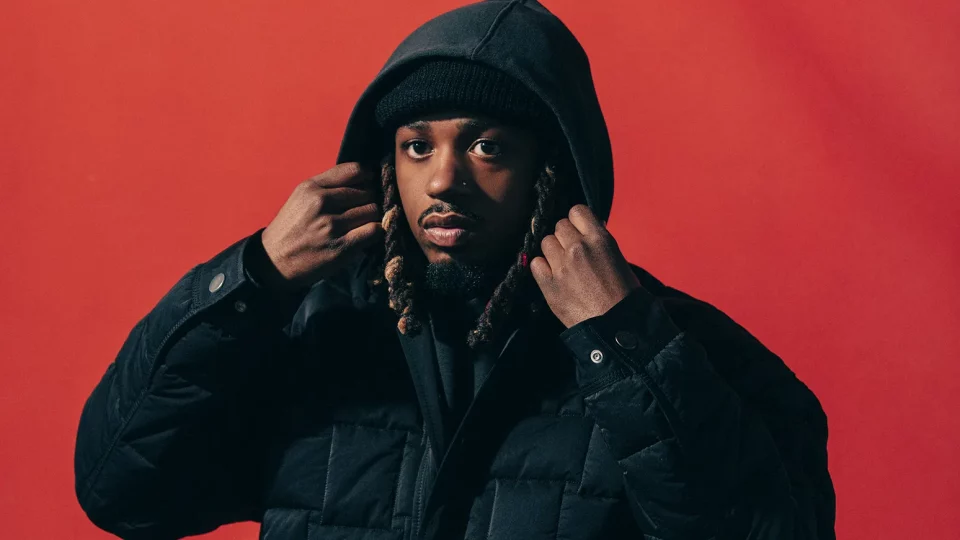
Producer Profile: Metro Boomin
For this instalment in our producer profile series, we head down south to spotlight one of the most influential figures in modern trap: Metro Boomin. From his early days as a hungry teenage beatmaker selling instrumentals online, to becoming the go-to producer for some of the biggest names in hip-hop, Metro’s rise has been nothing short of meteoric. So let’s get into it…
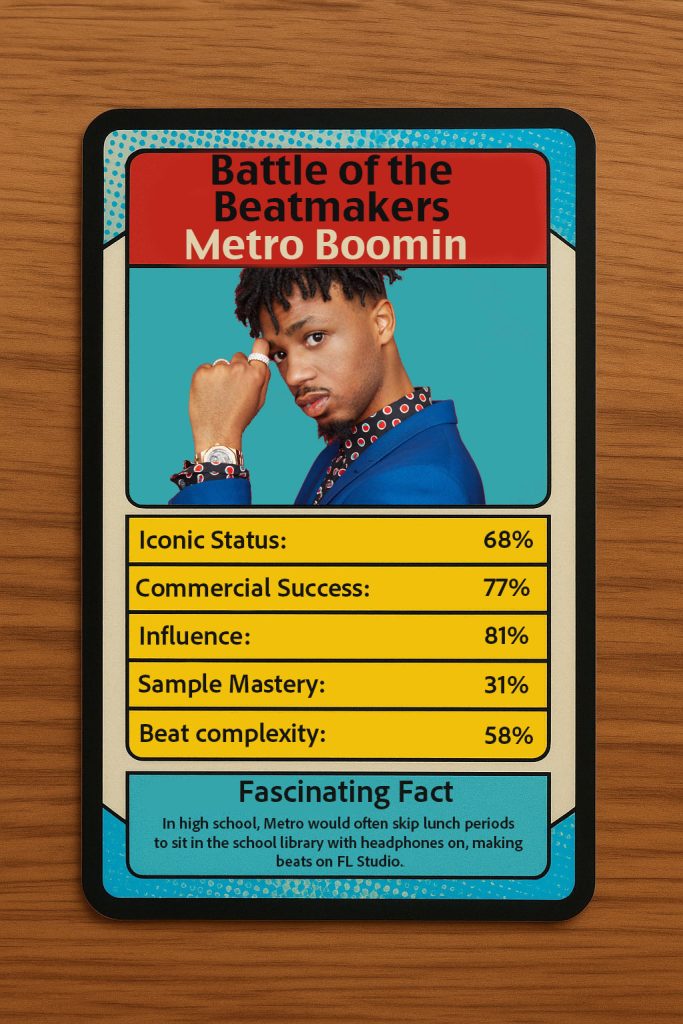
A Brief History
Leland Tyler Wayne, professionally known as Metro Boomin, was born in St. Louis, Missouri, in 1993. While he initially had aspirations to be a rapper, at age 13, he quickly fell in love with beat-making after experimenting with FL Studio (formerly FruityLoops). Even as a teenager, Metro had a disciplined work ethic, creating up to five beats a day and networking online directly with artists and management.
After high school, he moved to Atlanta for college, briefly attending Morehouse. At the same time, he was busy building working relationships with local artists like Future, Gucci Mane, and Young Thug. It wasn’t long before Metro dropped out of education to focus full-time on his musical aspirations. His early breakout moment came with Karate Chop by Future (2013). This track helped open the door to the Atlanta trap scene’s biggest stars and Metro’s rise to the top began.
By the mid-2010s, Metro’s name was synonymous with modern trap production, contributing to genre-defining hits like Tuesday (iLoveMakonnen), Jumpman (Drake & Future), and the massive international hit Bad and Boujee (Migos). He had become one of the most in-demand producers in the game, with a strong work ethic that would eventually result in the launch of his own label and collective, Boominati Worldwide, under Republic Records.
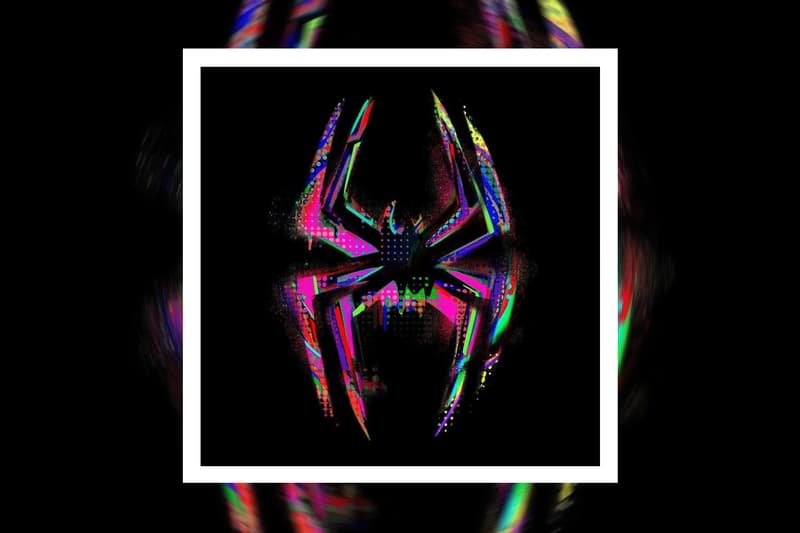
As well as being the go-to trap producer for aspiring and established artists, the ‘Metro Boomin’ brand has been boosted by a number of solo album projects. Inspired by his love of superheroes his 2022 release Heroes & Villains, features grand, orchestral arrangements that took trap production to new heights of sophistication. And keeping with superheroes, Metro’s dreams became reality when he was enlisted to produce the soundtrack to the critically acclaimed Marvel series, Spider-Man: Across the Spider-verse.
In 2024, Metro went viral again when he sampled a tongue-in-cheek (no pun intended) AI creation to make BBL Drizzy. This Drake diss beat was initially posted online as a joke but quickly took over TikTok and YouTube, making it the first high-profile AI-derived beat to hit mainstream usage and viral attention in hip-hop.
Signature Production Style
Metro Boomin’s sound is defined by both simplicity and emotion. While much of his work falls under the trap umbrella, what separates him from his peers is his ability to make every musical element count. Metro’s beats are always highly considered with a less-is-more approach. He is known for making a big impact using space and silence as tools, rather than filling every moment with sound. His beats often rely on minor key melodies and haunting chord progressions. These are built from ambient pads, bell-like synths, and ghostly reversed sounds that punctuate the background of his beats, often reinforcing a melodic loop.
Talking of loops, when it comes to sampling, despite some notable examples where he has dug in the crates, he generally creates his own loops or has loopmakers produce custom loops for him. These are then chopped, slowed, reversed, filtered, or pitched to resemble old dusty cuts. He’ll often render a melody to audio and reshape it with plugins like Gross Beat or HalfTime, giving it a warped, dreamlike quality. The textures he builds can feel surreal, giving them both a modern and nostalgic quality.
Metro’s drum game tends to follow the classic trap structure of crisp snares, sharp hi-hats, and heavy 808s. Inspired by producers such as Timbaland he is not afraid to experiment with swing, giving his beats that all-important bounce. Perhaps the most overlooked element of Metro’s drum style is how much space he leaves. His drums hit harder because they’re not competing with too many other elements. He allows silence and negative space to add tension and rhythm.
Not one to be pigeon-holed, Metro Boomin has also openly embraced and utilised generative AI, most notably in the viral sensation BBL Drizzy. While not originally intended it as a proper track, it took on a life of it’s own, perfectly showcasing Metro’s appreciation to both mood and satire.
Metro’s attention to detail, sound selection, and restraint has earned him praise from industry legends like Timbaland and Dr. Dre. Every 808, every snare hit, every synth line feels intentional. He doesn’t flood tracks with noise for the sake of it. Instead, he builds musical soundscapes with just a few well-chosen sounds. This minimalist, emotionally rich style has become one of the most influential blueprints in modern hip-hop an trap.
Equipment List
When it comes to gear, Metro Boomin has largely operated an ‘if it’s not broke, don’t fix it’ approach. He still works predominantly in FL Studio, which has been his go-to DAW since his teenage years. While much of his production is digital, his setups across various studios blend hardware and software to help craft his cinematic, hard-hitting trap sound.
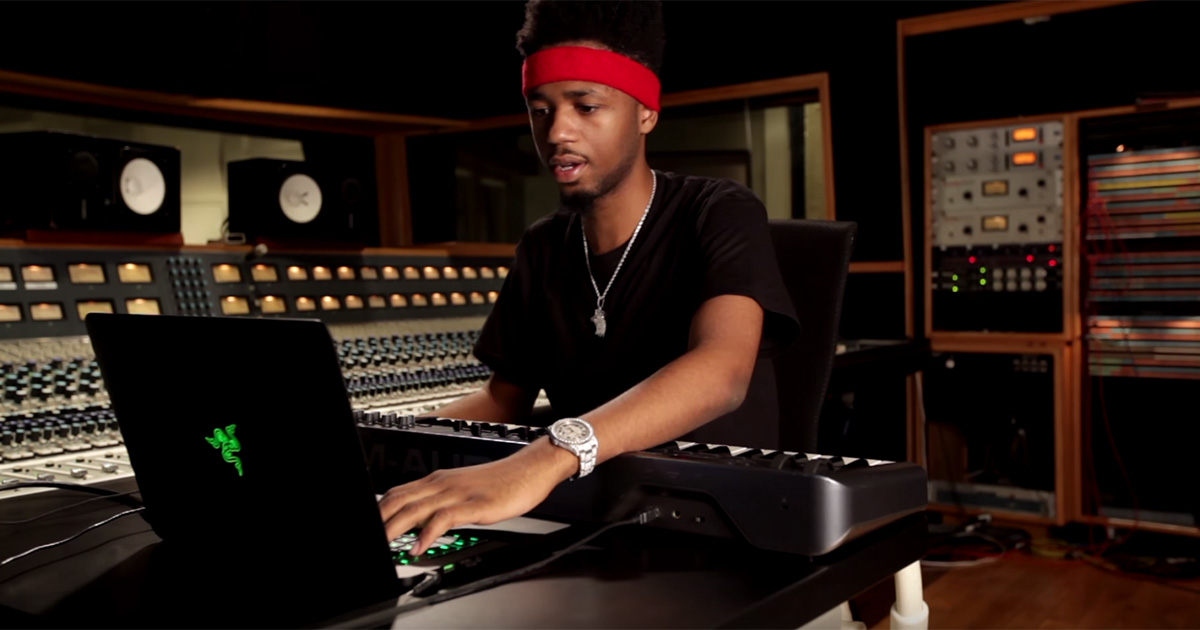
DAWs (Digital Audio Workstations)
- FL Studio – primary production and sequencing)
Software
- Nexus 3, Omnisphere, Kontakt – primary sources for melodic elements
- Gross Beat, HalfTime, ShaperBox – for rhythmic chopping and time manipulation
- Guitar Rig 6, Valhalla Reverb, RC-20 – used for adding vintage warmth and character to sounds
Hardware
- Akai MPC X, Mellotron M4000D Mini, OP-1 – used for hands-on control over sounds and samples
- SSL J-Series mixing console – desk used in his main studio
- Yamaha NS-10 monitors – If a beat sounds good on these monitors it often sounds good on all systems
Musical Legacy
Metro Boomin has been one of the most influencial trap based producers of the last decade. He has helped shape and define the sound and direction of trap, hip-hop and R&B, through his work with artists such as Future, 21 Savage, The Weeknd and Travis Scott. His beats have served as emotional backdrops for some of the most influential artists of recent times.
He’s also one of the few modern producers to transition successfully into album artist status. His solo records (Not All Heroes Wear Capes, Heroes & Villains) feature an assortment of lyricists and deliver cohesive narratives, mood shifts, and original orchestrated production. These albums showcase trap production’s potential to offer a truly cinematic feel. Something that didn’t go unnoticed by Marvel, who recruited Metro Boomin to produce much of the score to the critically acclaimed Spider-Man across the Spider-Verse series.
He’s also a branding genius: his taglines (“Metro Boomin want some more…”) and his Boominati aesthetic blend mystique with luxury. And with tracks like BBL Drizzy, he proves he can both move culture seriously and troll it with finesse. And with almost 40 million monthly listeners on Spotify alone, there’s no disputing Metro’s influence and musical legacy.
Both our previously featured producers, Timbaland and Dr. Dre have praised Metro for his sonic identity. They have commented on his restraint and his ability to stay ahead of trends. Few producers have managed to balance subtlety and showmanship like Metro Boomin has.
Top 5 productions
Here are five essential Metro Boomin tracks that have helped define his legacy:
- Bad and Boujee – Migos feat. Lil Uzi Vert (2016)
- Mask Off – Future (2017)
- Heartless – The Weeknd (2019)
- Superhero (Heroes & Villains) – Metro Boomin, Future & Chris Brown (2022)
- BBL Drizzy – (2024 viral diss beat)
And if you are looking for Beats or Samples for your next project then RouteNote Create has you covered. sign-up now and take your music to the next level