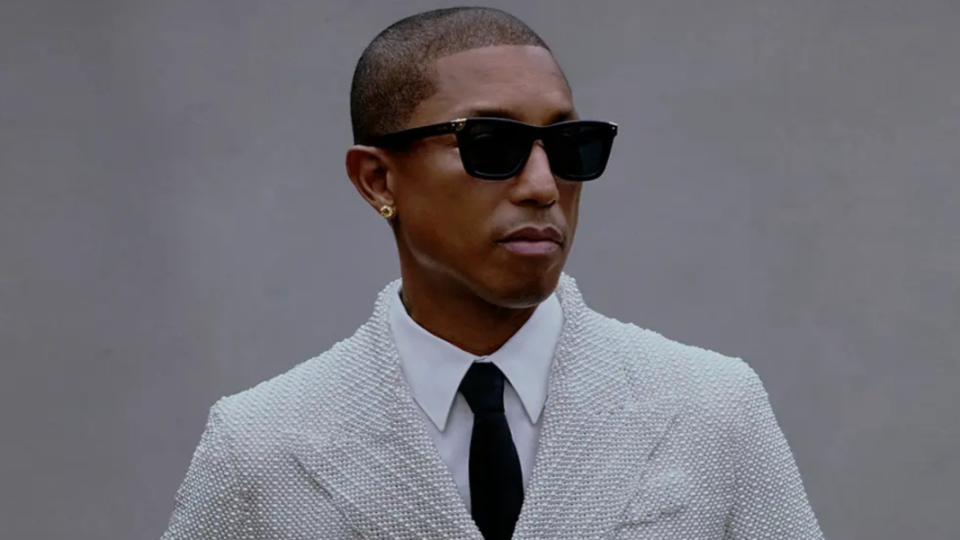
Producer Profile: Pharrell Williams
When deciding to prepare this producer profile I faced a slight dilemma. Do I tell the story of The Neptune’s or focus on the member who became a global icon in his own right, Pharrell Williams? With The Neptune’s officially calling it quits in 2024, and Pharrell continuing to dominate as both artist and producer, the choice became clear. Still, none of this takes away from Chad Hugo’s quiet genius, the other half of a partnership that redefined the sound of the 2000s. So buckle up because this is a story of innovation, influence, and musical disruption on a global scale.
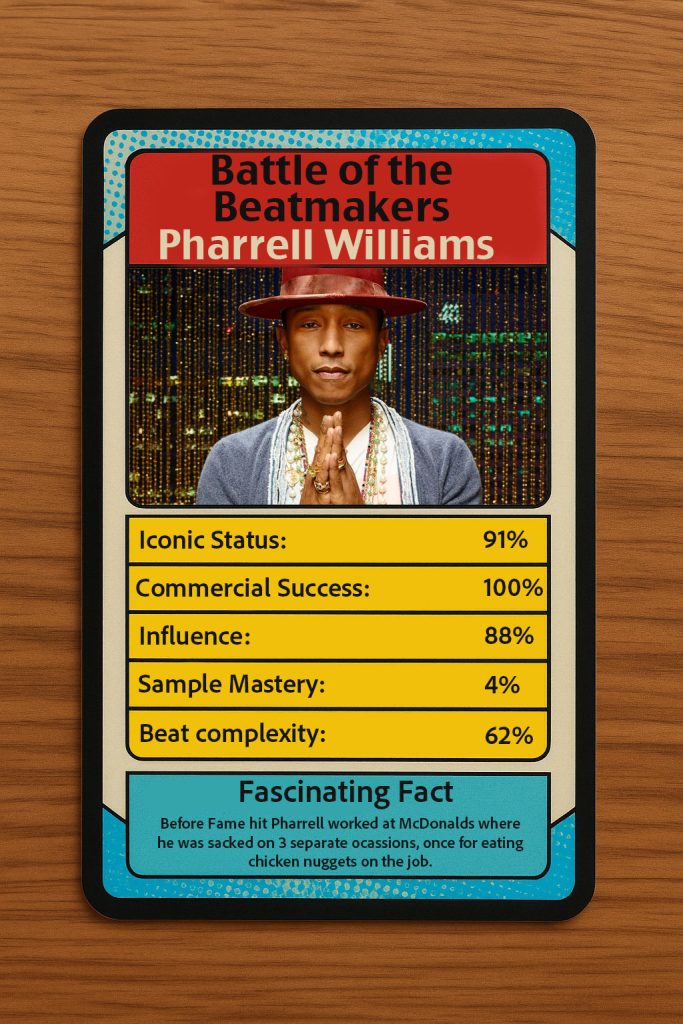
A Brief History
Born in 1973, Pharrell Lanscilo Williams grew up in the surprisingly fertile musical hotbed of Virginia Beach, Virginia. He’s actually a distant cousin of fellow Virginia beat innovator Timbaland, and the two grew up together, both experimenting with beats and melodies long before either hit the mainstream. In the ’90s, Virginia Beach became a hub for hip-hop and R&B innovation. Teddy Riley, pioneer of the New Jack Swing sound, had a studio next to Princess Anne High School, where a young Pharrell and Chad Hugo attended.
It was at a high school band camp that Pharrell and Chad bonded over jazz chords, hip-hop production, and offbeat melodies. Their first production experiments began in the early ’90s with a collective called Surrounded by Idiots, which included Pharrell, Chad, Timbaland, and Magoo. While nothing was released commercially, it laid the foundation for what would become The Neptune’s, with the original line up of Pharrell, Chad Hugo, and friends Mike Etheridge and Shay Haley.
The Neptune’s’ first major breakthrough came when they won a local talent competition run by Teddy Riley. An impressed and forward thinking, Riley signed them as soon as they both graduated. Under his mentorship Pharrell even contributed lyrics to Riley’s verse on Wreckx-N-Effect’s 1992 hit “Rump Shaker,” leading to his first taste of success.

With Riley as a guiding force in the industry, The Neptune’s honed their distinctive, futuristic sound, culminating in their first big production hit: N.O.R.E.’s “Superthug” (1998). Its hard-edged, original sounding production opened doors to a flood of high-profile placements. By the early 2000s, The Neptunes had crafted a distinctive sound that dominated airwaves and dancefloors alike, crossing over from hip-hop and R&B to mainstream pop artists like Britney Spears and Justin Timberlake. By 2003 The Neptunes had taken over the world, famously producing a massive 43% of the songs being played on U.S. radio.
By this point, Pharrell had stepped out front. His charisma and falsetto hooks made him a natural star. In 2001, he, Chad Hugo, and Shay Haley launched N.E.R.D., blending rock, funk, and hip-hop with their signature energy. The 2003 hit “Frontin’” and Pharrell’s 2006 album In My Mind, cementing him as both a producer and performer.
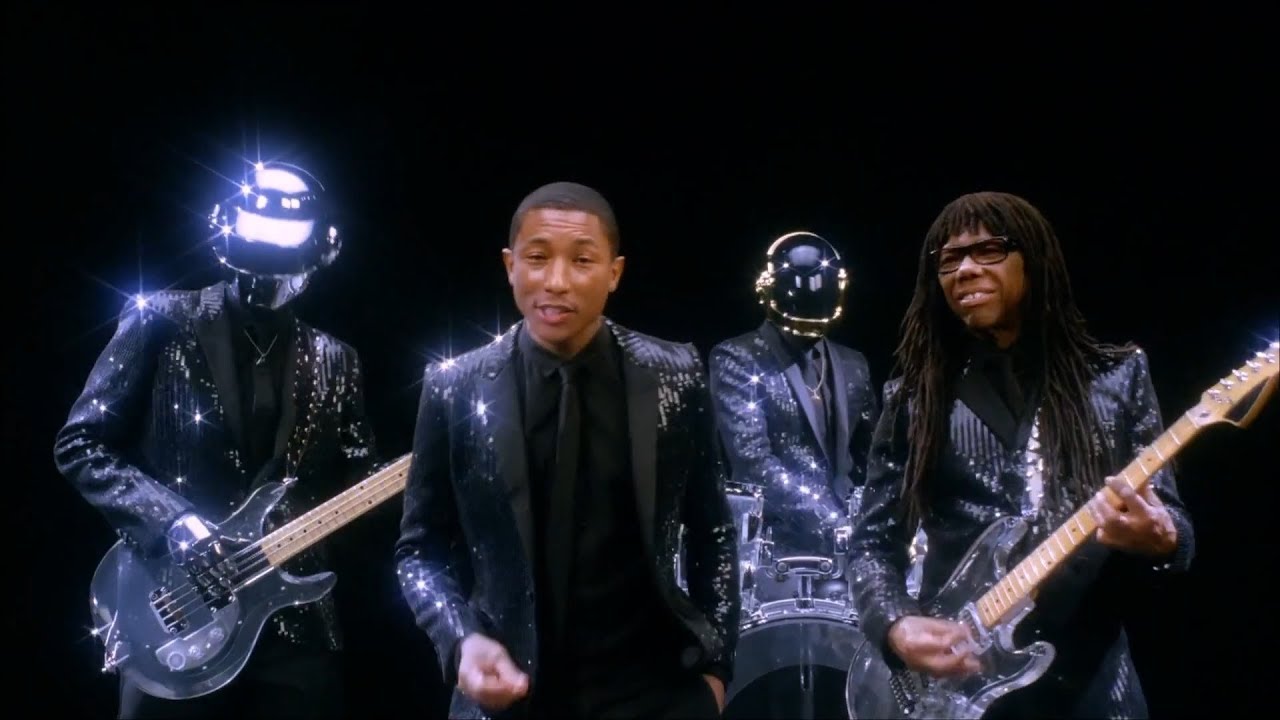
The 2010s however saw Pharrell become a global icon. Collaborations like Daft Punk’s “Get Lucky” and his own worldwide smash “Happy” solidified his superstar status. As well as his musical dominance he also established himself as a style icon with his ventures in fashion (Billionaire Boys Club, Ice Cream) expanded his cultural reach.
But all was not smooth behind the scenes. As Pharrell’s star rose, his work with Chad Hugo dwindled. Tensions peaked in April 2024 when Hugo filed a lawsuit accusing Pharrell of fraudulently attempting to claim sole control of The Neptunes name. The dispute reportedly ended any communication between the two, and The Neptunes officially disbanded later that year, closing one of the most influential chapters in modern music.
Signature Sound
When it comes to a signature sound, few producers have ever left as distinct a sonic fingerprint as Pharrell Williams and The Neptunes. Emerging from an era dominated by dusty sample-based hip-hop production, they rejected the past and instead looked to the future, crafting beats that sounded minimal, other worldly yet undeniably funky. Armed with the then-new Korg Triton workstation synth and a unique sense of rhythm and space, they created a sound that literally defined a new dawn.
While most producers were layering loops and samples to build thick, textured beats, The Neptunes took the opposite approach. They stripped everything back to its bare essentials. Tight drums combined with rhythmic chords and melodies, were often all that were needed as well as the odd sci-fi sounding fx. Their mixes also leaned on the minimal with barely any reverb, creating a punchy immediacy that leapt from the speakers. It was a formula that would widely be referred to as The Neptunes sound.

The foundation of that sound was always the drums. The Neptunes’ drums had an instantly recognisable snap. The snares and hats were often clipped short and pitched up while the kicks often had more of a sustained feel. But it was the programming that gave their drums their unique sound. Instead of the traditional head-nod inducing boom bap drum programming popularised in the 90’s, they created far funkier uptempo drum patterns. The kicks and snares were largely quantised to 16th’s and 16triplets while their signature percussive elements would be slightly swung providing a live syncopated feel. Some of the Neptunes most enduring beats like Grindin’ by Clipse and Drop it like it’s hot by Snoop Dogg were predominantly just drums with a significant percussive feature, proving a drum track and good vocal can be enough.
Their melodic work was equally distinctive. Syncopated chords and sparse melodies locked tightly with the rhythm, creating grooves that were as musical as they were minimal. The Neptunes palette often featured clavs, Electric Piano’s, synthetic guitars, and synth pads, all with the threat of some spacey si-fi effects and futuristic textures. Every element had intent and nothing felt random or ornamental. While to many the formula sounded simple it was notoriously hard to replicate authentically.
Of course, Pharrell brought another crucial ingredient: his voice. Whether singing, rapping, or layering falsetto hooks, he used his voice like another instrument in the mix. Like many of the great song writers of the past, Pharrell would come up with beats and vocals in unison, creating compositions that sounded more coherent and purposeful than fellow producers. This ability is what blurs the line between artist and producer.
The result of all these factors was a sound that felt lightyears ahead of its time. sleek, futuristic, yet deeply human. Every Neptunes record carried their unmistakable DNA and when paired with Pharrell’s natural vocal and songwriting talent, that sound didn’t just shape hits, it reshaped the sound of hip-hop, R&B and pop for decades to come.
Equipment List
While Pharrell came up as a master of the Korg Triton he has moved with the times, embracing different pieces of gear over the years.
DAWs (Digital Audio Workstations)
- Apple Logic Pro: Pharrell is thought to change systems fairly frequently but in a recent interview discussed working in Logic Pro
- Pro Tools: Pharrell confessed to exporting his tracks to Pro Tools to mix.
Drum Machines & Samplers
- Ensoniq ASR 10: While not known for sampling this workstation sampler can be spotted in footage of Pharrell’s old studio
- Akai MPC 2000xl: Used extensively on Pharrell’s “In My Mind” Solo LP.
Keyboards & Synths
- Korg Triton: Heard all over The Neptunes Early production as a sound source
- Korg MicroKORG: Small compact synth used for the chords in Drop it like it’s hot.
- Korg 05R/W: Another Korg, this time a vintage model that Pharrell has been known to use for sequencing before moving to DAW’s
Software and Plugins
- Spectrasonics Omnisphere: Thought to be a favourite soft synth some of the voices have appeared in Pharrell’s productions.
- Alchemy Synth: Some sounds from this Garage band synth have been confirmed as having been used in some Pharrell productions
- Waves’ Renaissance compressor: A simple compressor that Pharrell’s engineer has confirmed is used across multiple channels
Mixing & Outboard Gear
- Neumann TLM 103: Pharrell is known to use this, amongst many other mics.
- Avalon 737 Mic Preamp: Pharrell’s engineer confirms the use of this mic preamp often paired with a AKG C12 VR Mic.
- Genelec 1037A monitors: according to Pharrell’s engineer these are his favoured monitor.
Musical Legacy
It’s no exaggeration to say that Pharrell Williams and The Neptunes rewrote the rulebook for contemporary music at the turn of the century. Their stripped-back, keyboard-driven, and irresistibly funky sound single headedly reshaped hip-hop, R&B, and pop. By moving away from traditional sample-based production, they opened a new chapter in modern beat-making. One where originality, melody, and groove replaced the dusty crate-digging aesthetic of the ’90s. Suddenly, producers realised they didn’t need to spend time and money clearing samples when they could craft their own future-facing sounds. And in the process keep all the publishing revenue.
The Neptunes’ distinctive production style became the soundtrack of an era. Their clean, syncopated beats, rhythmic melodies and spacy synth textures pushed urban music onto the charts and onto dancefloors worldwide. Even pop and rock artists found new rhythm in their futuristic funk offerings, giving mainstream music a fresh urban edge. And as Pharrell grew away from The Neptunes unit, he evolved into far more than a behind-the-scenes producer. He become a songwriter, performer, and cultural tastemaker in his own right.
Pharrell’s genius lies in his ability to channel the musical spirit of the past, represented by artists such as Prince, Michael Jackson, Marvin Gaye, and James Brown, while filtering it through a distinctly modern lens. His music bridges genres and generations, managing to sound both nostalgic and forward-looking at once. With countless hits to his name and an influence that stretches across styles and decades, Pharrell’s catalogue has already left an indelible mark on modern music.
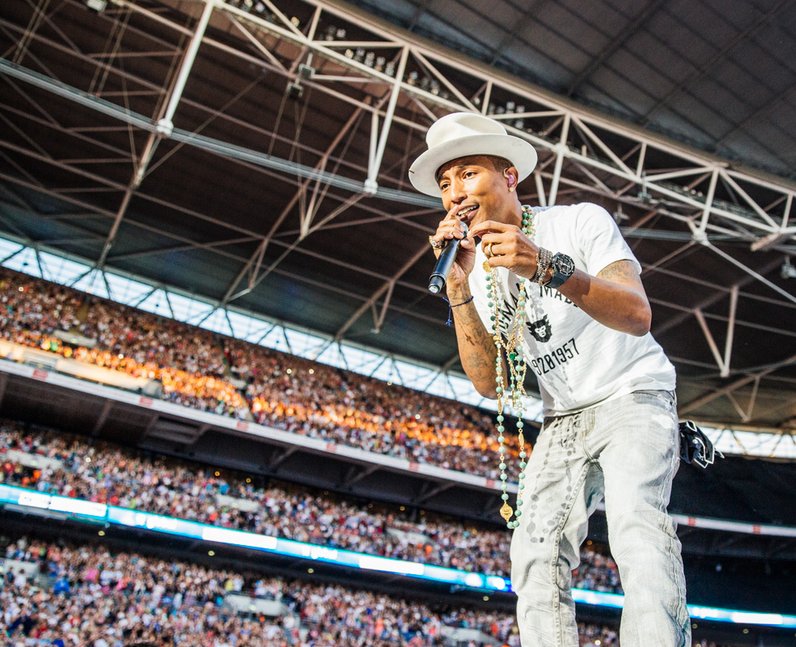
And while he has his own instantly recognisable sound, it never feels dated. His productions continue to evolve, adapting to each new musical wave while retaining that unmistakable Pharrell DNA. Whether behind the boards or in front of the mic, he remains one of the most visionary and enduring figures in global music and as such his legacy is assured.
Top 5 Productions
- N.O.R.E – Superthug (1998)
- Jay-Z – I Just Wanna Love U (Give It 2 Me) (2000)
- Snoop Dogg feat. Pharrell & Uncle Charlie Wilson – Beautiful (2002)
- Pharrell Williams – Happy (2014)
- Kendrick Lamar – Alright (2015)
And if you are looking for Beats or Samples for your next project then RouteNote Create has you covered. sign-up now and take your music to the next level