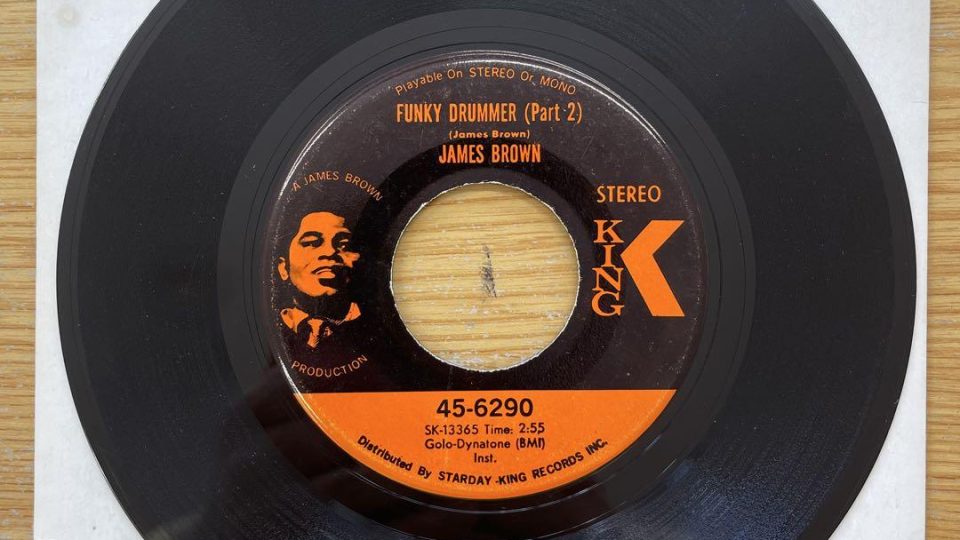
The Drum Break that Changed Musical History
While The Amen Break is often recognised as the most sampled drum break in music history, running just behind it is Funky Drummer. And when it comes specifically to Hip-Hop, Funky Drummer arguably takes the crown as the single most influential and most sampled beat ever laid to tape.
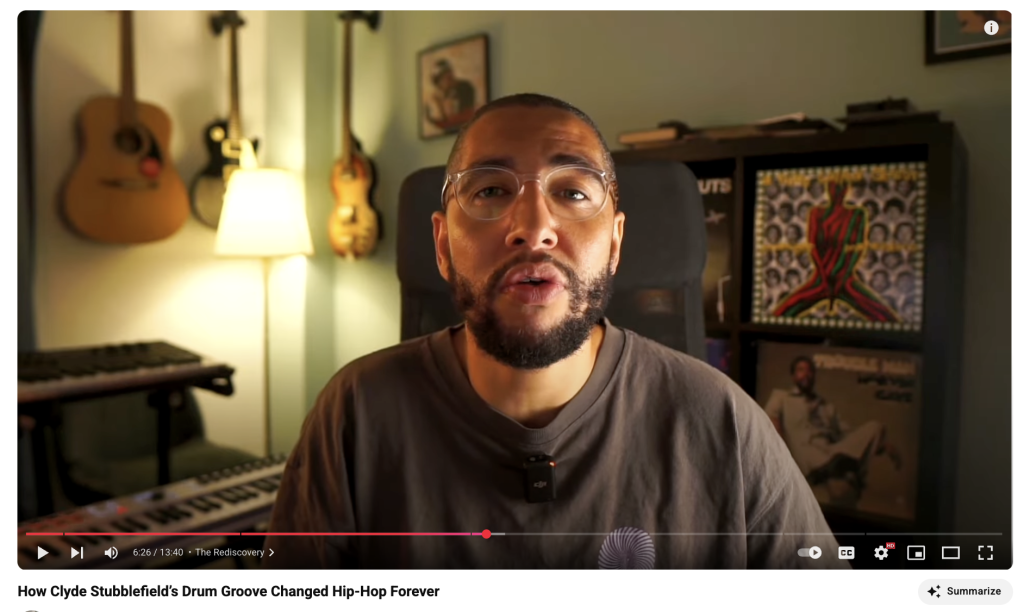
Recently, YouTube beatmaker and historian El Train released a video homage to this iconic break and to the man who played it, Clyde Stubblefield. Inspired by that excellent tribute, I felt it only right to shine a little more light on this seminal slab of funkiness and the long, fascinating journey it has taken.
Lost and Found: Funky Drummer’s Checkered History
When Funky Drummer was first released in 1970 as a 45” single, it completely failed to make an impact. Compared to James Brown’s many massive hits of the time, this track was considered a flop, quickly slipping into obscurity. For well over a decade, it was virtually forgotten, relegated to the dusty bargain bins of record shops.

The song itself was recorded sometime in 1969 after a live show and it’s essentially an improvised groove orchestrated on the spot by James Brown, the self-proclaimed “Minister of New Super Heavy Funk” . The rhythm and groove are loose and relaxed, and as the band locks into it, Brown can be heard christening the track “The Funky Drummer” right there on the recording.
Throughout, Brown acts as both bandleader and hype man, riffing into the microphone and steering the music in real time. Then, as Part 2 of the song nears its end, he gives the now-legendary command: “Give the drummer some… lay out and let the drummer go at the count of four.” Stubblefield obliges, dropping into a open break. A loose, syncopated drum groove punctuated by Brown’s trademark grunts and ad-libs. Those 14 seconds of open drums have since gone on to influence the course of modern music in ways that could never have been imagined at the time of the studio session.
For the next 15 years, though, nobody outside of collectors and hardcore funk fans seemed to notice. It wasn’t until 1986, with the Polydor release of In the Jungle Groove (which featured an extended drum break edit), that the world rediscovered this overlooked gem. The timing couldn’t have been better. It came out just as the Rare Groove movement was bubbling and, more importantly, just as Hip-Hop was about to explode onto the global stage.

Hip-Hop and James Brown
It’s almost impossible to imagine Hip-Hop without James Brown’s music. His syncopated funk grooves laid the very foundation for the culture. In the South Bronx during the 1970s, when DJs like Kool Herc and Afrika Bambaataa were establishing the use of breaks and break beats in their sets, Brown’s records were central. If it wasn’t a James Brown record being cut up on the turntables, it was lightly to be something heavily inspired by his groundbreaking funk sound of the late 1960s and early 70s. In fact, Bambaataa himself is quoted to have said, “There might not be hip-hop without James Brown.”
Interestingly, though, Funky Drummer wasn’t considered one of the essential breaks in this early, pre-recorded era. The reason may lie in its tempo. Early B-boy and B-girl breakbeats tended to be fast, driving, and high-energy. By contrast, Funky Drummer is a touch slower, with a looser, more relaxed feel. It wasn’t always ideal for dancers seeking maximum energy.
But everything changed with the advent of sampling technology.
The Sampling Revolution
The release of the E-mu SP-12 in 1985 marked a turning point. For the first time, hip-hop producers could directly sample, chop, and loop the very records the culture was built on. Before this, rap recordings often relied on either live musicians recreating popular breaks or stripped-down drum machines. The SP-12 (and later, the SP-1200) brought the raw, unfiltered sound of funk back into Hip-Hop, directly from the original vinyl grooves.

Suddenly, open drum breaks became the essential building blocks of beats. And Funky Drummer, now easily available thanks to In the Jungle Groove and the legendary Ultimate Breaks and Beats compilation series, rose to the top as the go-to choice.
Producers like Marley Marl were among the first to recognise its potential. On Kool G Rap & DJ Polo’s “It’s a Demo,” Marl sampled and looped just half a bar of Stubblefield’s beat, creating something hypnotic and new. Soon, Funky Drummer became the rhythmic DNA of late-80s Hip-Hop. The Bomb Squad, who produced Public Enemy’s dense, chaotic soundscapes, were particularly influential, leaning heavily on it. The break’s punch and presence provided the perfect anchor for their wild layers of sirens, samples, and noise.
And where hip-hop led others would follow. The beat’s infectious groove spread into pop, rock, and dance music. Artists as varied as George Michael (“Freedom! ’90”) and Sinéad O’Connor (“I Am Stretched on Your Grave”) used it as a rhythmic backdrop . Even James Brown himself sampled it in his 1988 release She Looks All Types A’ Good, bringing things full circle.
Funky Drummers Legacy
The late 80s and early 90s were undeniably the golden years of Funky Drummer, but its legacy hasn’t faded. Today, it sits comfortably in the pantheon of all-time classic breaks alongside Amen Brother by The Winstons, Apache by the Incredible Bongo Band, and Think (About It) by Lyn Collins.
What unites these breaks is that they are all instantly recognisable and brimming with character. And because they’ve been used in countless songs across decades, sampling them brings an almost built-in nostalgia, a callback to the many eras they’ve helped define.
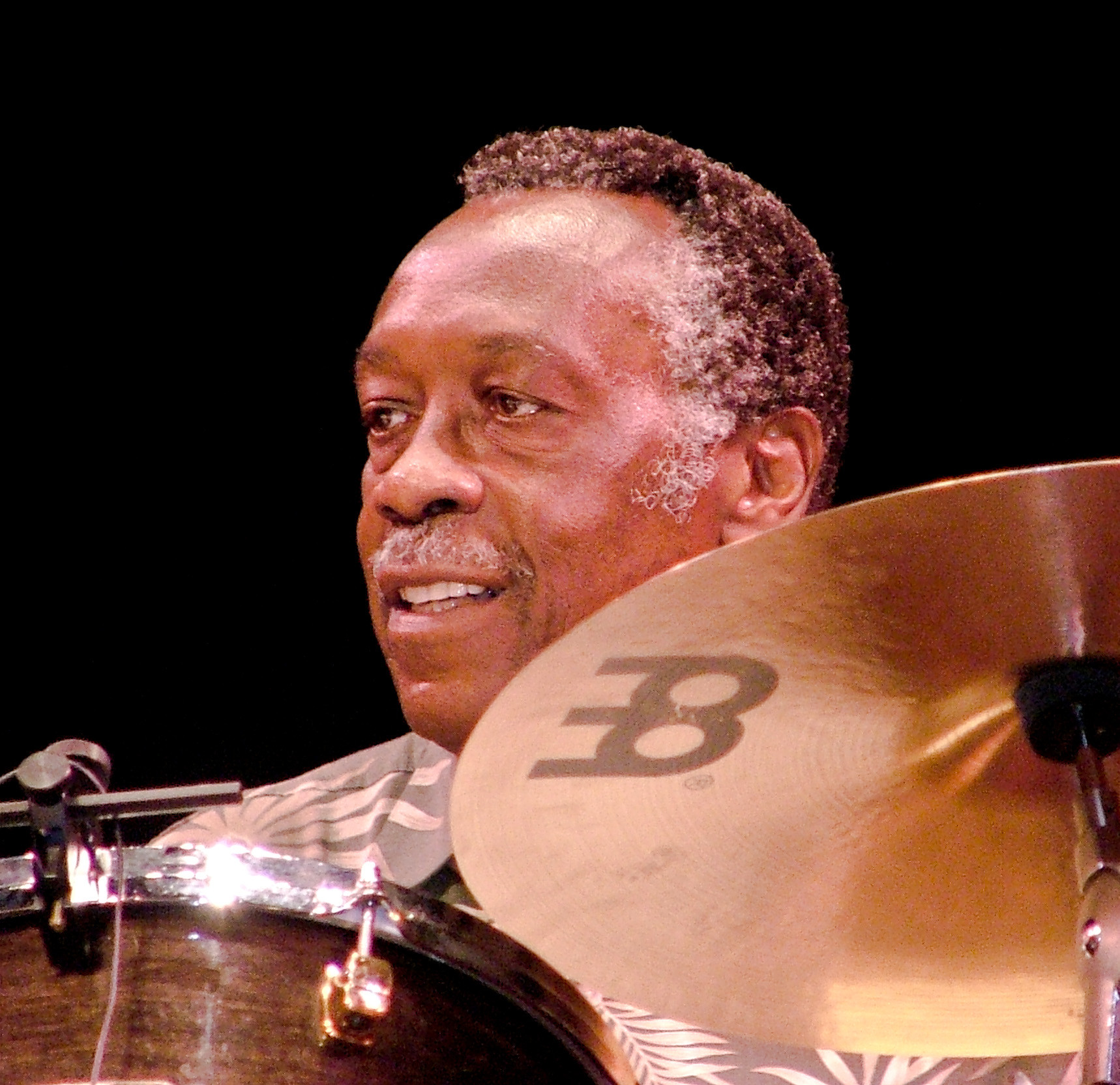
But the story has its bittersweet side. Clyde Stubblefield, the funky drummer himself and man behind the iconic beat, famously never received royalties from its endless reuse. James Brown, who was notoriously ruthless when it came to compensating members of his band, claimed full songwriting rights. As a result, Brown profited handsomely from the sampling boom, while Stubblefield grew to resent the very track that should have cemented his legacy.
Still, even without the financial reward he deserved, Clyde Stubblefield’s contribution to music is immeasurable. His drumming on Funky Drummer helped shape the sampled sound of Hip-Hop itself. And more than 50 years later, his famous drum groove continues to ripple through pop culture.
Check out El Train’s excellent mini doc on the full history of Funky Drummer and the significant role it played in shaping music in the late 80’s and beyond.
And if you are looking for Beats or Samples for your next project then RouteNote Create has you covered. sign-up now and take your music to the next level