Looking for the perfect bass: How to make synth basslines you can really feel
Whether it’s a hypnotic Techno groove, a gritty trap 808, or a chest-rattling dubstep wobble, great bass can make or break a track. While the electric bass guitar once dominated low-end duties, synthesizers have revolutionised the way producers create bass sounds. In this guide, we’ll explore the role of synth bass in modern music, the different types available, and how you can use them to add power, depth, and energy to your productions.
Synth bass’s role in modern music
For many forms of modern music the Bass is foundational. It serves as a dominant force at the low end whilst supporting the harmony, and helping create groove. In music designed for the dancefloor, bass plays an even more important role. In a club the bass isn’t just heard, it’s felt! Those powerful low frequencies create a physical connection with the listener that few other instruments can match. Whether you’re producing dance music, hip-hop, pop, reggae, or drum & bass, the bassline acts as the crucial link between rhythm and melody.
Since the 1980s, synthesised bass has helped shape the sound of popular music. One of the key reasons for its enduring popularity is its versatility. Unlike traditional low-end instruments such as the bass guitar, double bass, or organ bass pedals, synthesizers allow producers to sculpt every aspect of a bass sound. From its tone and texture to its movement, character, and dynamics, the possibilities are virtually endless.

More importantly, a synth bass has the power and presence to become a defining feature of a track. Think of the iconic dance records of the 1990s, many of which are instantly recognisable from their basslines alone. These club classics with their melodic bass continue to inspire new generations of EDM producers today. Likewise, it’s difficult to imagine a modern trap track without the deep, booming presence of an 808 style bass. Without this vital element it would be like eating pizza minus the cheese.
This combination of flexibility, character, and sheer sonic power has made synth bass an essential element across countless genres, giving producers endless creative possibilities when crafting their sound.
Synth bass sounds: The main types
While synthesizers are capable of producing an almost limitless range of sounds, producers have gradually grouped some of the most recognisable and influential types of synth bass into distinct categories. And just as every synth bass has its own sonic character, each serves a different purpose within a mix or genre.
Understanding these categories can help you choose the right bass sound for your track.
- Sub Bass: A pure, low-frequency bass sound, usually built from a sine wave.
Commonly used in: Trap, EDM, Boom Bap, Film Scores - 808 Bass: Derived from the kick drum of the classic Roland TR-808, but evolved into a melodic bass instrument in its own right.
Commonly used in: Trap, Hip-Hop, Drill - Reese Bass: Created by layering detuned saw waves, first popularised in early rave and jungle music.
Commonly used in: Drum & Bass, Jungle, Dubstep - Acid Bass: A distinctive squelchy resonant bass sound created using a Roland TB-303 and popularised in the late 80s.
Commonly used in: Acid House, Techno, Trance - FM Bass: Created using frequency modulation synthesis such as the iconic Yamaha DX7
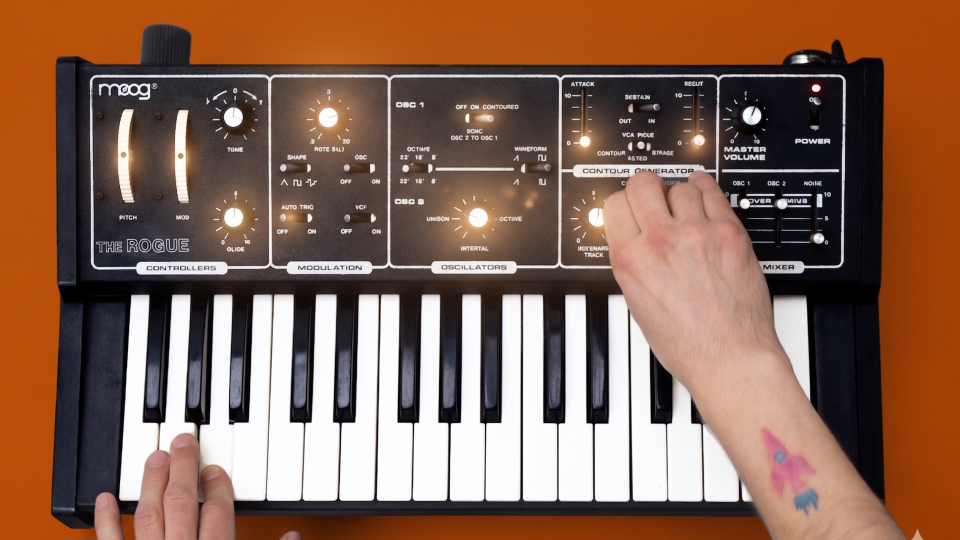
Commonly used in: House, Techno, Future Bass, Synthwave, Video Game Music - Moog-Style Bass: Inspired by the use of the moog as a bass instrument during the 1970s
Commonly used in: Funk, Disco, House, G-Funk - Saw Bass: Built primarily from one or more sawtooth oscillators.
Commonly used in: Trance, House, Techno, EDM - Wobble Bass: A bass sound whose filter is modulated rhythmically, often using an LFO.
Commonly used in: Dubstep, Bass Music - Hoover Bass: An instantly recognisable bass sound based on a patch from the Roland Alpha Juno.
Commonly used in: Hardcore, Rave, Hard Dance - Neuro Bass: An advanced evolution of the Reese bass using extensive modulation and processing.
Commonly used in: Neurofunk, Modern Drum & Bass, Experimental Bass Music
How to create an awesome synth bassline
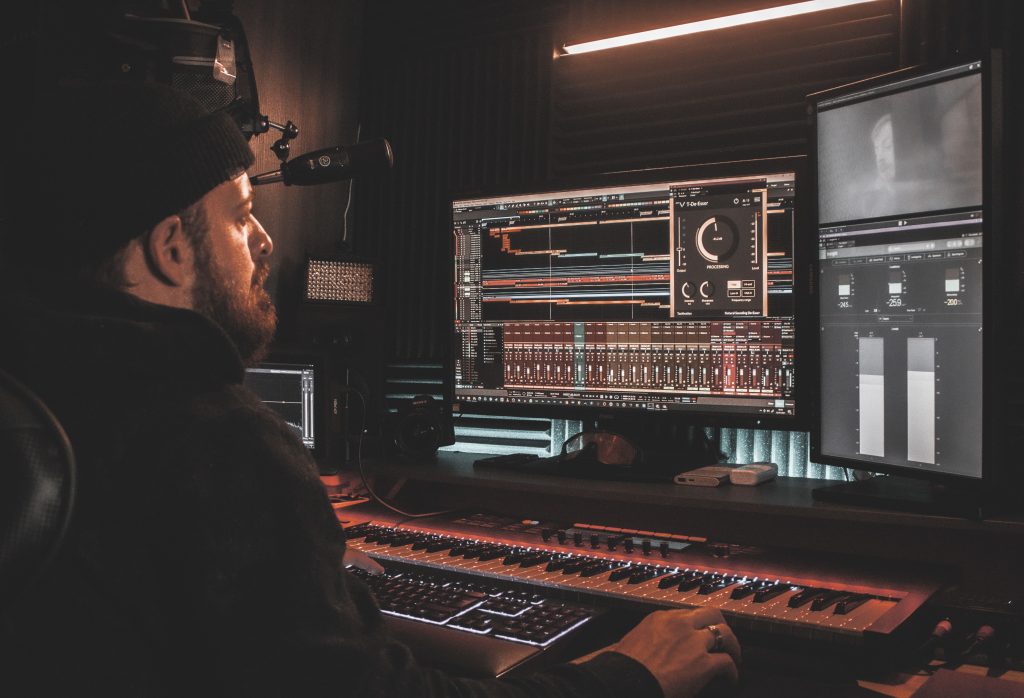
Creating a great bassline starts with choosing the right bass sound. And this will be inspired by the style of track you plan on making (see above).
If you require a clean and separated low-end, begin with a sine wave. If you need more presence and character, saw and square waves introduce additional harmonics. These help the bass cut through a mix, an important factor as so many people now consume music on devices like smart phones.
When writing basslines, simplicity is often the key. A rhythmically strong pattern with a strong melody using a handful of carefully chosen notes is always a good starting point. Dance music in particular benefits from simplicity apposed to overly complex sequences. The main priority is to focus on how the bass interacts with the drums. This is what gives a track its groove and helps to drive it forward.
Layering is another trick that can help create a fuller sound. The way much modern music is produced now using DAWs makes it easy to duplicate a bass MIDI track and apply a different bass sound to it. A common technique is to combine a deep sub layer (for low-frequency presence) with a second layer that provides texture and character. To avoid any frequency clashes it’s advisable to roll the bottom end off the second bass tone. This approach allows you to fully sculpt the bass elements to create unique hybrid bass textures. Because all frequencies are accounted for it also means the bassline remains impactful on both large sound systems and smaller speakers.
Finally, experiment with tools and plugins such as filters, envelopes, modulation distortion and saturation to shape the sound. Even subtle adjustments can dramatically effect how a bass sits within a track.
Making bass you can actually feel
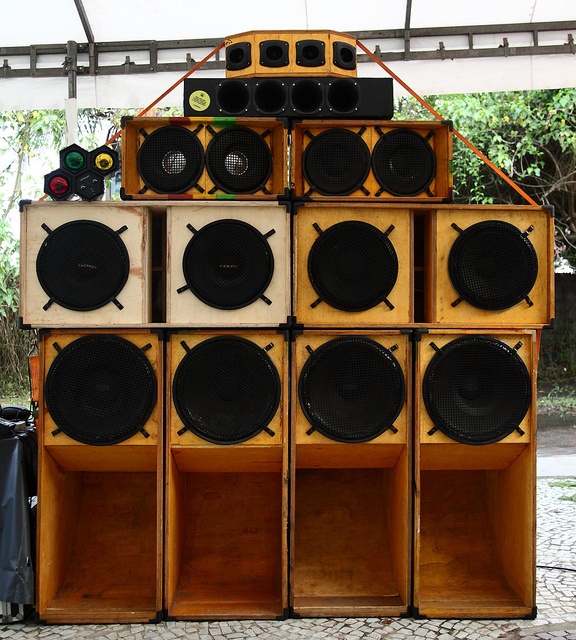
While bass has the power to give your track maximum impact with such power comes responsibility. A powerful bass isn’t simply a matter of turning up the volume. In fact, if the bass is too loud it can have the opposite effect, muddying a mix and reducing clarity. As with all aspects of music production, everything has it’s place. The bass needs to complement and balance the other elements in the track, working with them rather than competing for dominance. More often than not you want to create a full and punchy bottom end where the bass has impact but remains clear, controlled, and well-defined.
One of the most important factors in creating an awesome bassline is the relationship between your bass and kick drum. As both occupy similar areas of the frequency spectrum, they often find themselves competing for space within a mix. If left unchecked, these conflicting frequencies can create a muddy, unfocussed sound that robs your track of impact and punch. Use techniques such as EQ and sidechain compression to help the two elements work together rather than against each other. If you are using layered kicks and bass sounds this gives you even more scope to isolate and control competing frequencies.
Finally it’s important to reference your mix and it’s bass balance across multiple listening environments. Studio monitors, headphones, laptop speakers, and car systems will all present a different picture. The goal is a bassline that translates consistently wherever it’s played.
Sample basslines and one-shots
For producers who want to focus on creating music rather than tweaking oscillators and filters, royalty-free bass samples offer a fast and effective alternative.
A great bass sample can instantly provide the foundation for a production. Sample libraries allow you to audition a vast array of bass samples until you happen upon something that stands out to you. In many cases, hearing the right bassline can inspire and help shape the entire direction of a track.
Royalty-free bass samples generally come in two forms: loops and one-shots. Bass loops are fully programmed phrases and grooves that can be dropped straight into a project. This makes them ideal for quickly building ideas and establishing momentum. One-shots, on the other hand, consist of individual bass notes. By loading these single notes into a sampler, producers can replay and create entirely original basslines while still benefiting from professionally crafted sounds.
The beauty of working with samples is that they offer the best of both worlds. Loops provide instant inspiration and speed, while one-shots give you the flexibility to compose your own bass patterns without having to design the sound from the ground up. If sound design isn’t your strongest skill or favourite element of production, high-quality bass samples can be an invaluable creative tool.
And if you’re in the market for the sort of bass samples that haven’t been done to death, RouteNote Create is the answer. With a comprehensive library of high quality samples covering every conceivable angle you will never be short of inspiration.
Top 10 synth Basslines
So, for a bit of fun and to round off this synth bass exploration, we have come up with our very own synth bass top 10. This list represents what we consider to be the most important, iconic and inspirational synth basslines ever created. Let’s go….
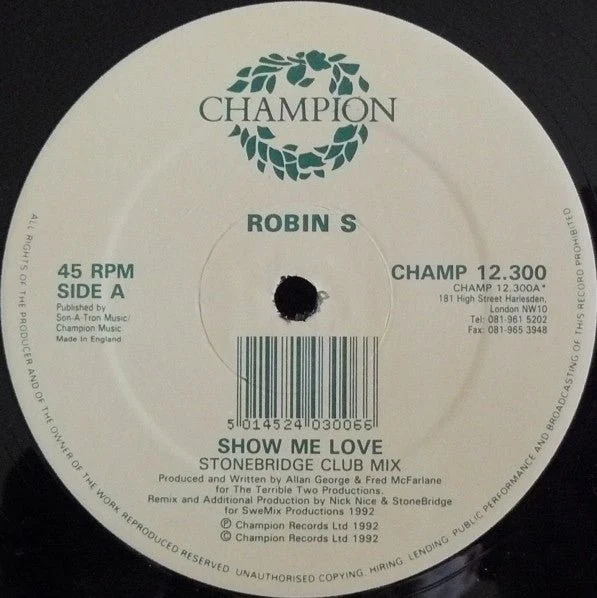
- Robyn S – Show me love: As well as it’s infectious melody this instantly recognisable bass sound has been adapted in countless other productions spanning deep house to RnB. The bass sound comes from the iconic organ bass patch on the Korg M1.
- Axel F – Harold Faltermeyer: Featuring an equally iconic bassline and lead synth melody, this was THE synth anthem every school child wanted to learn to play in 1980s music rooms.
- Phuture – Acid Tracks: Considered to be the first use of the TB 303 in a house record. It may not be the most recognisable example of synth bass but it did spark the whole acid house movement. A movement primarily driven by a highly specific style of synth bass.
- Who am I? Whats my name? – Snoop Dogg: Perhaps the most iconic example of G-Funk, the California-born hip-hop style pioneered by Dr. Dre and DJ Quik. The genre became synonymous with laidback grooves, almost always backed up by a melodic synth bassline.
- Adamski – Killer: This classic dance pop crossover features one of the catchiest and most instantly recognisable synth bassline’s of all time.
- I feel love – Donna Summer: Widely regarded as one of the most influential dance records ever made, this Giorgio Moroder-produced monster introduced dancefloors to the hypnotic power of the arpeggiated synth bassline.
- Pass out – Tinie Tempah: Emerging from the UK’s grime and bass music scene, this enduring club anthem is built around a deep, sub-heavy melodic bassline that drives the entire track from start to finish.
- Blue Monday – New Order: This groundbreaking 1983 indi pop dance classic helped redefine electronic music, driven by a simple yet unforgettable synth bassline and industrial sounding rhythm section.
- Skrillex – Scary Monsters And Nice Sprites: While Skream is widely credited with pioneering the dubstep wobble bass, this Skrillex classic helped propel the sound into the mainstream, defining a new era of aggressive, synth-driven bass music.
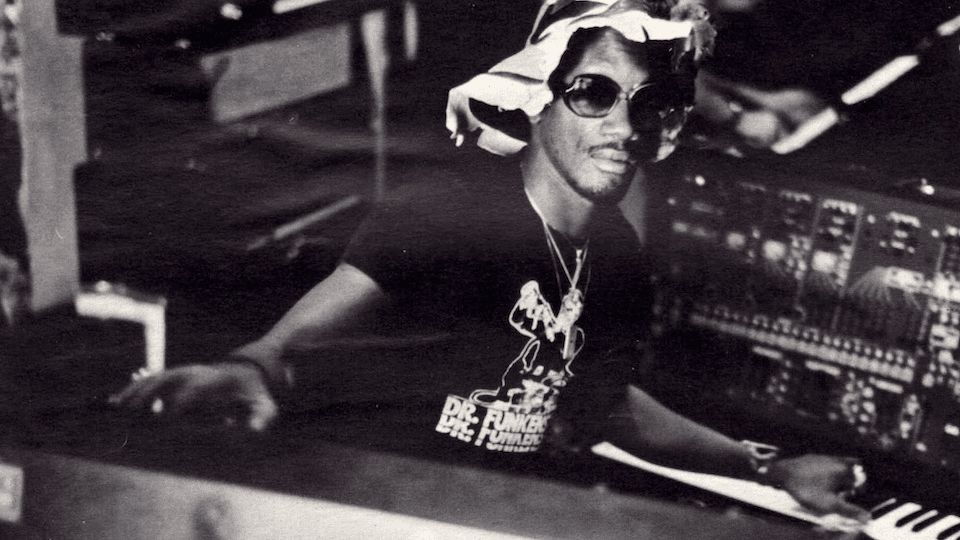
- Flashlight –Parliament: Finally a track that might not be so obvious, but Parliament’s George Clinton and keyboardist Bernie Worrell were instrumental in bringing synth bass to the forefront of funk and disco. This template went on to influence a whole generation of hip hop producers.
And if you are looking for Beats or Samples with the deepest bass then RouteNote Create has you covered.
Sign-up now and take your music to the next level