What was the very first record to use a sample loop?
For today’s blog, we are going back in time… Way back, as we pose the question “What was the very first record to use a sample loop?”
So, don your detective hats as we predate the digital sampler by decades and unravel this musical mystery.
Definition of a sample loop
Before we embark on this epic sample quest, we need to establish a few ground rules. The first is agreeing on what actually constitutes a loop. We are all familiar with the modern definition of a sample loop. A repeated piece of pre-recorded music that loops at regular intervals at the same point, usually on the beat, i.e. every 1,2,4 or 8 bars. So, with that definition in mind, we’re searching for the earliest example of a popular music track built around a looped section of pre-existing music, much like sample-based musicians do today.
To truly qualify, that loop can’t simply be repeated in isolation. It must serve as an integral musical element of the track, with additional instruments, vocals, or other complementary parts layered on top to create a new composition.
But before we uncover that ground-breaking example, let’s look at some earlier instances of artists using third-party recordings as a compositional tool.
Musique concrète
The earliest examples of creatively repurposing pre-existing audio can probably be traced to a movement known as musique concrète. Emerging in France during the late 1940s, it was pioneered by the avant-garde composer Pierre Schaeffer, who rejected traditional musical notation in favour of composing with recorded sound.
Instead of writing music for performers, Schaeffer and other musique concrète composers manipulated recordings using techniques such as tape looping, splicing, reversing, speed changes, filtering, and layering. These experiments transformed everyday sounds, instrumental fragments, and field recordings into entirely new musical works.
By the 1960s, many of these techniques, particularly tape looping and editing, had found their way into radio and television advertising, where they became valuable production tools.
Although musique concrète can rightly claim some of the earliest examples of what we’d now call sampling, its abstract and experimental nature means it doesn’t quite fit our brief. We need to uncover a record where a loop has been used as the central compositional foundation in the way sample-based producers work today.
The Beatles: Tape loop pioneers
When it comes to pioneering tape loop practitioners, one name always comes up. I am, of course, referring to The Beatles. Not only are The Beatles regarded as some of the greatest songwriters of all time, but they were also ahead of the curve in terms of experimentation. And one of the areas that clearly fascinated them was the manipulation of tape. With the first dedicated digital samplers over ten years away, the only similar way to get creative with audio was via tape. McCartney was considered the driving force behind tape manipulation, and in 1966, he got to put it to good use in their most experimental LP to date, Revolver.
Tomorrow never knows
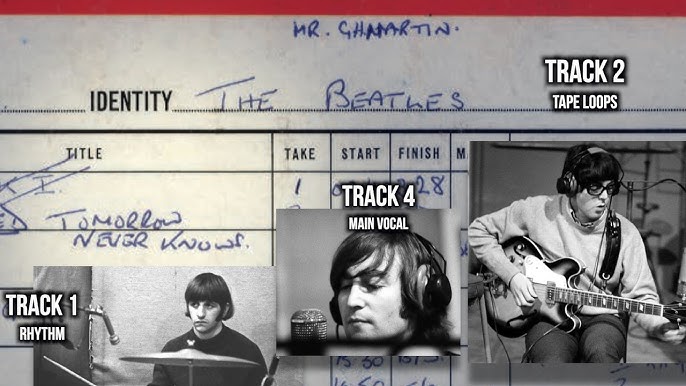
Although “Tomorrow Never Knows” closes the Beatles’ 1966 album Revolver, it was actually the first song recorded for the project. And it’s here that we encounter some of the earliest uses of pre-recorded looped audio in popular music.
On first listen, you might assume Ringo Starr’s repetitive drum pattern is a loop. It isn’t. Instead, Ringo is playing live with remarkable consistency. Interestingly, this approach was, in fact, inspired by the idea of a sample style loop. During the song’s early development, the band experimented with looping recordings of the drums, bass, and a pitched-down guitar. But the technology of the day simply wasn’t up to the task. The tape loops continually drifted out of sync, forcing the band to eventually abandon the idea.
So, if our question were, Who were the first people to attempt to compose a song using sample loops? then the Beatles would almost certainly take the title.
Undeterred, Paul McCartney suggested that each member go home and record whatever sounds interested them onto tape. The following day, the band reviewed the recordings and selected five tape loops for the finished track. During mixing, these loops were played simultaneously on separate tape machines and manually faded in and out, creating the swirling collage heard in the song.
Much like the musique concrète that inspired the Beatles, these manipulated loops feature altered speeds, pitch changes, and carefully blended textures to create an otherworldly, psychedelic atmosphere.
So why doesn’t “Tomorrow Never Knows” claim the crown as the first true sample-loop composition? Because the loops aren’t the musical foundation of the track. Instead, they’re used as sonic textures, drifting in and out to enhance the arrangement rather than providing a repeating musical backbone over an extended period.
The Beatles continued to push tape manipulation even further on later albums, most notably with “Revolution 9” from The White Album. Its surreal collage of tape loops, found sounds, and spoken-word fragments is perhaps their most direct homage to musique concrète and remains one of popular music’s boldest experiments in recorded sound.
Electronic experimentation
It feels like we’re getting close to uncovering the first true example of a song built around a sample loop. But before we reveal our prime suspect, it’s worth acknowledging the ground-breaking work taking place in electronic music at around the same time.
By its very nature, electronic music was an experimental playground, with composers constantly pushing the boundaries of what could be achieved using recorded sound. Tape looping, editing, and manipulation became central compositional tools for pioneers such as Pierre Henry, Steve Reich, and Terry Riley.
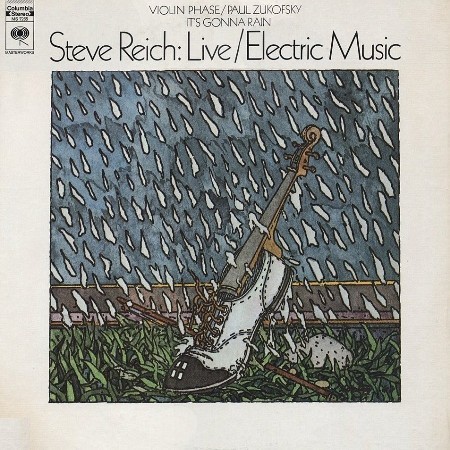
Steve Reich, for example, explored the musical possibilities of looping fragments of recorded speech in works like It’s Gonna Rain (1965) and Come Out (1966). Rather than treating recorded audio as something to be reproduced faithfully, these composers transformed it into raw musical material, using repetition, phasing, and tape manipulation to create entirely new sonic experiences.
Their innovations were hugely influential and helped establish many of the techniques that would later define sample-based music. However, like musique concrète, these works remained firmly rooted in the avant-garde. They weren’t popular songs built around repeating loops of pre-existing recordings, which is what we are after.
BBC Production Music
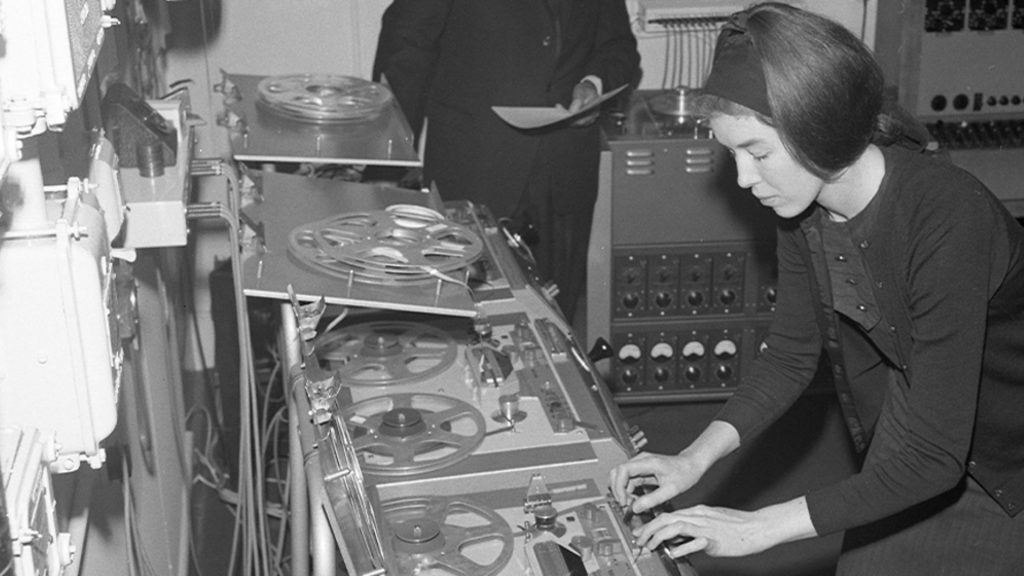
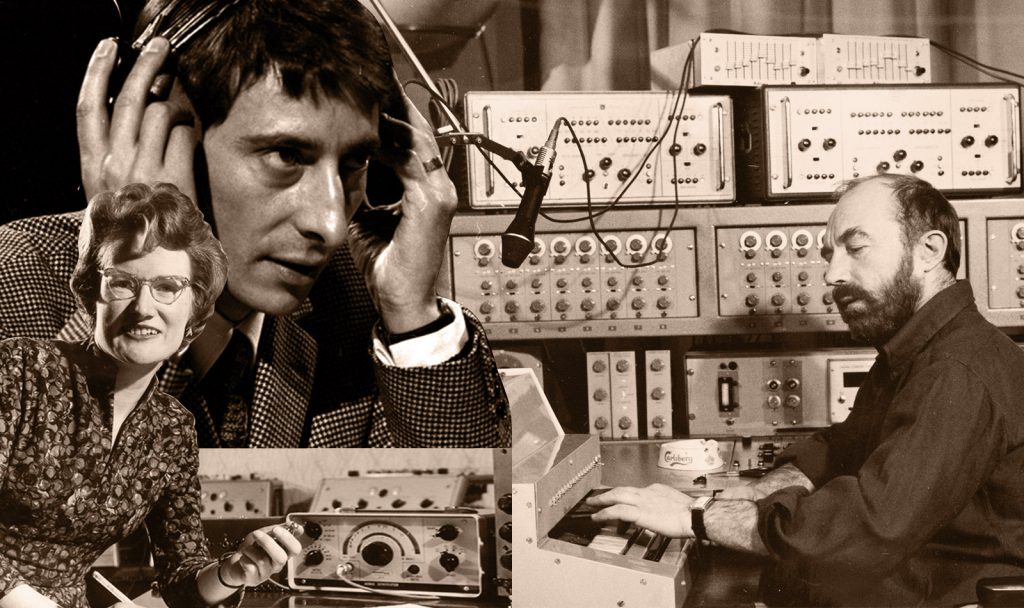
Meanwhile, at the BBC’s Radiophonic Workshop, Delia Derbyshire, Daphne Oram, and Brian Hodgson were incorporating many of these same techniques into music and sound created for television and radio.
The Workshop’s mastery of tape manipulation was astonishing. Through painstaking tape splicing, looping, and re-pitching, its composers were able to construct intricate melodies and rhythmic patterns entirely from recorded sound. It’s highly likely that looped sections of recorded audio also formed the basis of some of their jingles, themes, and incidental music.
Unfortunately, because much of the Radiophonic Workshop’s output was largely created for broadcast rather than commercial release, it’s difficult to identify a definitive example of a composition built around a foundational melodic or rhythmic tape loop. Nevertheless, they were almost certainly among the pioneers of this approach.
Marvin Gaye for the win!
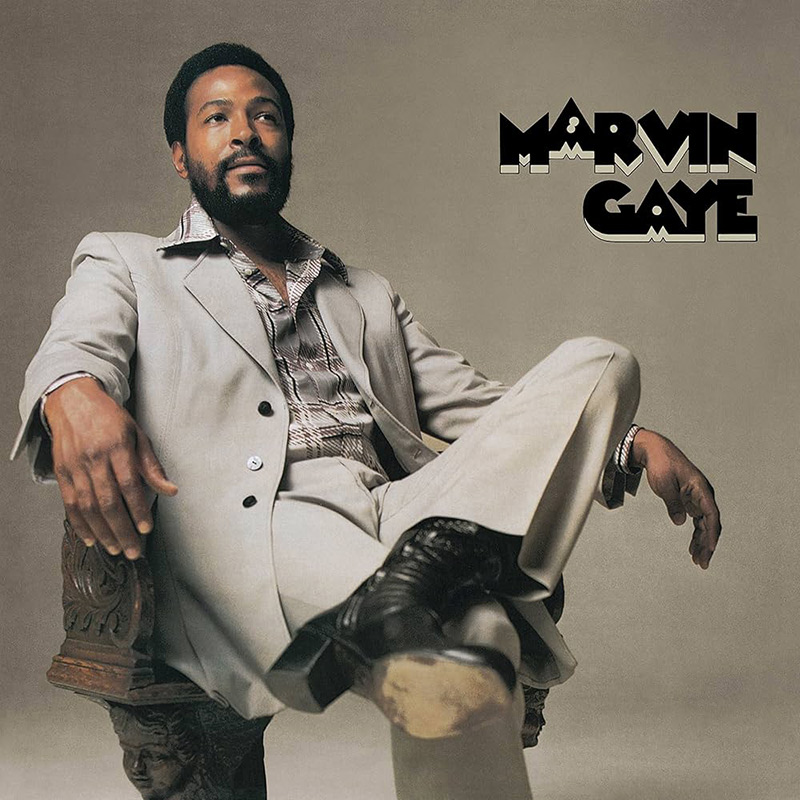
While the 1960s was a hotbed of experimentation, we have to wait until the early 1970s before we find a track that truly fits our modern definition of a sample-loop composition. And, rather fittingly, that very track would later become a classic breakbeat in its own right, sampled by countless hip-hop producers.
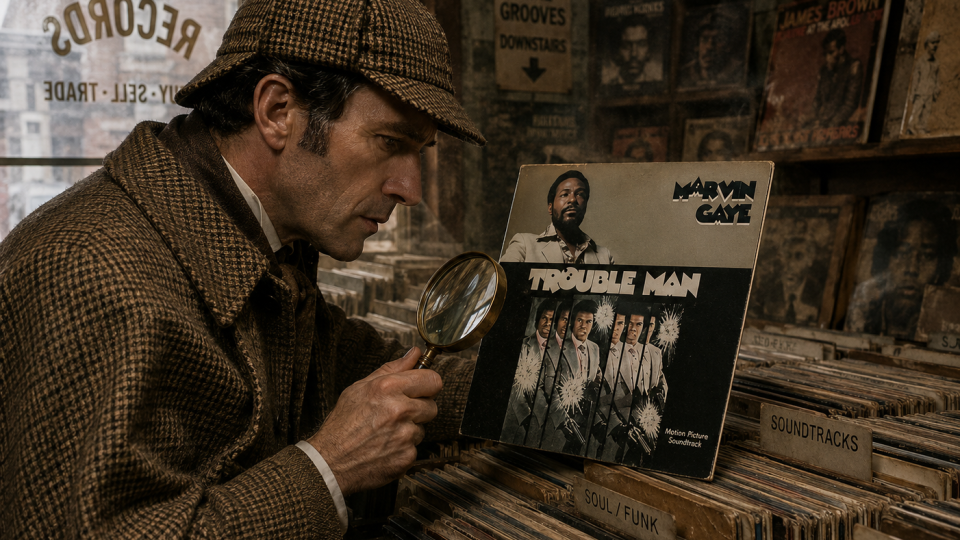
The year is 1972, and our prime suspect is “T Plays It Cool“ by soul legend Marvin Gaye. Taken from the soundtrack to the blaxploitation film Trouble Man, this album has long been a firm favourite amongst Marvin fans. But hidden within it is something far more significant.
The worlds first 4 bar sampled loop
The track T Plays it Cool is a hypnotically groovy slice of instrumental synthesiser funk. What makes it so remarkable, however, is that the entire track is built around a single, repeating four-bar loop.
This loop features rolling drums courtesy of Marvin himself, along with staccato rhythmic wah-wah guitar accompaniment. As well as these two elements, the loop contains some slightly eerie dreamlike vibraphone chords. It’s so seamlessly edited that you could easily miss it repeating at all, were it not for the distinctive drum fill that signals the end of every fourth bar. Even by today’s standards, it still sounds like a perfect 4-bar loop. Simple enough to repeat without becoming monotonous, yet rich enough to support everything layered on top of it. It provides the perfect rhythmic foundation for the rest of the arrangement.
But what is the origin of this perfect 4-bar loop? For many years, it was assumed that this four-bar passage had been recorded specifically for the track. But the expanded 40th Anniversary Edition of the Trouble Man soundtrack, released in 2012, revealed a different story. The loop was actually lifted from an earlier, previously unreleased version of “T Plays It Cool” that appeared in the original film score.
Suddenly, the mystery of the loop’s origin was solved. Rather than recording the groove specifically for the finished track, someone had extracted a four-bar section from the middle of this existing recording and used it as the basis for an entirely new composition. Why Marvin Gaye or the production team chose this unusual approach remains unknown. But for 1972, it was an astonishingly forward-thinking production technique, and one that worked brilliantly.
A glimpse of the future
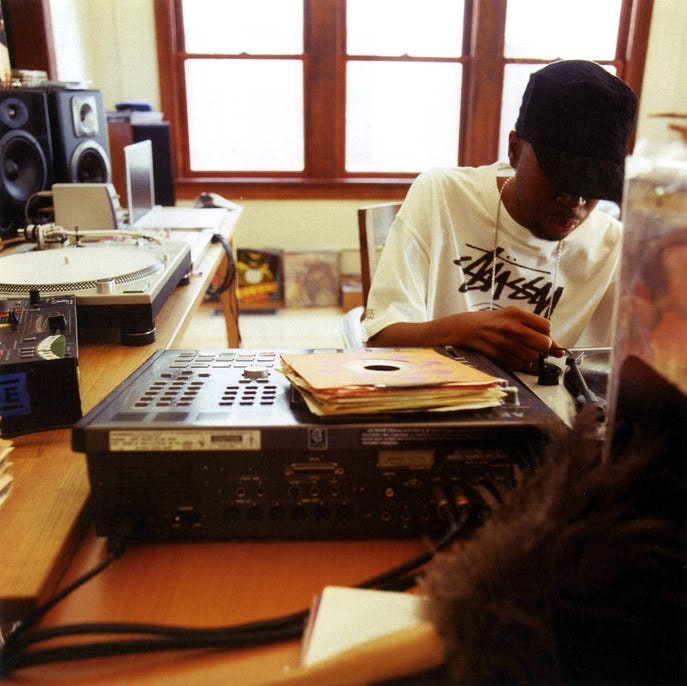
What makes “T Plays It Cool” feel so remarkably modern is the way it’s constructed. The loop itself comes from what hip-hop DJs would later call “the break”. A term used to describe the stripped-back, rhythmically powerful section of a record that lends itself perfectly to looping. That four-bar excerpt then becomes the track’s canvas for an entirely new performance featuring synth bass, layered synth melodies, and fierce saxophone improvisations all built around it.
In essence, apart from the fact that the loop was created using tape editing rather than a digital sampler, the production process is strikingly similar to how countless hip-hop, electronic, and sample-based records are made today.
After tracing the history of tape loops, musique concrète, the Beatles’ experiments, and the pioneers of electronic music, we’ve finally arrived at what is arguably the earliest example of a commercially released popular song built around a repeating sample loop. More than twenty years before the golden age of sampling, Marvin Gaye had unknowingly given us a glimpse of the future.
And since we’ve finally ventured into the world of modern music production, it’s worth mentioning RouteNote Create, a rich source of royalty-free samples for producers looking to build tomorrow’s classics
Sign-up now and take your music to the next level